Undertaking this signment, I wanted to think about what surface or material would define my act of writing, both in terms of what I wrote and how. I ended up enacting and then writing this recipe.
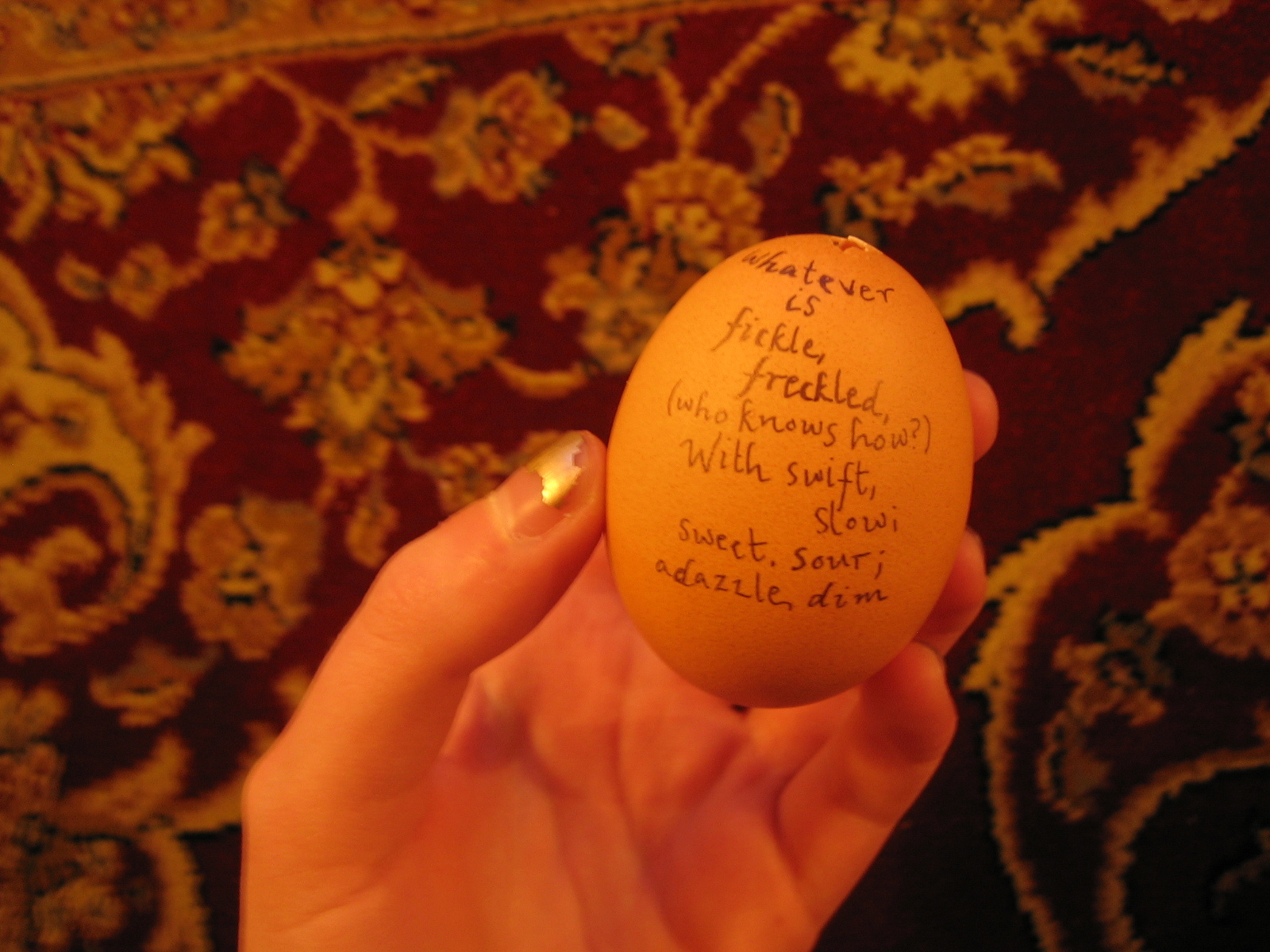
Recipe for One (1) Written Egg:
1. Using the sharp point of a knife, bore two small holes into either end of a large egg.
2. Drain the egg of its yolk by gently blowing on one hole to force the yolk out the opposite end. (WARNING: Take care not to get raw egg into your mouth, which can carry salmonella.)
3. Rinse out and carefully dry the empty eggshell.
4. Write lightly on the eggshell with the utensil of your choosing. A soft-tipped pen, marker, or brush will be most effective.
5. Store the written egg in a safe place to prevent its breaking.
Directions I haven’t included here reach back farther into this materiality’s life. Perhaps I should really begin with purchasing a carton of large eggs at the local Giant Eagle. The complex, entwined system of farming and commerce that got the eggs to my Giant Eagle in the first place is just as relevent, but beyond the scope of this signment.
Then, in a dramatic ethical complication, I decided to streamline this signment into lunch.
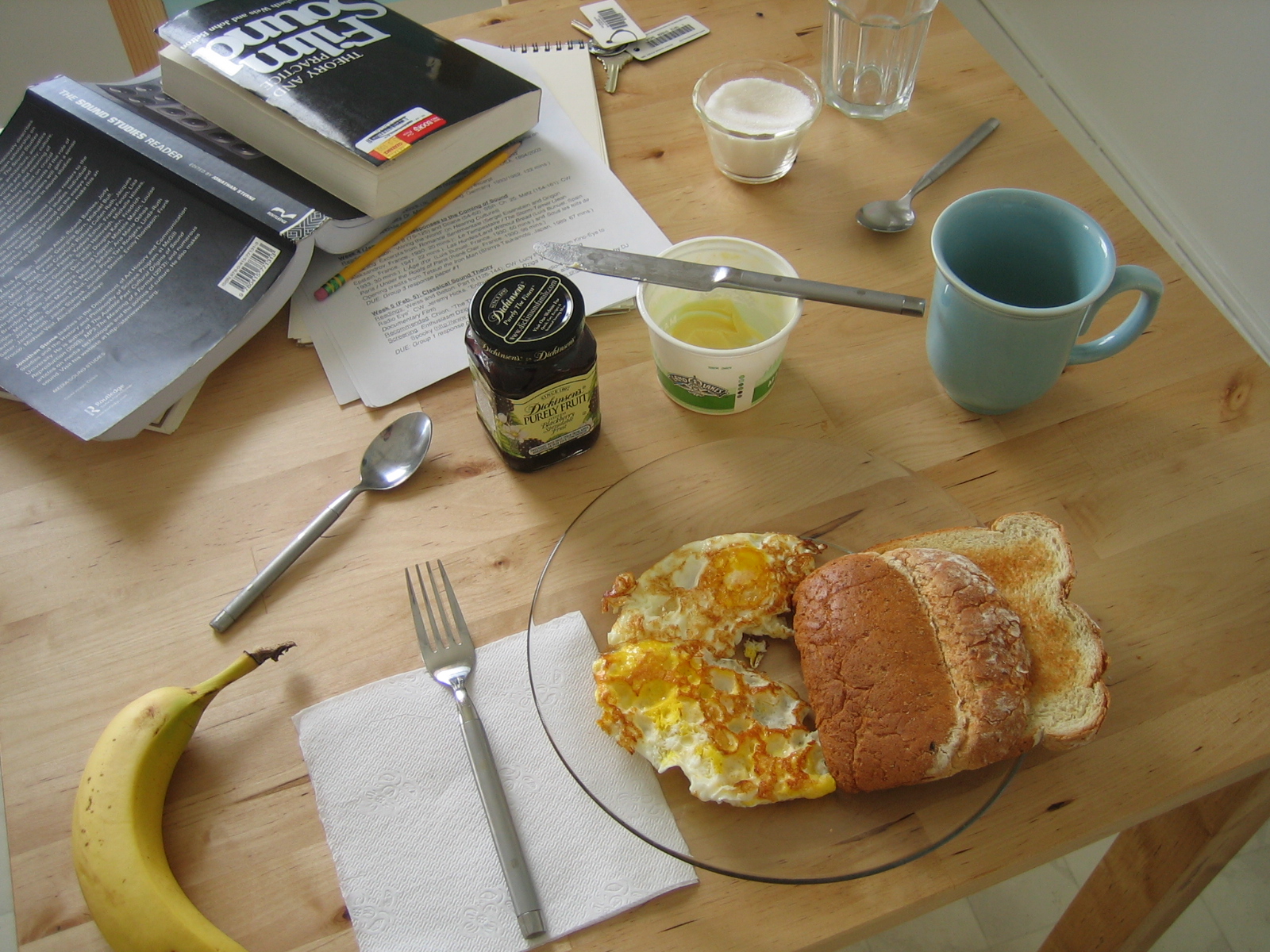
Jokes aside, this process made me think about what is used and what is thrown away. I was about to blow the insides of the egg straight into the sink before I realized I could reuse them (for lunch). Whereas normally, when preparing a meal of fried eggs, I discard the shells without a second thought, except to make sure to wash my hands afterwards.
More broadly, this is about the transformation from an object, or in this case an animal by-product, into a writing surface. This little project only gestures at stakes that could be much higher, as in our reading of “Pigs and Parchment” last week. Who decides, and how, that an animal becomes a writing surface? What happens, physically and metaphorically, in the process of making something into a writing surface? As in “Pigs and Parchment,” I can’t help but predict that a discourse of power might emerge from looking closely at this process. Writing almost seems to become, under certain circumstances, an act of ownership, intrusion, domination, or violence.
In our brief discussion of tattoos last week, I expected a conversation about writing on bodies to ensue, but we navigated away from that. I think a continued conversation along those lines, though fraught, may elucidate some issues underlying inscription, surfaces, and the act of writing.
