I’m not a marginalia person. I don’t do it myself, and I don’t like seeing it by other people in my books. So when I buy used books I flip through them first to make sure they’re clean. Sometimes I don’t have an option, and I’ll just deal with it.
When I was an undergrad I took a James Joyce class. For the used Ulysses copy I bought, I can’t remember if I was in a rush or if it was the only copy left or if it was the least written in copy. There is marginalia throughout, written in pencil, although I can flip ten, twenty pages without seeing any markings.
I thought of my marginalia’d Ulysses while reading Brunton’s Spam reading. Not because of the lit spam but because of the way spam works through both a computer and a computer user’s interaction with spam. For spam to spread, spammers need the (usually unknowing) cooperation of the user and their computer. It made me think of the much less nefarious working together that was my first time reading Ulysses with the help of the marginalia.
I definitely struggled reading Ulysses for the first time. And I wouldn’t say every bit of marking helped me. Her (..or his) markings include underlining lines and passages, notes, and numbers that I don’t think I realized at the time are previous chapters and the lines in said previous chapters that are being called back to. I think the notes helped me the most. Sometimes it was underlining and noting when Bloom is thinking about Martha’s letter, or other motifs. In Aeolus, she expands:
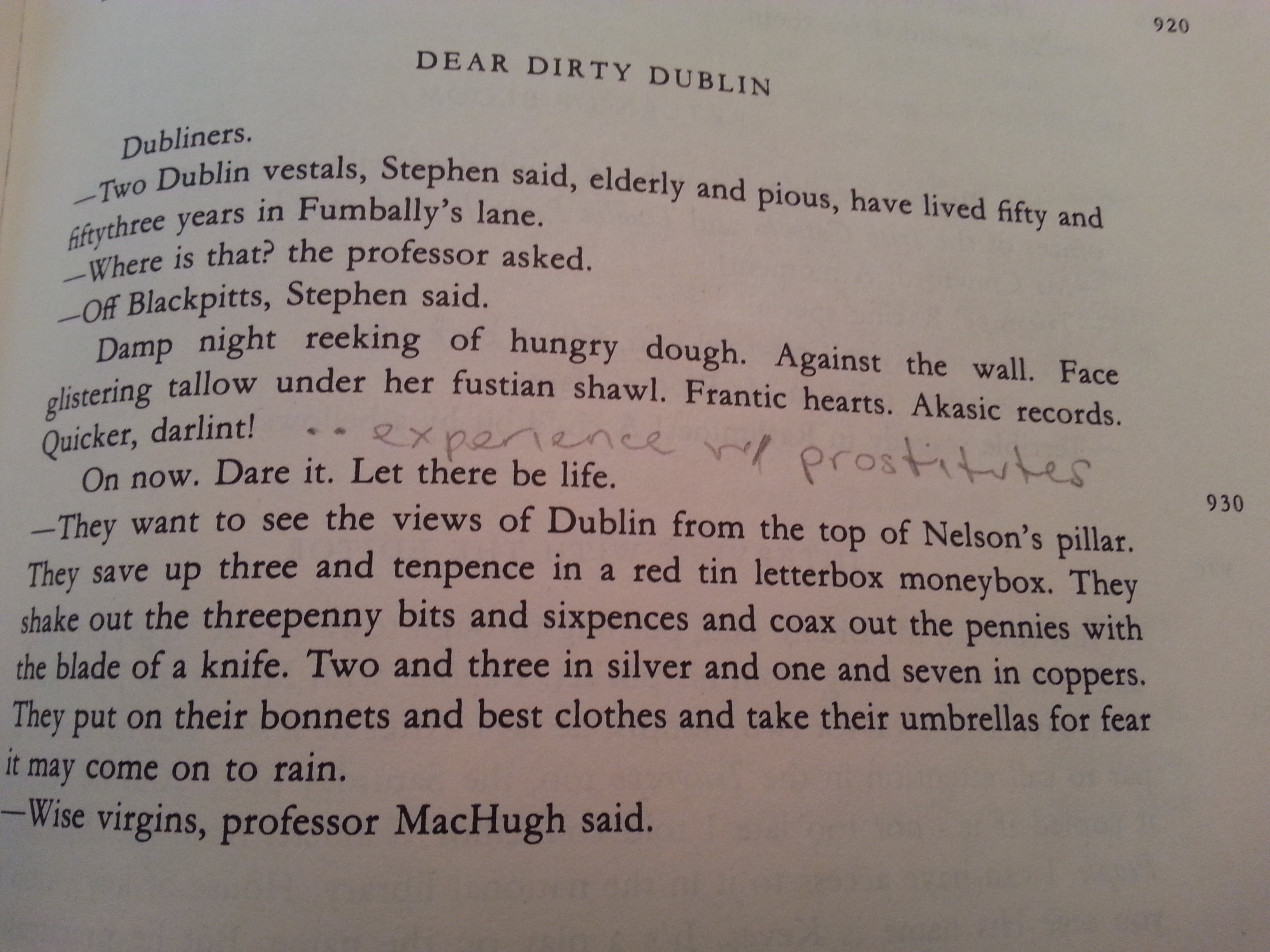
which I almost definitely wouldn’t have picked up on. Ulysses is an unwieldy read, and I was glad to have someone there, even in a non-physical sense, to help with the puzzle.
