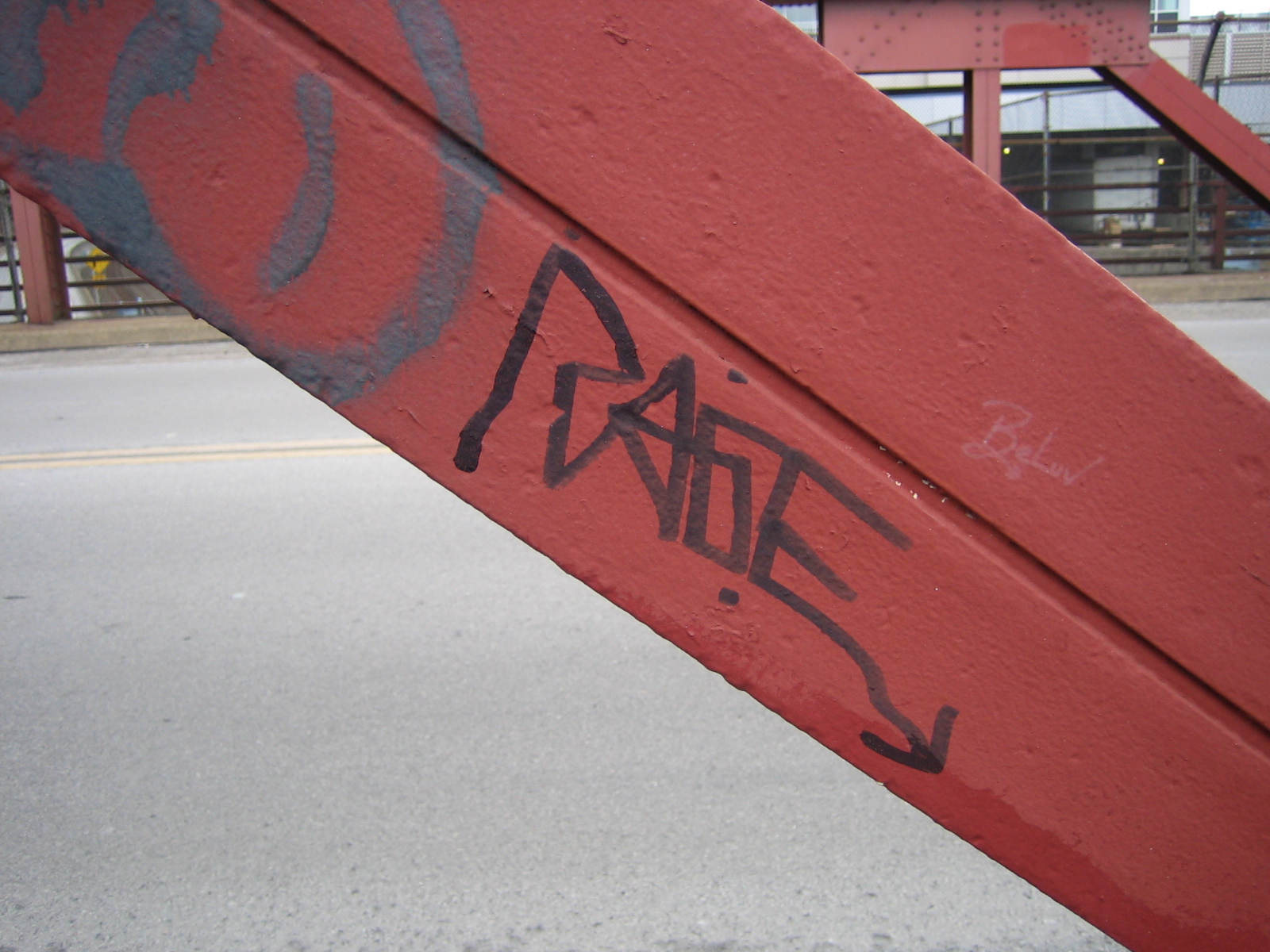
Before reading part of Joe Austin’s “Taking the Train” this week, I had never thought to consider graffiti as a highly developed modality for writing or communication. This seems strange, given that it surrounded me, growing up, on the highways of central New Jersey and out the windows of trains that rumbled through Philadelphia. I admired the geometric boldness of the tags and symbols that melded into mural arts projects in West Philly and San Francisco, even as I learned, on a subconscious level, to associate graffiti with the potential for threat. Especially when I followed my parents and uncle around the heavily marked streets of Manhattan, I was vaguely aware that territorial systems of influence overlay the gridded streets like a net. It was an urban language I was not allowed to partake in—I also had no idea how to read it.
So it feels like an entirely new system of significance has been revealed to me: even if I only know a few phrases here and there, I now have a new way of reading the city.
To get groceries, I regularly walk from my apartment in Shadyside to the Giant Eagle on the corner of Negley and Centre Ave. To get there, pedestrians cross a bridge that spans the East Busway, which runs parallel to Fifth and Centre like a deep vein through the city.
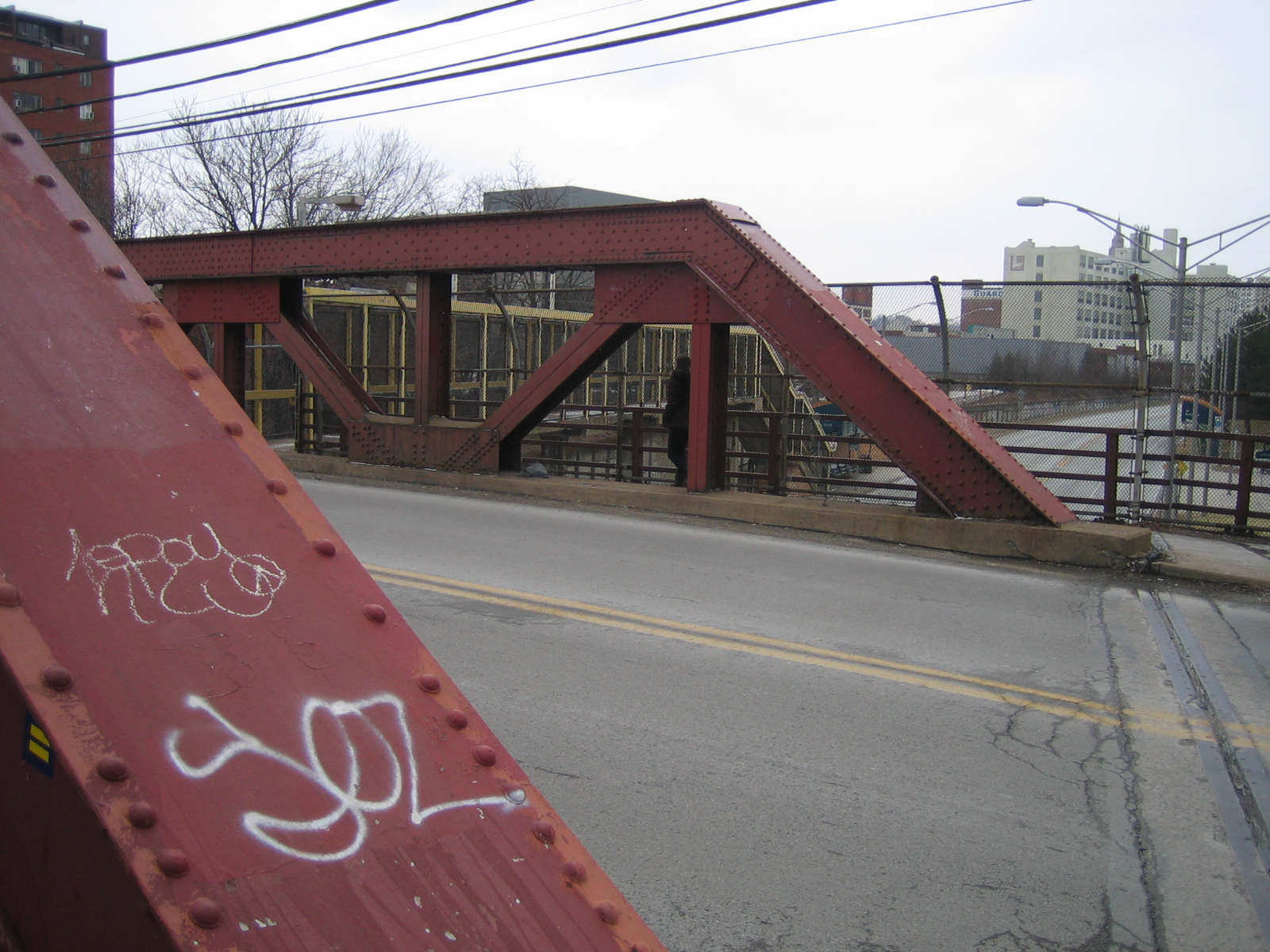
This bridge, to my mind, marks a kind of separation between Shadyside and the neighborhoods of Friendship and East Liberty that lie adjacent to it. There’s decidedly different feel to the intersection just over the bridge—it’s a congested tangle of roads, lights, and cars; rounding the corner of Centre, a homeless man rattles a cup at people on their way to buy milk and bread. Only a few minutes away are the cobblestones of Walnut with its Banana Republic and a leather goods boutique, but it feels much farther. Cities are like this.
I had noticed the graffiti on this bridge before, but I returned to look at it today with new interest. I felt sure its taggers must have noticed, or felt, as I did, that it marked a significant artery between neighborhoods. These writers seem to strive for ownership, exposure, and expression by marking this unglamorous but crucial thoroughfare. Seeing the graffiti, I think this: others have been here before, others feel strongly enough about their ties to this city to mark it with their chosen names. In a way they claim it, as they force the metal and stone of the built environment to bear the traces of their hands and identities. I’m still not in a position to interpret these writings with any nuance, but maybe that can be allowed given how new my graffiti-literacy is.
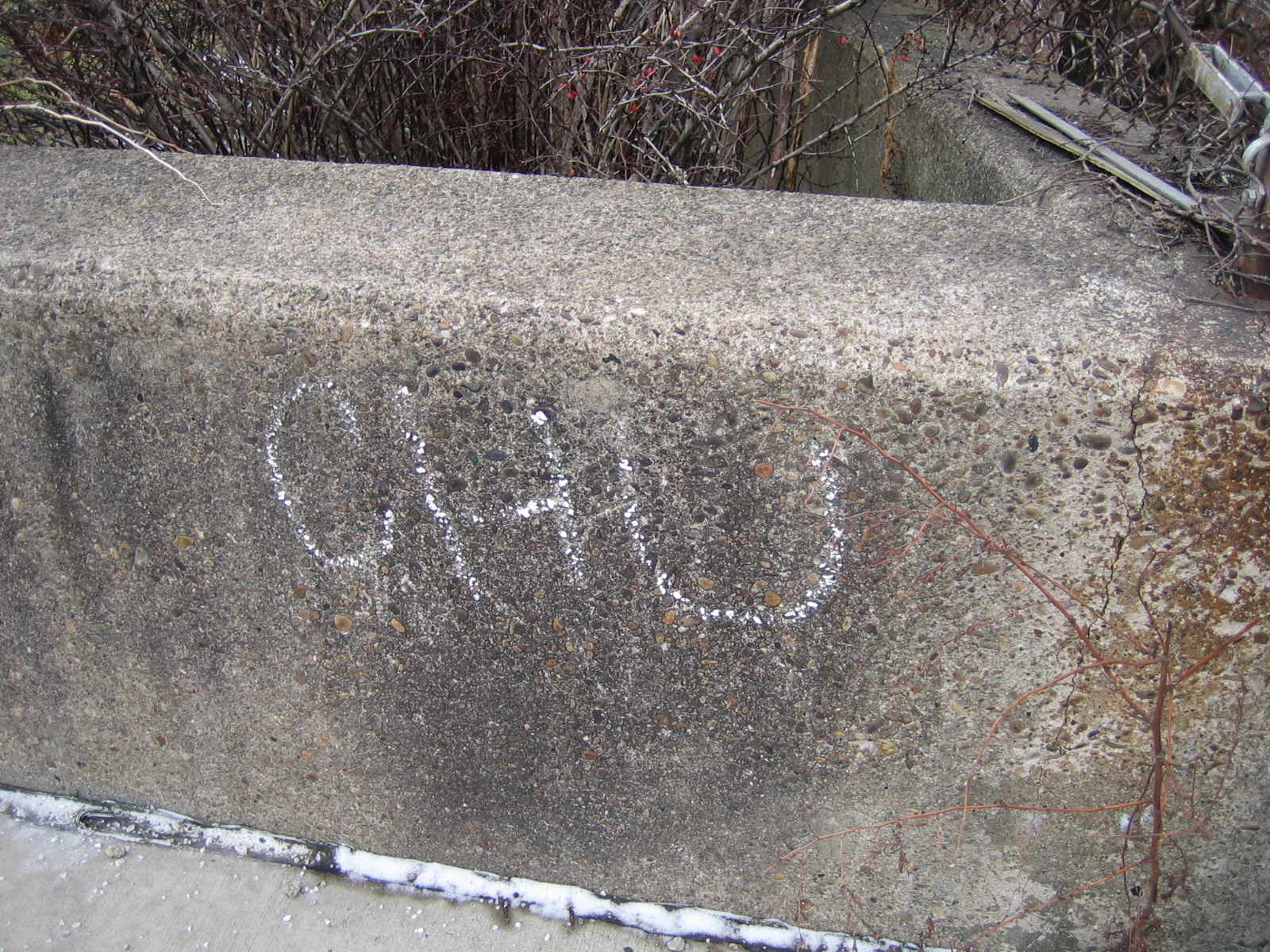
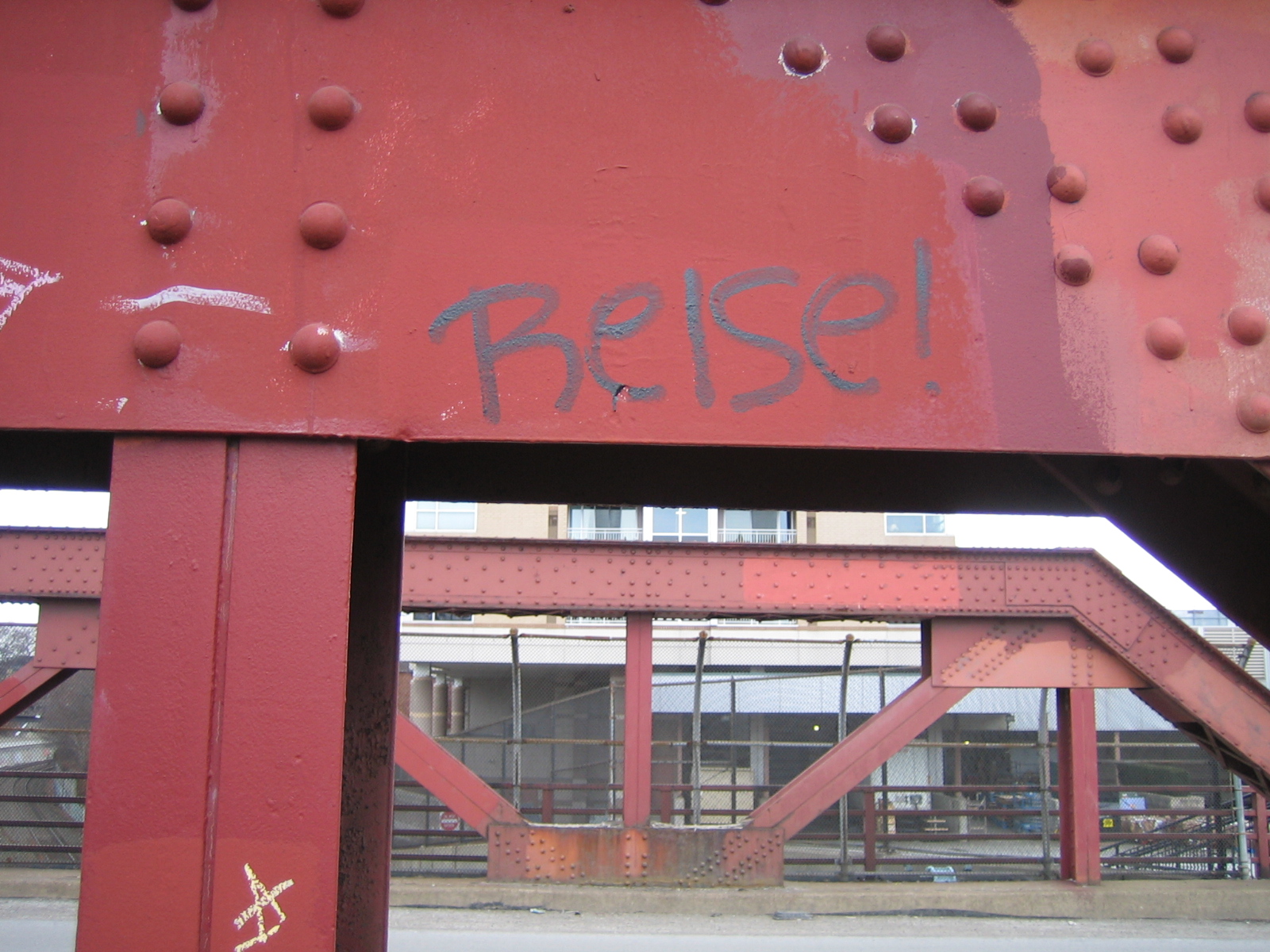
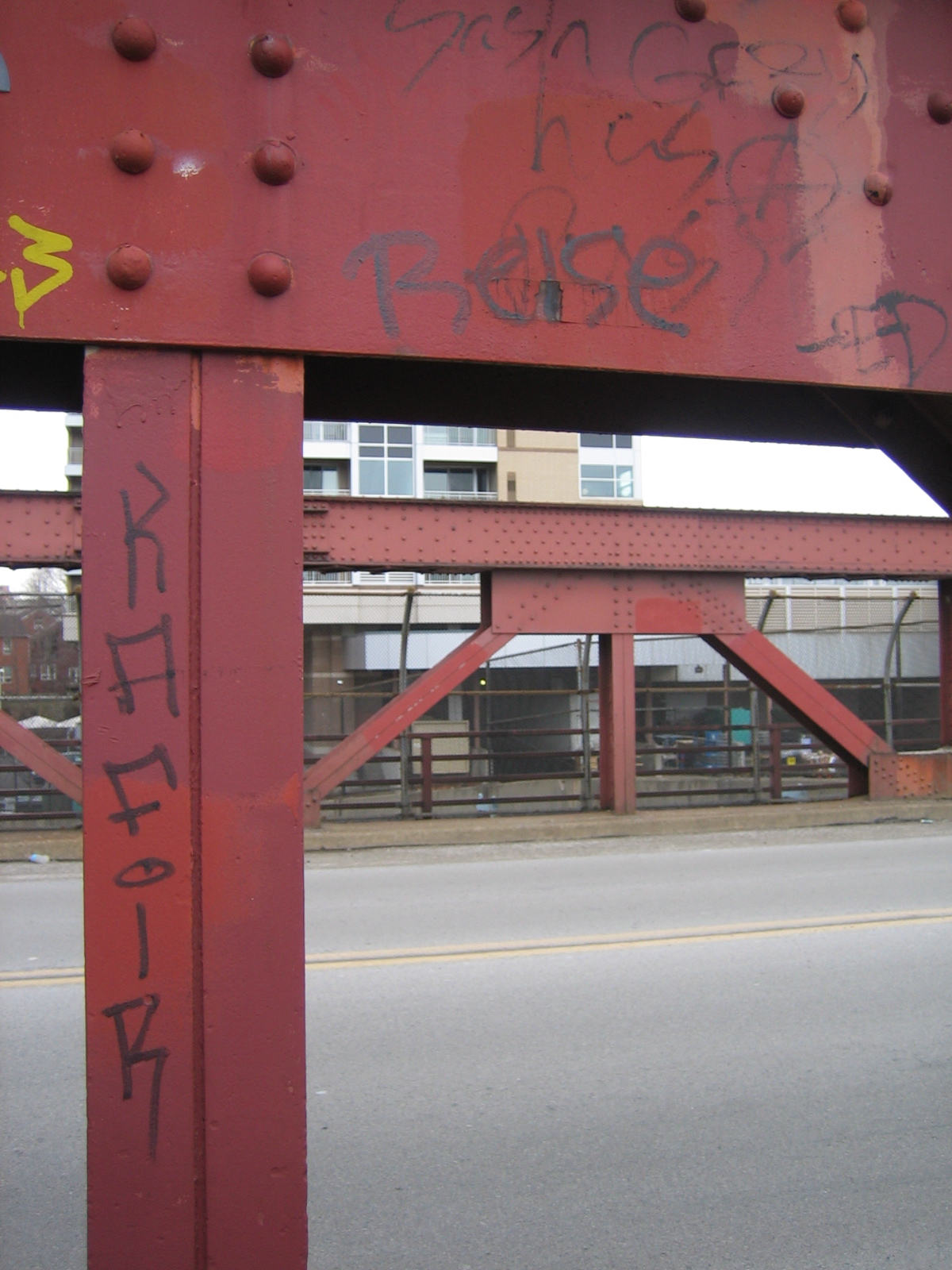
So who has marked the bridge? Two names return over and over, competing with each other for exposure: “CHU” and “Relse.”
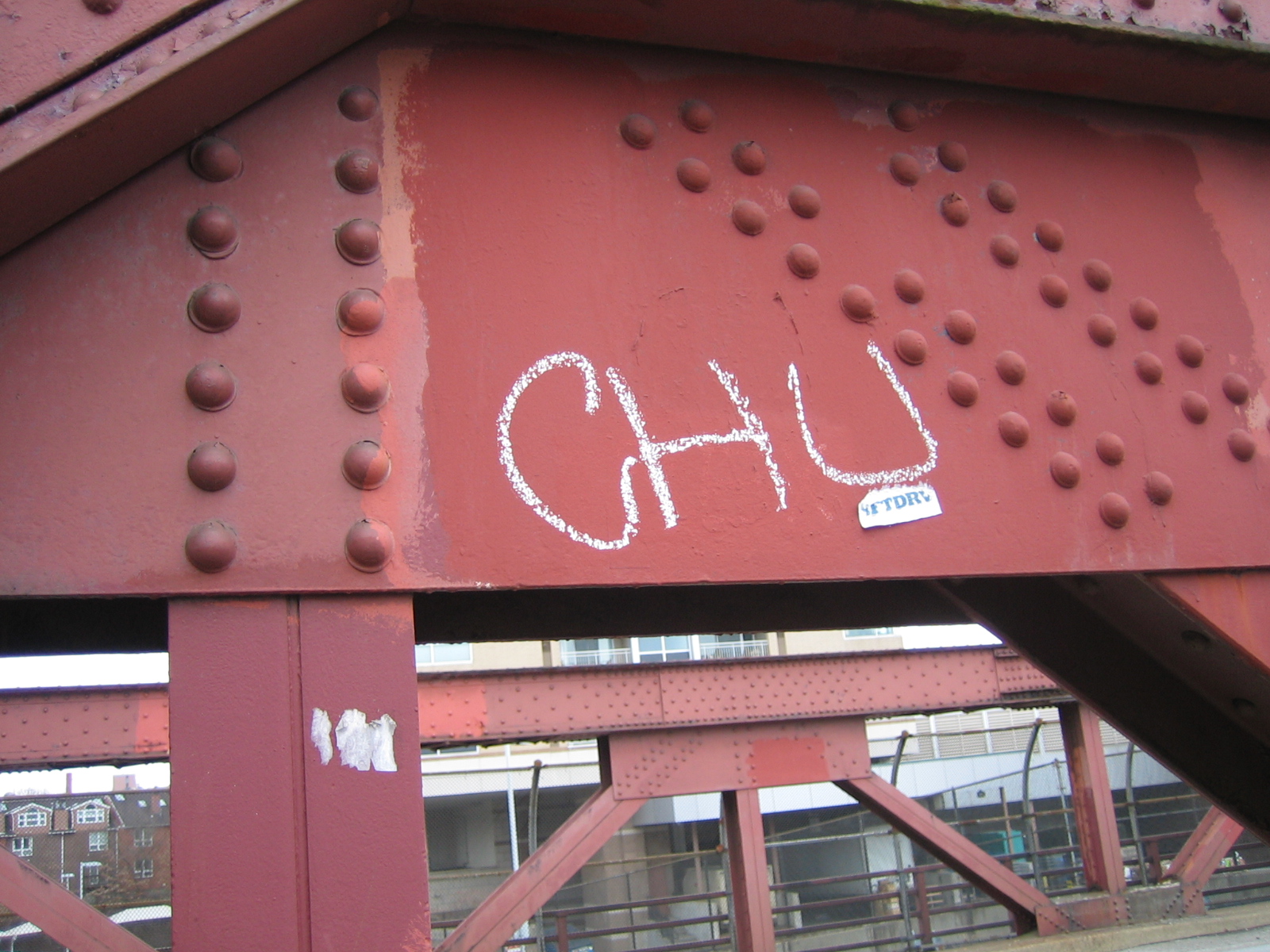
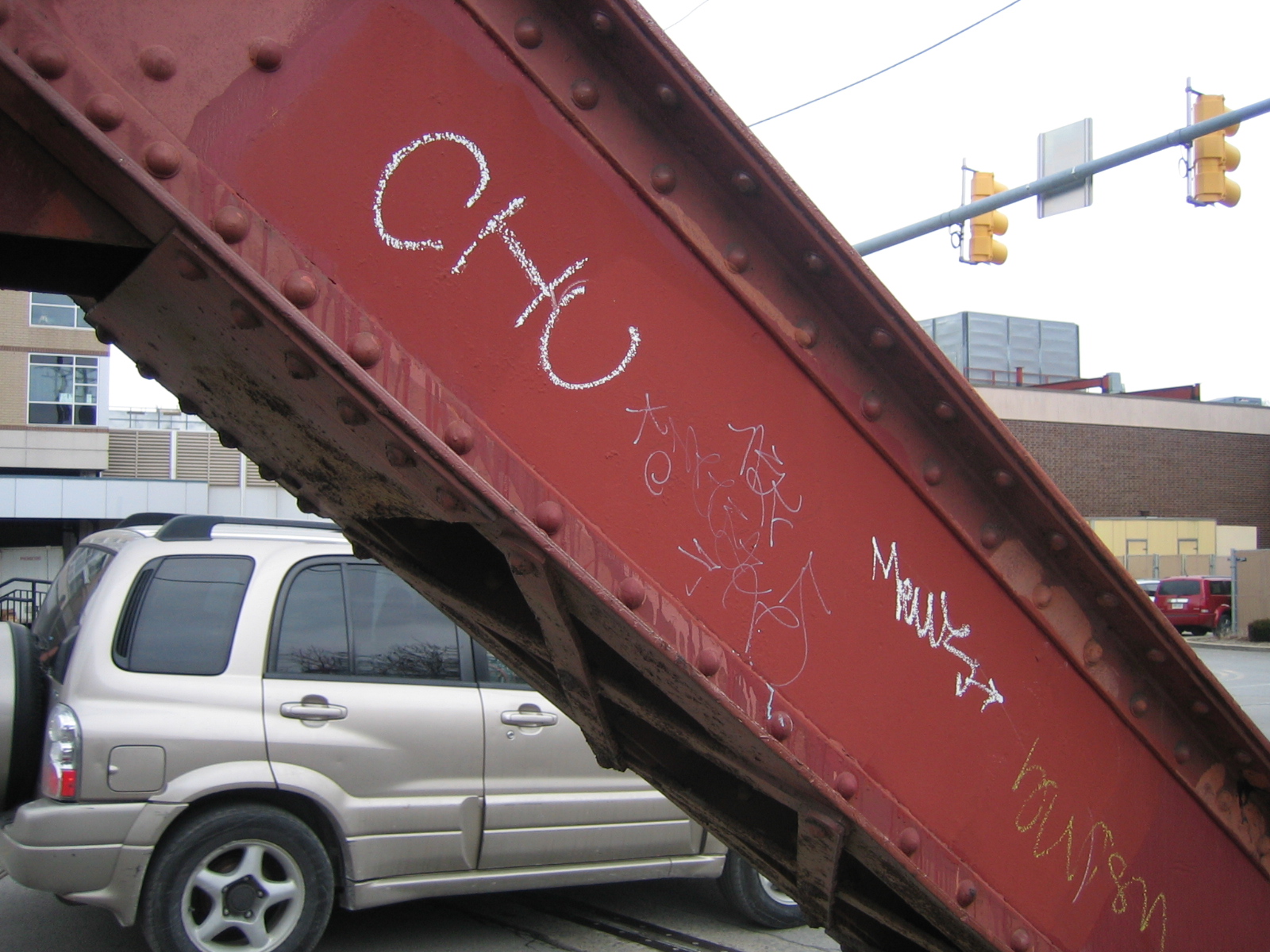
Another rails generally against our social and economic conditions:
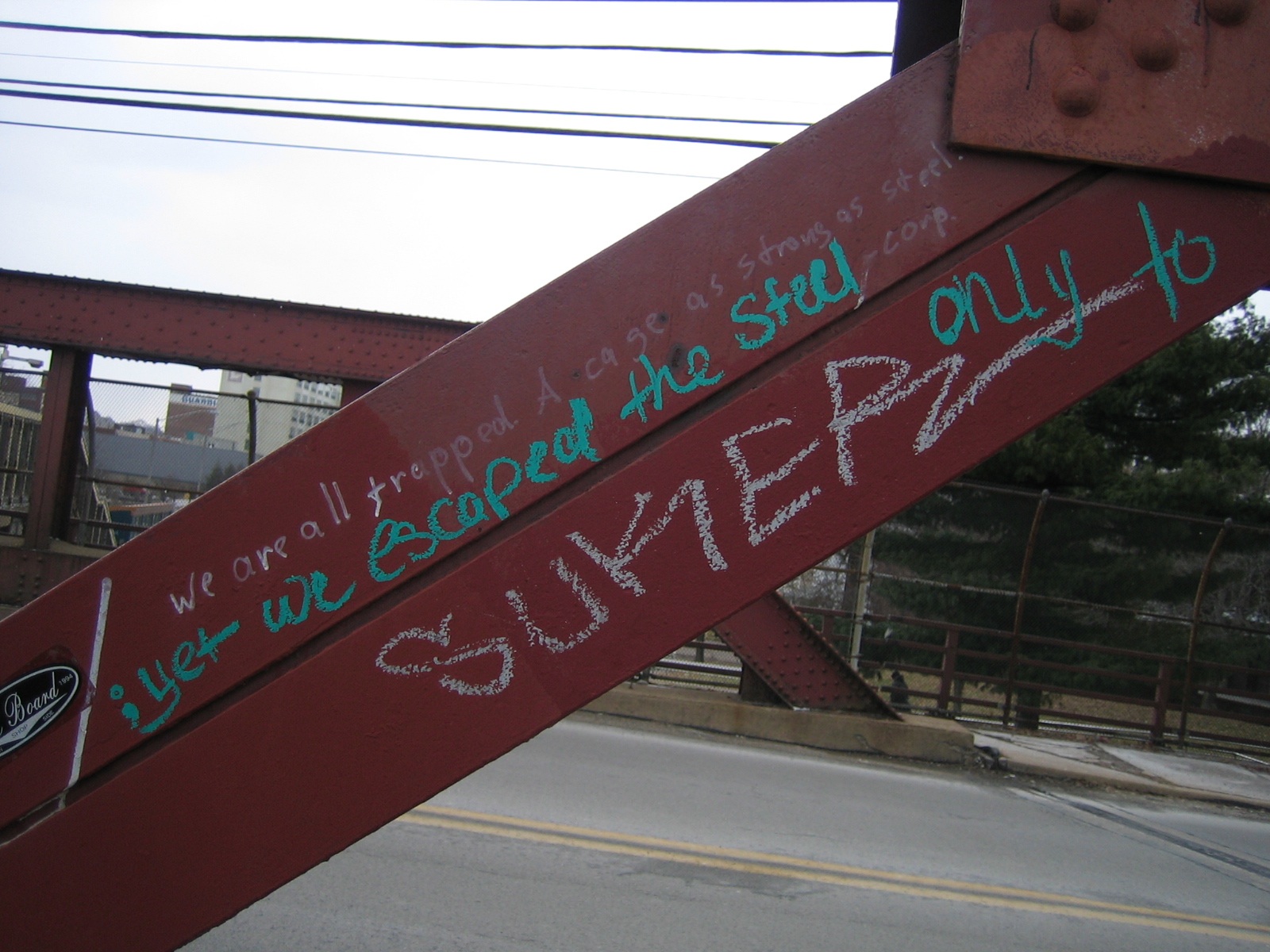
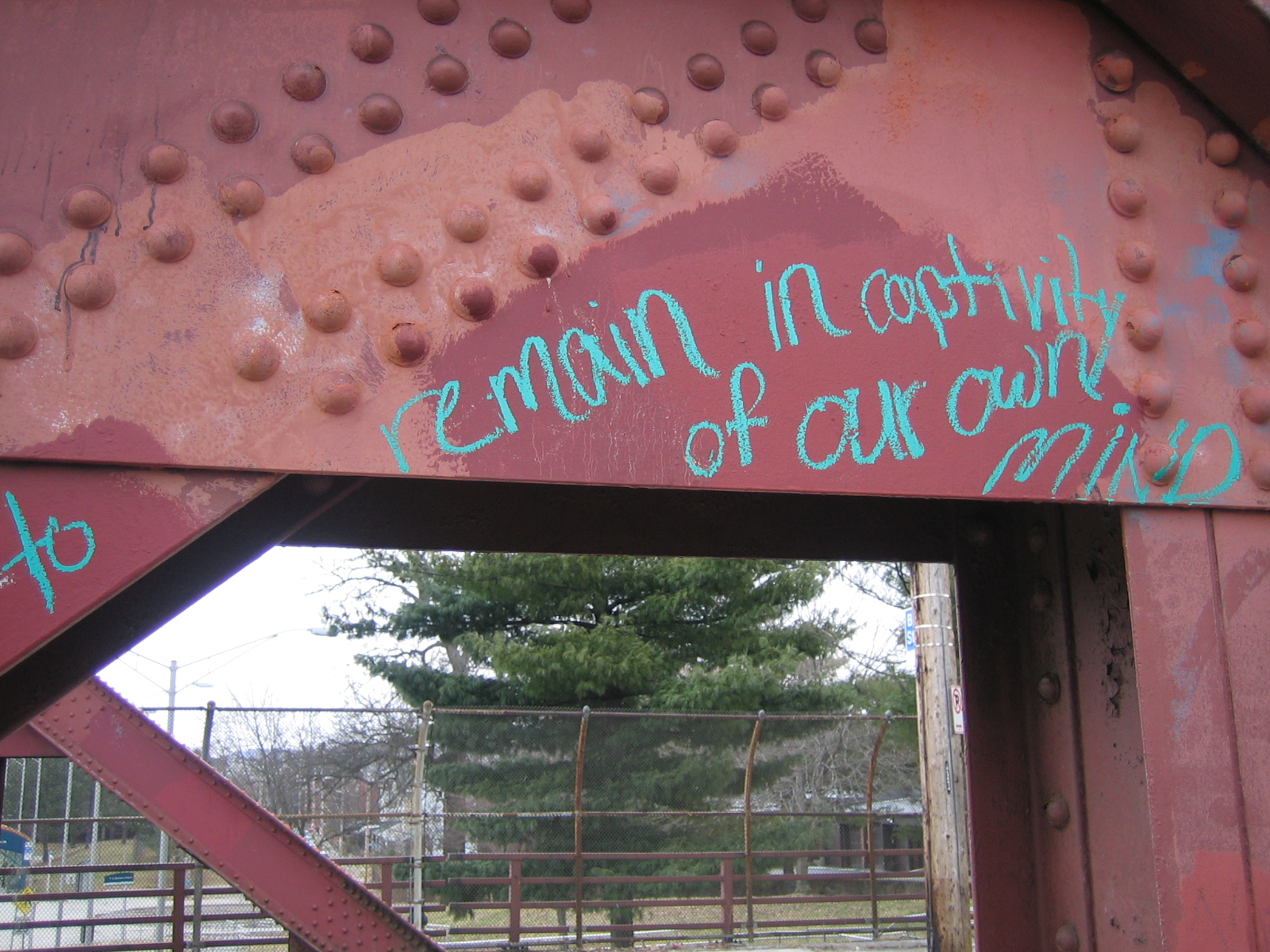
Another simply writes: