“…spamming is the project of leveraging information technology to exploit existing gatherings of attention.”
– Finn Brunton, “Introduction: The Shadow History of the Internet.”
Today, walking home from Crazy Mocha, I realized that I needed to check my mail, a task that often feels extraneous and arduous. I do not mean email here. As I gazed up at my front porch, I saw that my mailbox, my snail mail mailbox, was overflowing with junk mail to a point where the situation could no longer be ignored. Spam as it has existed through its email manifestations has also been called junk mail. There are filters and separate digital storage spaces that have developed to take care of this issue, to hide “junk” or “spam” from me, most of the time. However, I can’t escape the junk that goes to my snail mail “inbox.” Is snail mail an information technology? Is snail mail a medium? Is snail mail a genre or set of genres? It seems enabled by a variety of technologies and institutions, including print, the automobile, the plane, “The United States Postal Service” etc. Not to mention all of the various social, ideological, and historical developments which interacted with these technologies to form certain expectations about communication and the exchange of goods at both national and international scales. Somehow, along the way, junk mail became an inseparable component of mail in America, and this seems to have occurred before the widespread availability of personal computers.
So, despite the fact that “spam” or “junk” has a unique meaning in the digital age, I found myself wondering if this actually all starts with the computer. Brunton traces the evolution of spam through different stages in the history of the computer, but could we go back farther? Is “spam” made possible just because of some unique technology of the computer and the unique way people interact with and form communities online? Certainly, the volume of spam’s presence is heightened through the computer; some of the functional capabilities lead to new “genres” of junk, which became divorced from the concept of mail. “Clicking” on spam can lead to far worse results than reading through a letter from a credit card company. Or, at the very least, the turn-around is much faster, and some computer users seem less aware of the dangers and pitfalls within the new context. I am wondering if isolating spam within its most recent, digital manifestations, which are starting to evolve away from the concept of mail, is necessarily the only or most productive way to talk about this form of unwanted writing. Or, does the idea of “junk” and its ties to financial duping actually have a history that stretches back across a much longer historical continuum and acts through and with a variety of technologies?
Why has snail mail and its spam not vanished completely? Why are these print forms and technologies of delivery continuing to exist alongside their newer, digital counterparts? We still live in physical spaces, we still have mailboxes, and these kinds of papers, which hold their own kind of writing, continue to be delivered. Each day, I come home and have to check my mail. I know it will primarily be full of junk mail, but I have to sort through it lest I miss one of the few, rare and important deliveries, lest the post office stop delivering until I clean out the mail receptacle. I have to take this extra step, I have to check both kinds of mail. Do unwanted forms of writing always die as new technologies develop, or do they proliferate and become hybrid, present in new spaces and adjusting to these spaces, while still existing and working within the older spaces?
Here is some categorized collection of my junk mail from today, either through the postal service or “door-to-door spamming.” Note: I have never paid this much attention to my junk mail before:
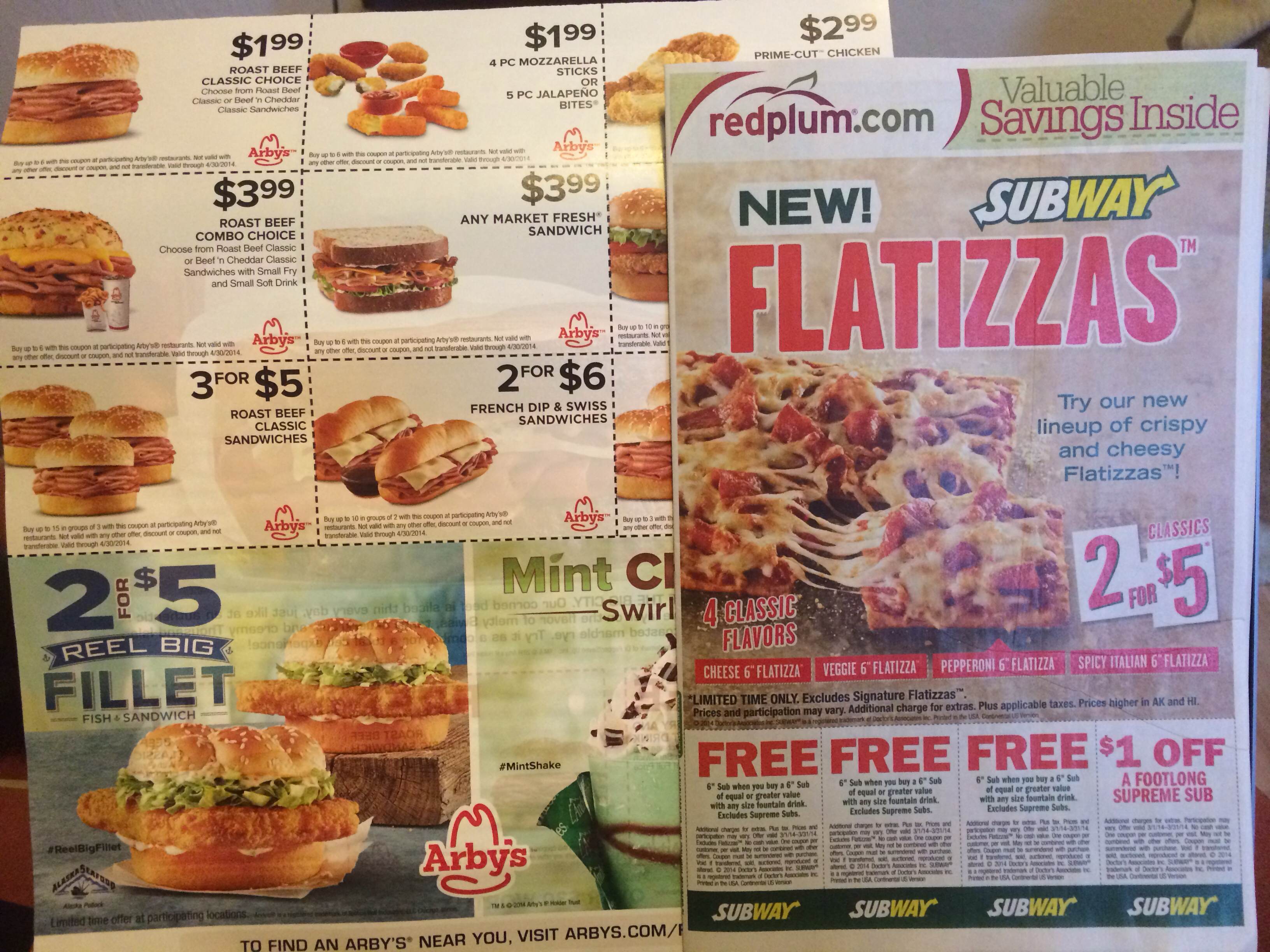
1) We have this first grouping, the least spammy of the snail mail spam because these actually provide the recipient with functional discounts, if the effort of selecting and cutting and/or tearing is undergone. These are…the coupon booklets. I personally do not know many people who use these on a regular basis, which leads me to believe that the classification of this as “junk” or otherwise has something to do with class and age bracket:
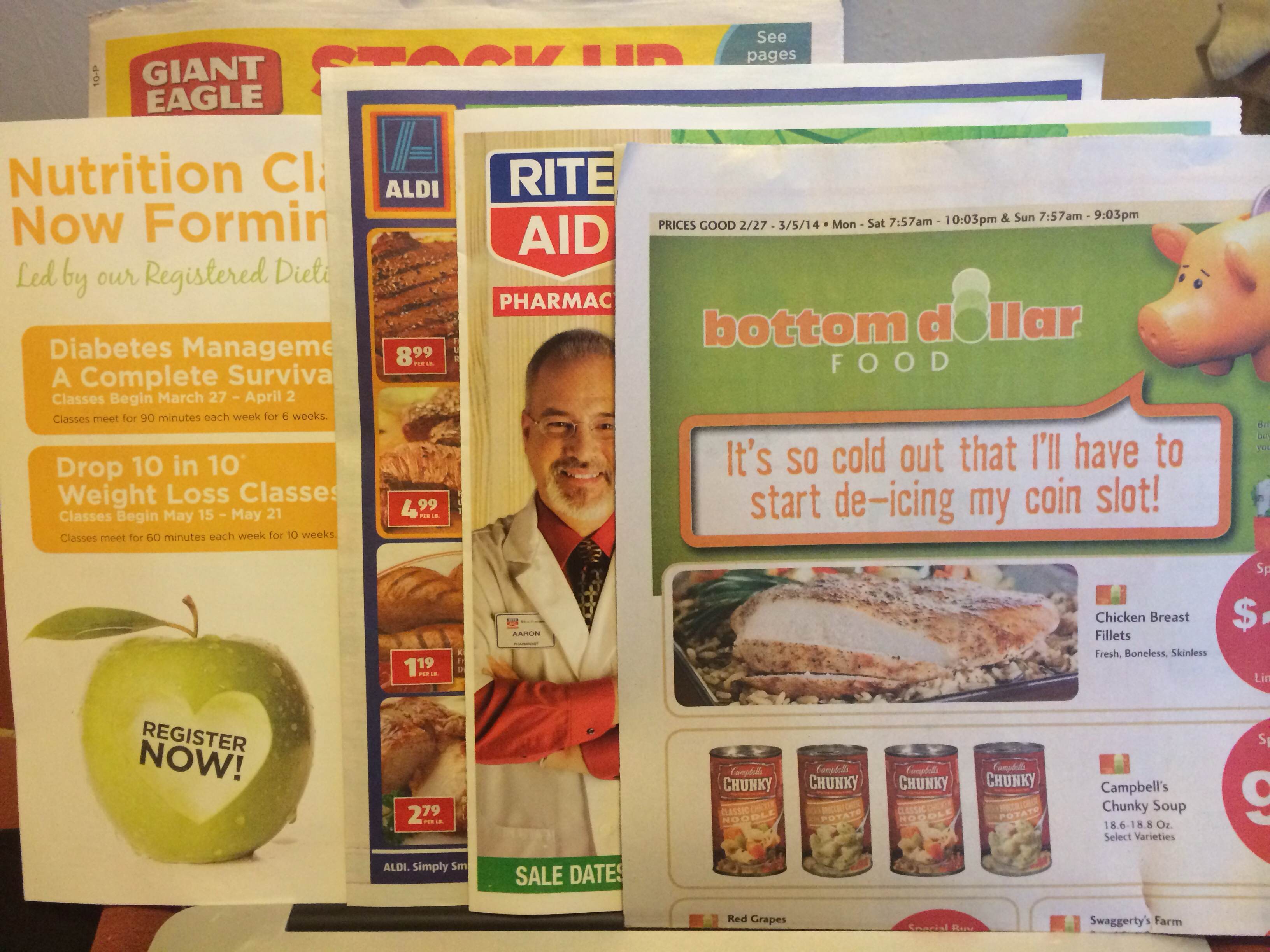
2) Next we have the pages of advertisements informing the recipient of deals going down in various stores and/or the low prices of items in certain stores more generally. In theory, this could be useful. However, this seems like a rather aggressive or invasive form of advertising because the low prices exist entirely apart from the writing. Bringing in your copy of the writing does not lead to the prices, like the coupon. Everyone gets the low prices, even if they didn’t receive the advertisement on their actual porch:
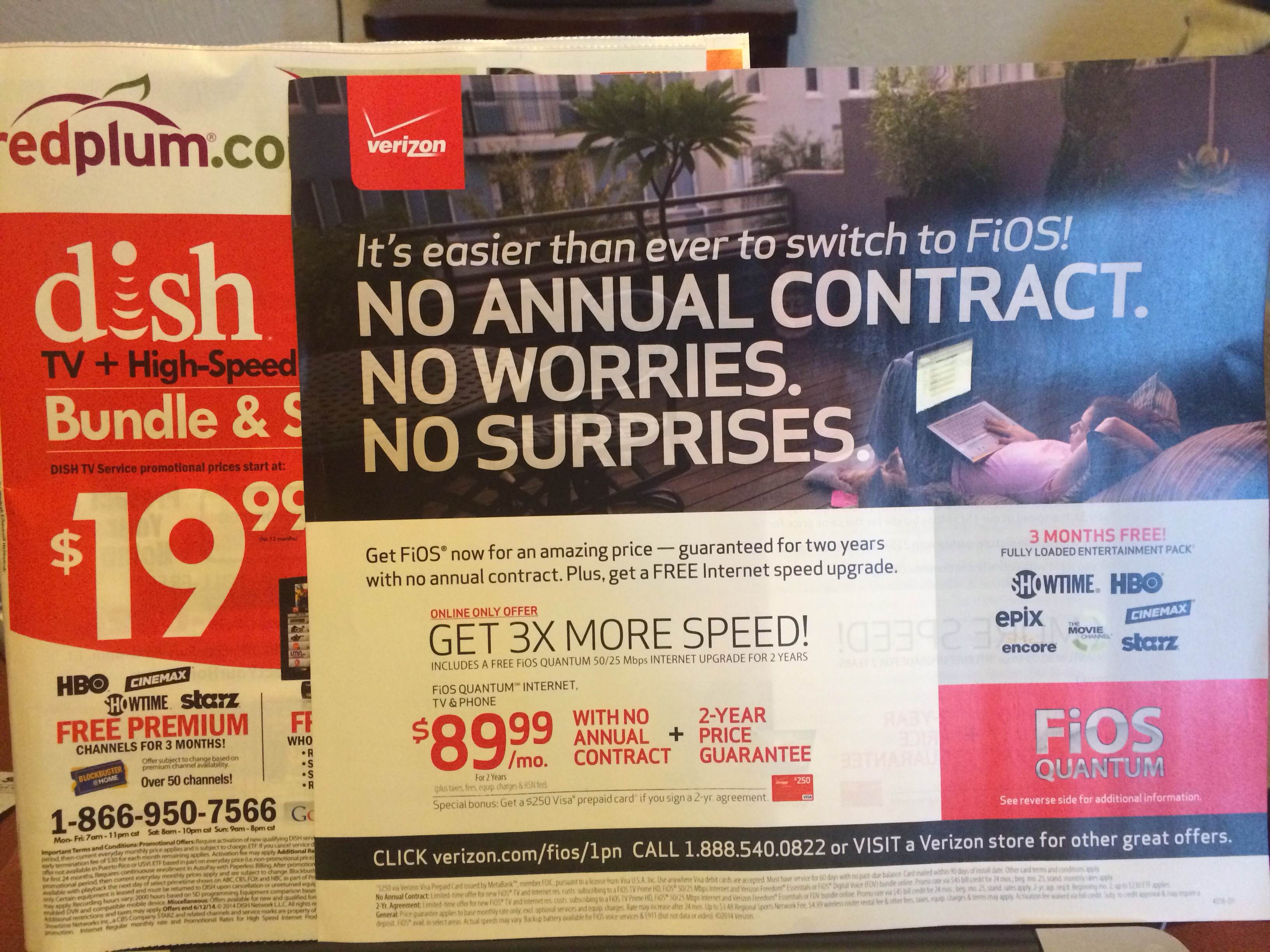
3) Next, we have various attempts from cable-related companies tempting you to drop your current service, which probably means they looked up what you have, and know you are a viable house to drop these at:
4) And, finally, the most annoying/insidious/unethical, the ones that come in envelopes and often remain unopened, cards, offers, or current ongoing “deals” from banks. This could just be a statement or something, but I usually don’t risk opening it. No picture because you could see my address.
This post has gotten rather long, so I’ll stop for now. Suffice it to say, these print items interact with “attention” in ways that seem similar and different to that of computer-based spam. I think the lineage/connections might be interesting to explore further.
