As usual, I turn to the OED for a definition/title of my blog post — and while I could have selected the verb of “file” we’re discussing this week, “to place documents on a file” (on? interesting, OED…), I realized the alternate definition of the verb is somehow also appropriate. While beautifully mismanaged piles of papers sit under my desk and in boxes, the digital file system I revisited for this week’s ‘signment has, arguably, less (and also, maybe more) “surface.” Organizational files, however, only give the semblance of perfect systems of arrangement. We all know when we pull up that file folder (or, at least if you pull up any of mine) that the documents within are out of order (whatever order might be logical), messy, wrinkled, coffee-stained… etc.
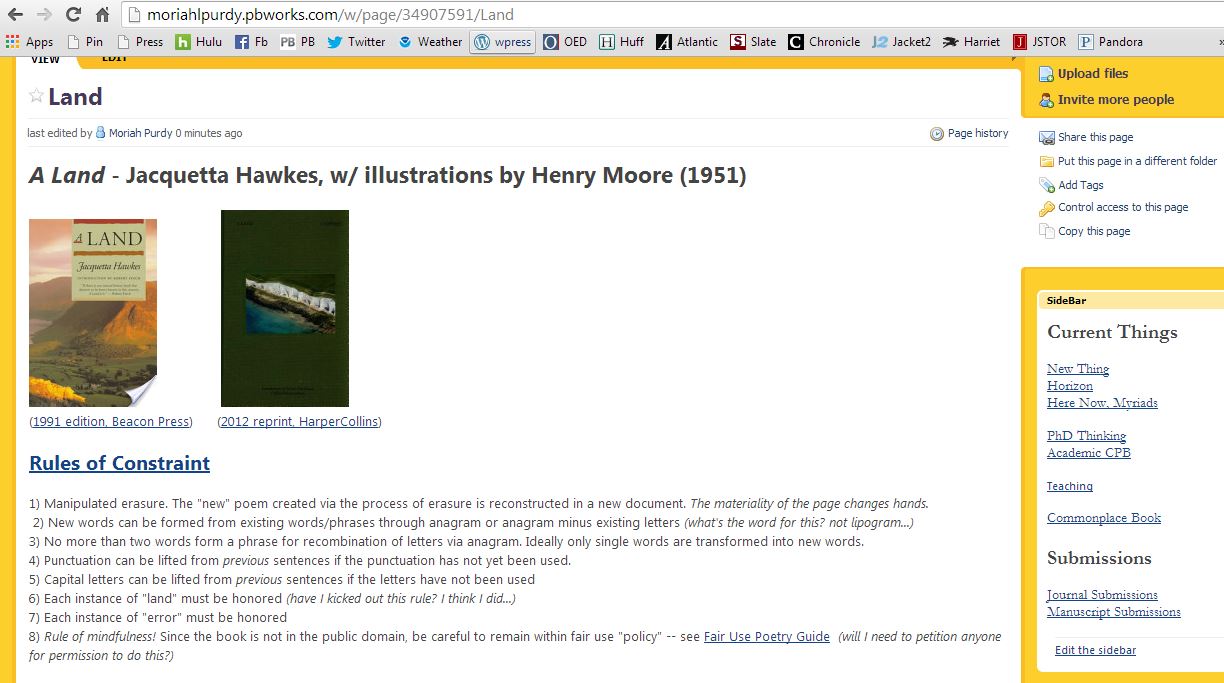
Organization is very important to me, though I’m not sure I’ve ever thought of the stories my personal file systems tell of me until this week. I took the opportunity of this week’s ‘signment to reorganize my digital file system for a current poetic project (one I’ve been slowly plugging away at for around four years now). I keep my files organized in a personal wiki space via PBWORKS. I like the freedom the format provides me — to hyperlink file names to files, and also to annotate in the same space. It seems more useful to me than a list of files in a file folder on my computer. Plus it keeps the files “safe” in the cloud. The project is an erasure of Jacquetta Hawke’s A Land. Much like my West Elm erasure, except the results of the erasure are reproduced in a new Word document. The change in materiality also offers some affordances, like the ability to create new words of old ones via anagramatic methods, or lift capital letters and punctuation from other places. Here are my constraints:
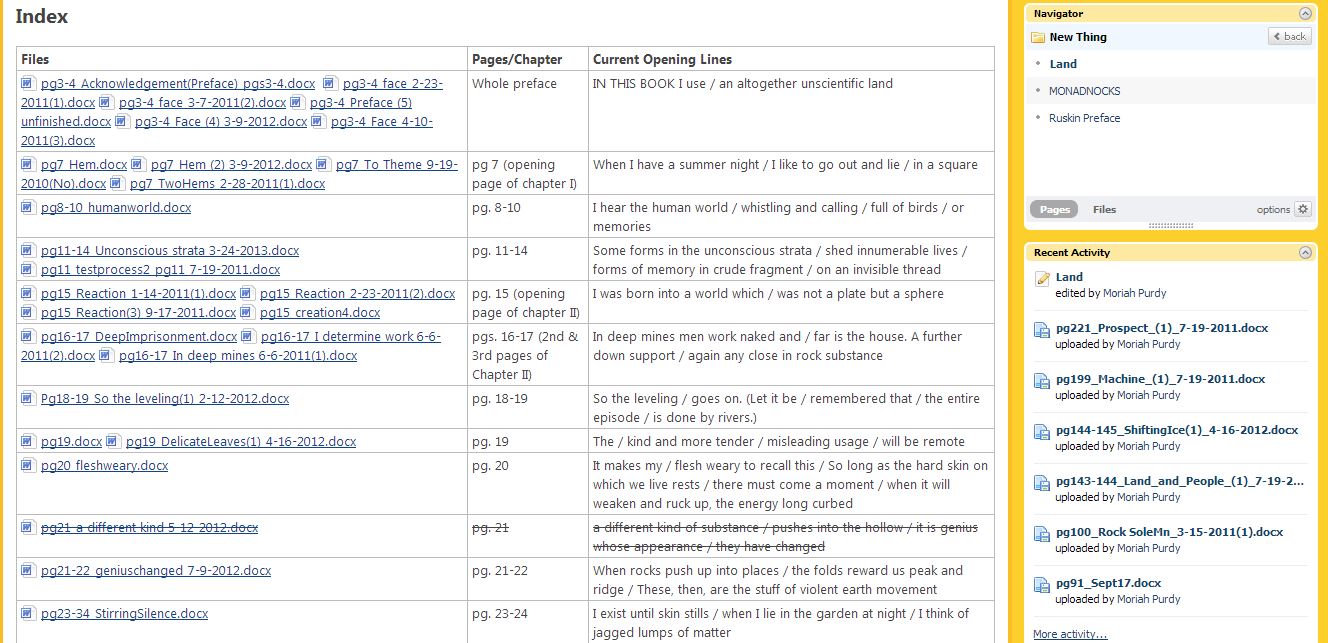
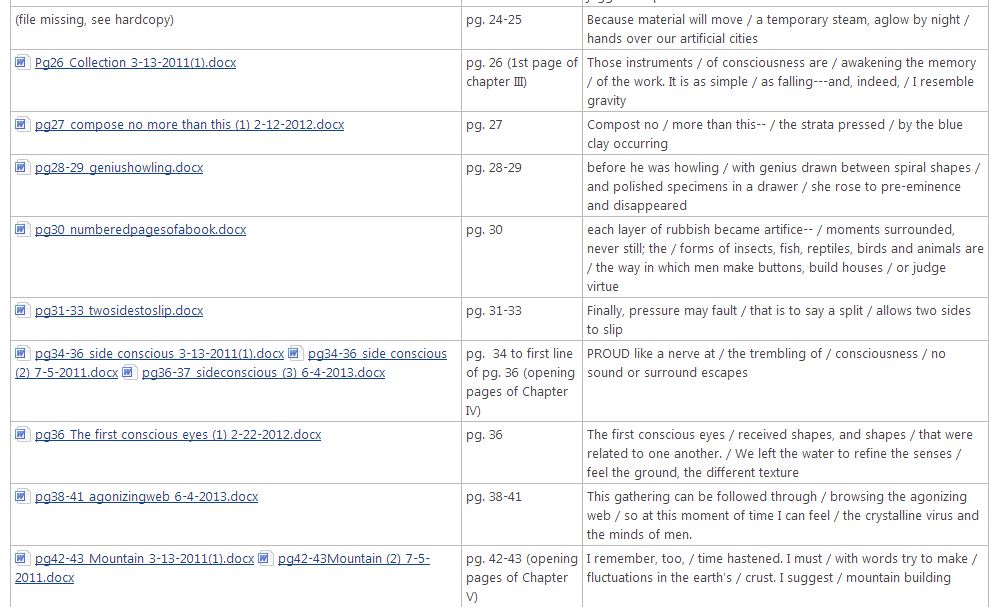
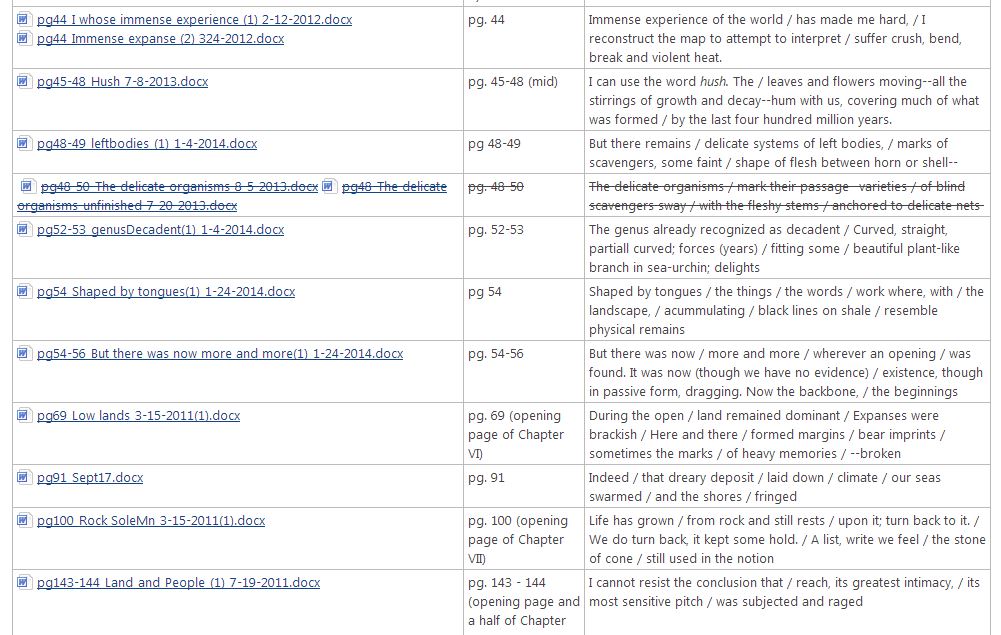
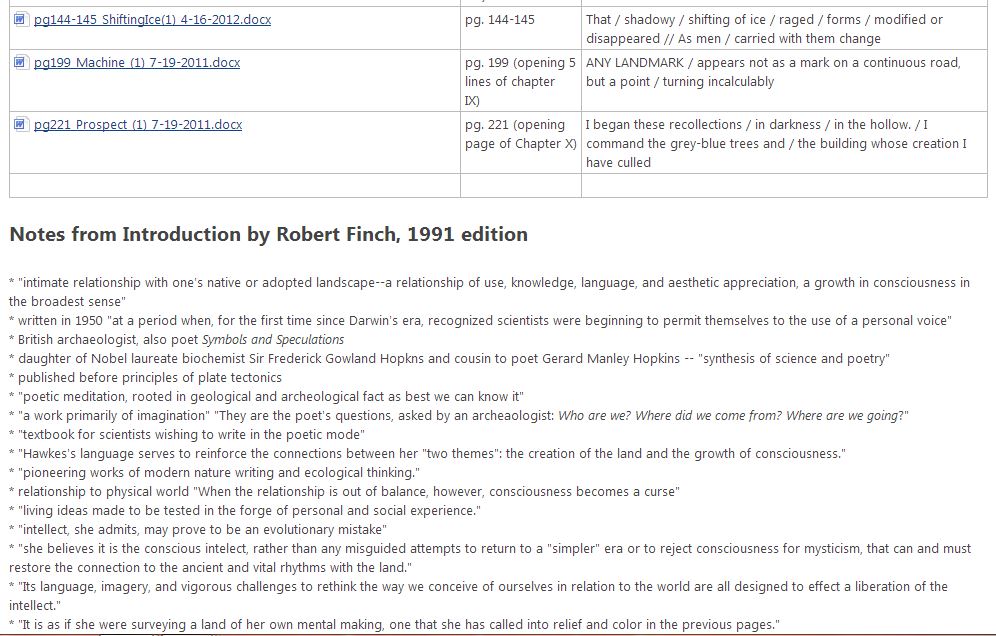
The results, however, are difficult to name and file, because the text is constantly shifting. You can see from the dates on my file names in the images below that I first began the erasure from the different chapter beginnings, and that the earlier poems have been revised more than the rest. Somewhere in the last year or so I gave up revisions for the sake of “progress,” changing my methods from the slow focused revision process I’ve typically employed to a desire to simply “get it done,” and then reconsider. As I’m now working through the book chronologically (I’m roughl 60 pages in…) I took this opportunity of the ‘signment to go back and rename my files first with the page numbers of the pages I erased for a given poem. This process was time-consuming. And I discovered digital files had gone missing for versions I had in hard-copy (usually when I’d made choices to usurp one stretch of pages with a slightly different stretch, thereby absorbing poems into others…).
It’s through these elements that my anxiety over this project is made material. While structured and organized, the poems usurped by others, the semi-random selection of pages to erase first, the obsessively dated files… it demonstrates that I haven’t yet found my focus with the project. The rules of constraints appear confident and assertive, yet (in the additive italics, my inner voice externalized) it is clear I still have some questions, or have since dropped my own rules. I’d be curious to hear how others might read this archive were I not to be telling its story. Perhaps a more generous narrative. Perhaps a more critical one.