In the computer game Civilization V, you start the game as the leader of one of many civilizations all positioned at the beginning of agriculture, and you have to lead this civilization throughout the industrial age and the modern era and all that. Part of this process involves researching technologies. And one of the technologies that you can research is Writing.
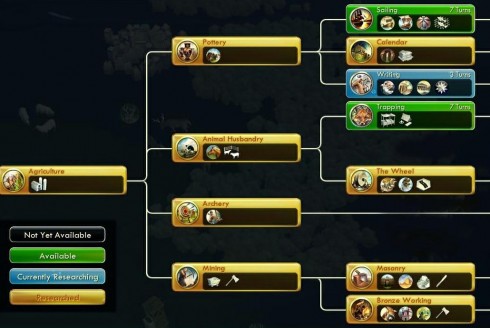
One of the main benefits that researching writing allows you is the ability to sign open border agreements with neighboring leaders. These agreements, in addition to granting each signee free passage through the others’ country, allows you, if you produce more “great works” of art than your opponent, to then force your culture down the throats of the leader who signed the treaty with you. If you do this hardcore enough, you can come away with a “cultural victory” at the end of the game.
Basically, cultural hegemony=win the game. It’s pretty fun to take the Aztecs and spread Aztec culture everywhere. I imagine sacrifices taking place in front of Parliament and laugh sadistically. ^_^
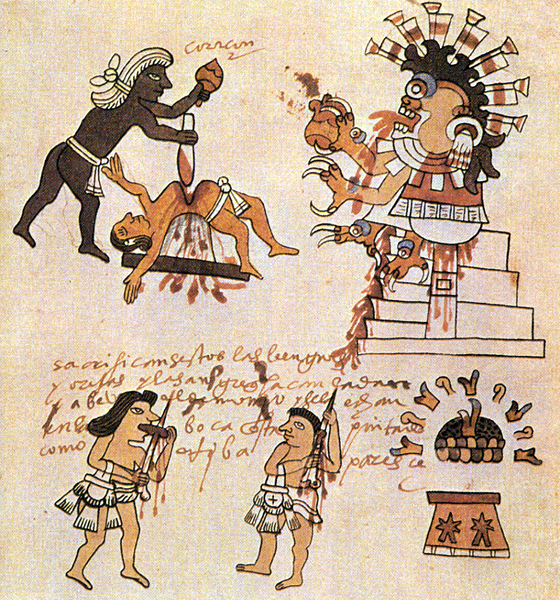
Anyway, the reason I bring this up is because writing in Civ, and the open borders agreement, is simply the first step toward a cultural victory: eventually you research the printing press, and mass media communications become available, and you have to continue to invest in these things to push your culture onto others.
But even before the materiality of the printing press comes into play, the materiality of free movement between various territories must be in place.
Annette, the first day of class, shared her shoes as the materiality of her writing. And while this is a very personal connection, I think it also has these broader political connections as well: in which way does writing walk across borders?
If we are to consider the body as a materiality of writing, we must also consider the place in which the body is located, the place the body has been born, the place through which the body travels. I think of the long line to get from Tijuana to San Diego — a two to three hour process, all days of the week. And how easy it is to simply walk into Tijuana. A revolving iron gate that moves only in one direction. This movement is material. If bodies are writing, then this is more than just a metaphor. If we are to consider the body as materiality, we must consider the ways that the body is limited, or imprisoned, we must consider the ways the body is seen by others, the racialized body, the gendered body.

On Angel Island, there are poems that Chinese immigrants carved into the walls. Walls and walls of poems, people expressing feelings of betrayal, people longing to return to China, longing to enter America, to see their families, to be treated with dignity, respect. These poems are painted over in white, erased from ever having existed. And on top of this erasure, more poetry, more longing.
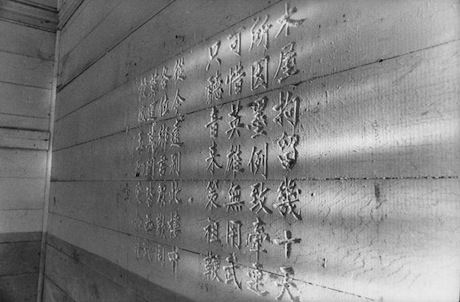
^From Poetry Foundation.
In the American South, if a slave were ever caught reading or writing, they would be whipped, beaten. Today, there are young girls who have to check their well for poison each day before school, because the society they live in does not believe that women should read or write, and there are those that will use violence to reinforce their privilege.
We are incredibly privileged to be able to speak freely about whether we enjoy writing with a computer or by hand. We must remember this fact in any discussion of materiality, in any discussion of bodies.
In class, I cautioned against our exclusion of certain kinds of writing as being defined as writing. I believe that this exclusion is dangerous. This is especially apparent in ESL classes, where the ability to write in one’s own language is not considered literacy, and no aid is given to student who might want to pursue this task. I believe that if you can write in one language, you also possess the skills you need to translate this writing to another language. In many cases, these two languages are not even that distinct in the child’s mind.
My mother’s friend has a four-year-old daughter. Sometimes, when asked to speak English, she simply repeats the same phrase in Spanish, but v e r y s l o w l y. While working at an after-school program, I often had kids talking to me in both English and Spanish, without even noticing that they were speaking in two languages: Mr. K, I have an ache in my panza. So, if literacy is the goal, perhaps the goal should not be writing and reading English, first and foremost, but writing and reading, period.
(Perhaps the definition of what writing is is not ours to define. Perhaps that definition belongs to those who feel they have had writing taken away from them. Or, at least, our definition must remain conscious of those that do not have access to this privilege. To say that those without a written language can write feels a little oppressive to me.)
My mom currently works for our school district as a researcher. They’ve started to implement this push for literacy at all levels of education. They’ve been trying to figure out how to help underperforming kids learn to read better, or learn to read at all. They’ve been trying to figure out how to help kids stuck in ESL classes, trying to “fix” all of these things. And they’re been working especially hard to get parents involved, asking everyone to make their kids read for thirty minutes every night.

Here is a stock photo of a racially ambiguous kid reading.
But this must be incredibly difficult if the texts your children are assigned are not even produced in the same cultural contexts, let alone the language context, that you are familiar with.
I think it’s important to see the production of texts as taught in school as being this continuing legacy of the printing press — the stakes here are that a 21st century curriculum should not merely relocate this legacy to a digital environment, but thoroughly innovate the way in which texts in school are consumed, given the broad scope of available “texts” on the Internet (yes, the Internet is mostly colonized by straight white English-speaking men, but, you know, a skilled Interneter should be able to circumvent these problems).
In this way, the consumption of texts can be better fitted to each classroom’s particular cultural context, with the aim of enabling students to produce their own texts.
(Why do we focus so much on reading as literacy? Why not writing?)
In my classes that I teach at Pitt, and in most of the writing classes I’ve taken at the undergrad and graduate level, the emphasis is always on reading to help you write better. In secondary school, the focus is always that you have to learn to write to communicate what it is that you read. Communicate your level of consumption. And only those who can demonstrate an adequate level of consumption are allowed to then, finally, graduate and join the conversation.
This really is what I’ve been thinking about most in these readings: text as cultural capital, and the production and consumption of, as well as the body as positioned in society, the body in border spaces, and the transmission of body-as-materiality and texts across borders.
