Authentic (adj. or n.): Entitled to acceptance or belief, as being in accordance with fact, or as stating fact; reliable, trustworthy, of established credit.

“[I]f publishers don’t seem to fit into the other-than-codex world of job printing, neither exactly do readers. Who ever really reads receipts, bills, tickets, bonds, or certificates? …Notably, whatever reading is entailed by genres like bills of lading and stock transfers, it is not reading that has anything to do with the sort of readerly subjectivity that came to such especial prominence in the course of later eighteenth and nineteenth centures, the subjectivities of literature in general and the novel in particular” ~ Lisa Gitelman, “Print Culture (Other than Codex)

“A document–be it a book or a cash register receipt–is something that preserves someone’s thoughts or ideas, or some bit of information that would otherwise be carried away by the river of time” ~ David Levy, “Scrolling Forward: Making Sense of Documents in the Digital Age”

As seems to be the case in this course, when we are tasked with identifying a material to compose or read I have to sit on the task for several days before I decide what to write on. For this task of “reading” a non-codex document I went through my junk mail, browsed my email spam folder, and pulled out receipts from my wallet… but I couldn’t get Levy’s insistence on the stories these documents tell out of my head. I couldn’t help but consider the way such documents gather personal stories that makes these otherwise ephemeral or inconsequential documents meaningful in someone’s life. I couldn’t help but think of the ways in which such documents can actually be read subjectively, the way Gitelman suggests they cannot. It all depends on the story being told, and who is telling it — the object itself, or the person whose lived experiences can illuminate its otherwise more mundane details?

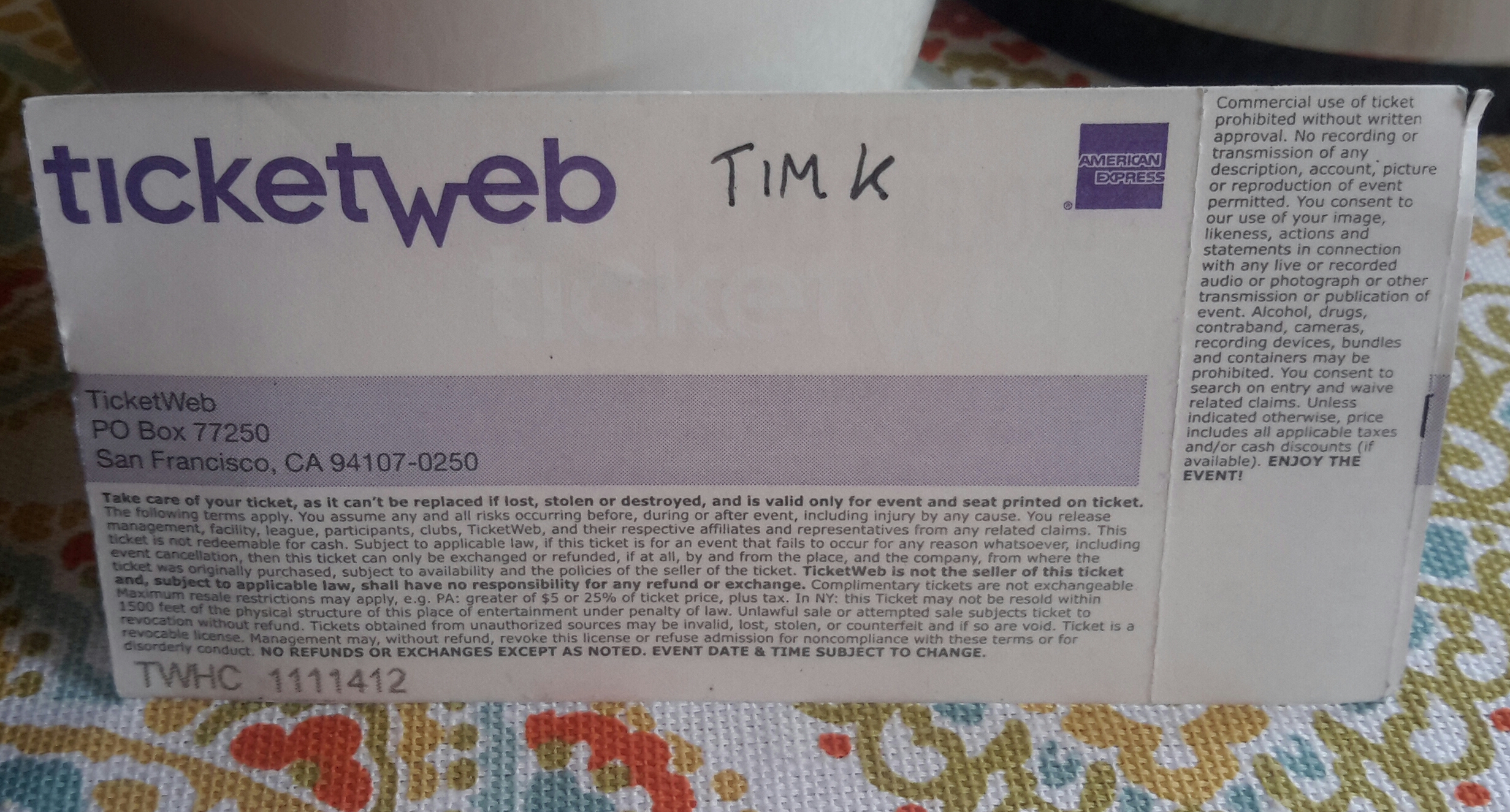
In short, I was wondering about the distinctions between our “precious” materials and these other documents, as what determines “precious” is less about the material itself but the story behind it. So when I was riffling through my wallet for forgotten documents I came across a ticket stub from show on November 22, 2013. Here are images of the ticket:
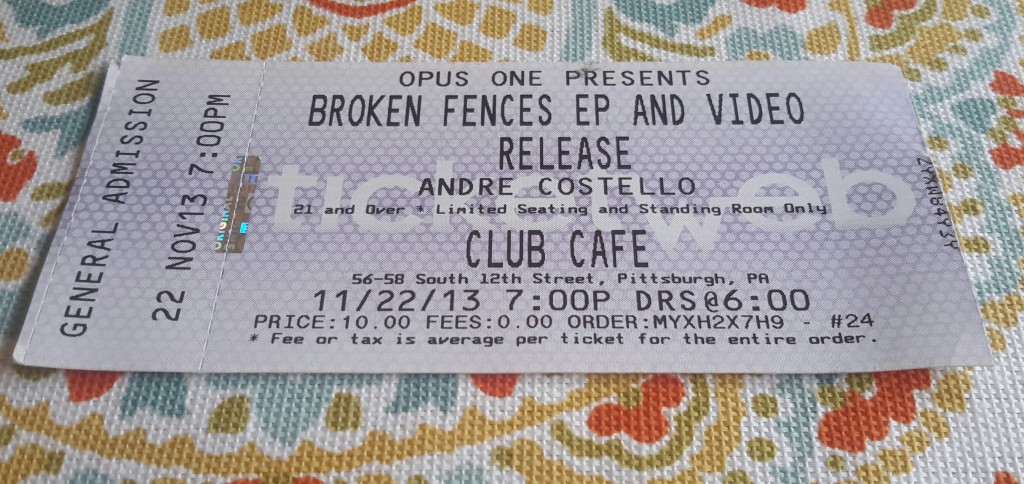
2014-02-04 15.22.28

2014-02-04 15.21.25

There are a lot of details on the ticket that certify it as authentic. Presumably the various watermarks and codes on the ticket all perform this task as well as identify something of the purchase and publication of the ticket. These materials simultaneously certify the document as legitimate and add legitimacy to the event and the venue. I’ve been to plenty of shows where they simply ask for your money and stamp your hand, but this was not that kind of show. The venue, however, is small and mostly standing room only (as printed on the ticket, seating is limited), and fits less than a hundred people, but you wouldn’t know it just from looking at this document. Because of this, the questions you can ask of it seem more interesting. Who is this band, and who is presenting them? What is this venue like, beyond its limited seating and over-21 age requirement?

There is only two indicators of the personal narrative attached to this particular ticket. One is the wear and tear on its corners, which is evidence of it sitting in my wallet for an extended period of time. The second indicator is the name “Tim K” on the back of the ticket. With a little detective work, one could ask the club owners who this person could be. It might be discovered, then, that this is how they hold tickets for will-call, and it must have been someone who had a ticket set aside for him. It is not clear, however, that there were two tickets set aside under this name, nor is it clear that it was a member of the band that was playing who asked for the ticket to be set aside in this name.

While it might seem, at first, that Tim (my date) and I are the only ones who could provide the “authentic” story of this ticket, these details could be sussed out with some detective work. The fact that neither of us purchased the tickets online or with a credit card limits the so-called “paper trail” (trails of authenticating documents, I might add), but if one were to discover who this person was that the ticket was set aside for, that there were indeed two tickets reserved, etc. etc. etc. one might get closer. But its subjective meaning for me (an artifact from a particularly fun date night early in my current relationship) is quite far down the line of these authenticating facts. The fuller narrative cannot be determined (though it can be speculated) just from the document at hand.

I suppose this is all to suggest that the stories our non-codex documents tell is not mere authenticating facts of the perhaps banal habits of everday life (though, they might also be such), but their stories also have subjective registers to them, and that subjectivity happens as soon as a person is attached to the document. It becomes an event on the timeline of someone’s life.
Posted in Uncategorized | Comments Off on Authentic (adj. or n.): Entitled to acceptance or belief, as being in accordance with fact, or as stating fact; reliable, trustworthy, of established credit.

Minor printing for minority cultures

As I was reading Jessica Isaac’s piece about adolescent editors and “editresses,” I found myself experiencing some very weird déjà vu. And then I realized what I was thinking of.

DSC04557

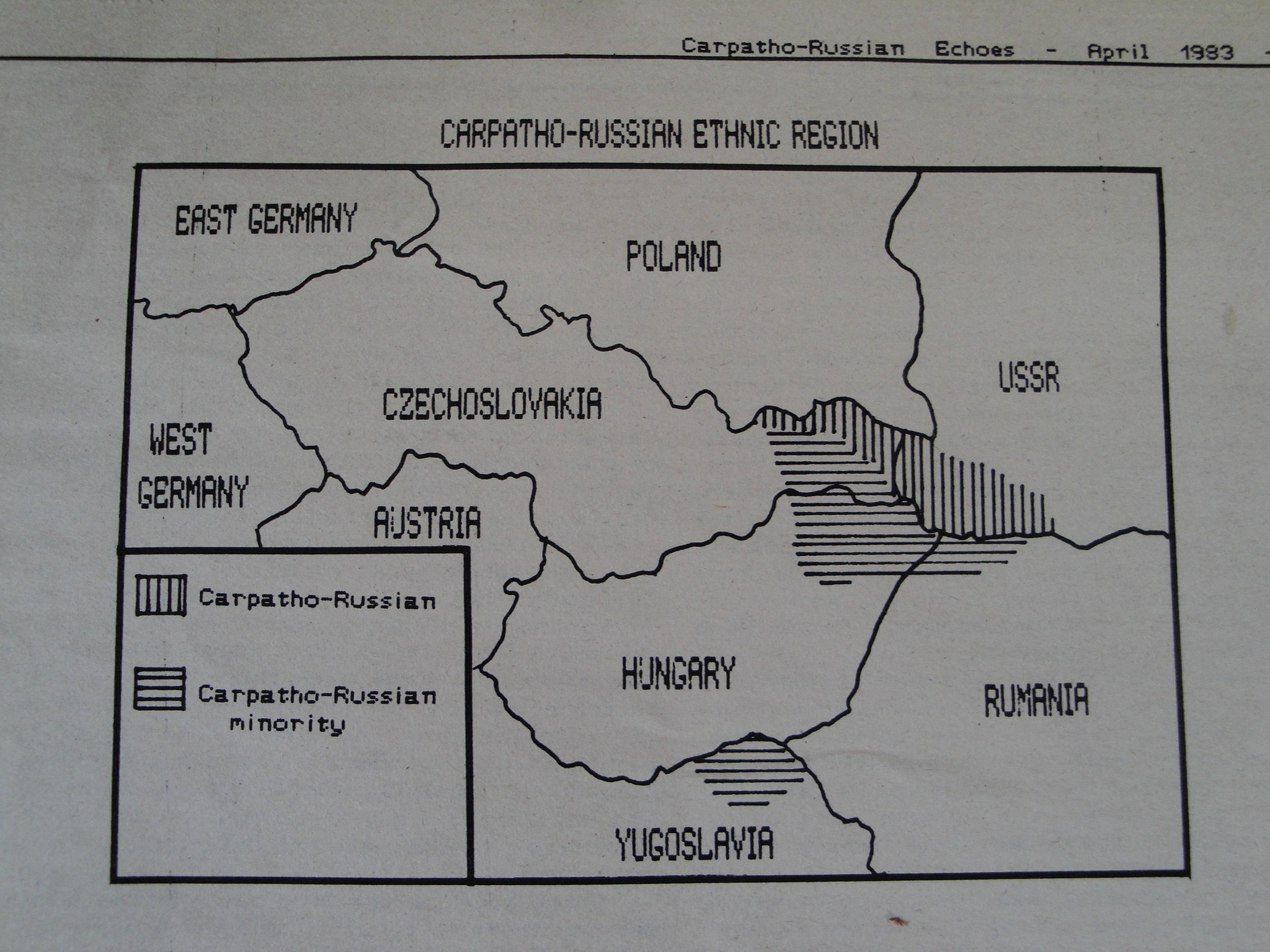
This is a map from Carpatho-Russian Echoes, an independent paper that my dad, uncle, and grandfather published for about ten years. It began around 1983, the year of this issue, in South Florida, and ended when I was too young to remember much about it.

So here’s the thing: as you might notice from the map, there is no country called Carpatho-Russia. It’s not even contained within what is present-day Russia. (Check those vintage country names: East AND West Germany, Yugoslavia, the USSR.) The reason for that is that Carpatho-Russians are a self-identified ethnic group never formally acknowledged by the Russian Empire or the countries that followed it. It’s a complicated history. I made a Powerpoint about it once.

My own family, by the way, is Carpatho-Russian – if you ask my dad. Or Ukrainian, if you ask me. And in our respective systems of logic, we’re both right. That’s how these three men ended up writing and editing a decade’s worth of articles on the subject, printed on my dad’s dot-matrix printer on rolls of computer paper. The front page was usually a poem or hymn, printed in Cyrillic, transliterated English, and translated English. My dad did the translation. He also made the font. And at the height of CRE‘s run, about three thousand people were reading.

I don’t remember the context of this map; I took the photo a few years ago, when I was trying to explain part of this whole story to someone. So let’s treat it as a found object, like Levy’s receipt (never mind my own connection to its authors). Here’s a map of a semi-imaginary country, printed on smooth, plant-based paper that has yellowed more significantly than this photo shows – a recently-made thing. When I say “printed,” I mean that the letters were inked on by impact, sort of like a typewriter, except that the shapes of the letters and countries were stored in a dot matrix. Digital. So it isn’t just the ink and the paper, it’s also the computer that was programmed to reproduce the contours of Romania and then translate this into an electrical impulse that a machine could understand.

And here’s another layer: the men who did the printing were doing their best to preserve a history that had existed in the Old World but had fallen victim to the kind of things that befall the documents of peasants. Fire, mostly. My family was serfs, and serfs don’t really have book-preservation techniques. You need capital for that.

Also, the audience? Mostly also descendants of serfs, who were generally not literate or were, at best, only literate in the most marginal way. The poems and hymns mostly survived through oral transmission until they made it to my dad’s office in 1983.

There’s a lot to say about that, not least because the politics are still incredibly touchy. But then, the politics of printing are always touchy. I’m thinking of Libbie Adams and her affidavits, or the shots fired by Truax and Pynes. I’m stopping here, though, just to avoid writing a novel. So here’s my contribution to our minor printing display: proof that history isn’t just written by the victors, it’s rewritten by the printers.

Posted in Uncategorized | Comments Off on Minor printing for minority cultures

Vernacular Documents.

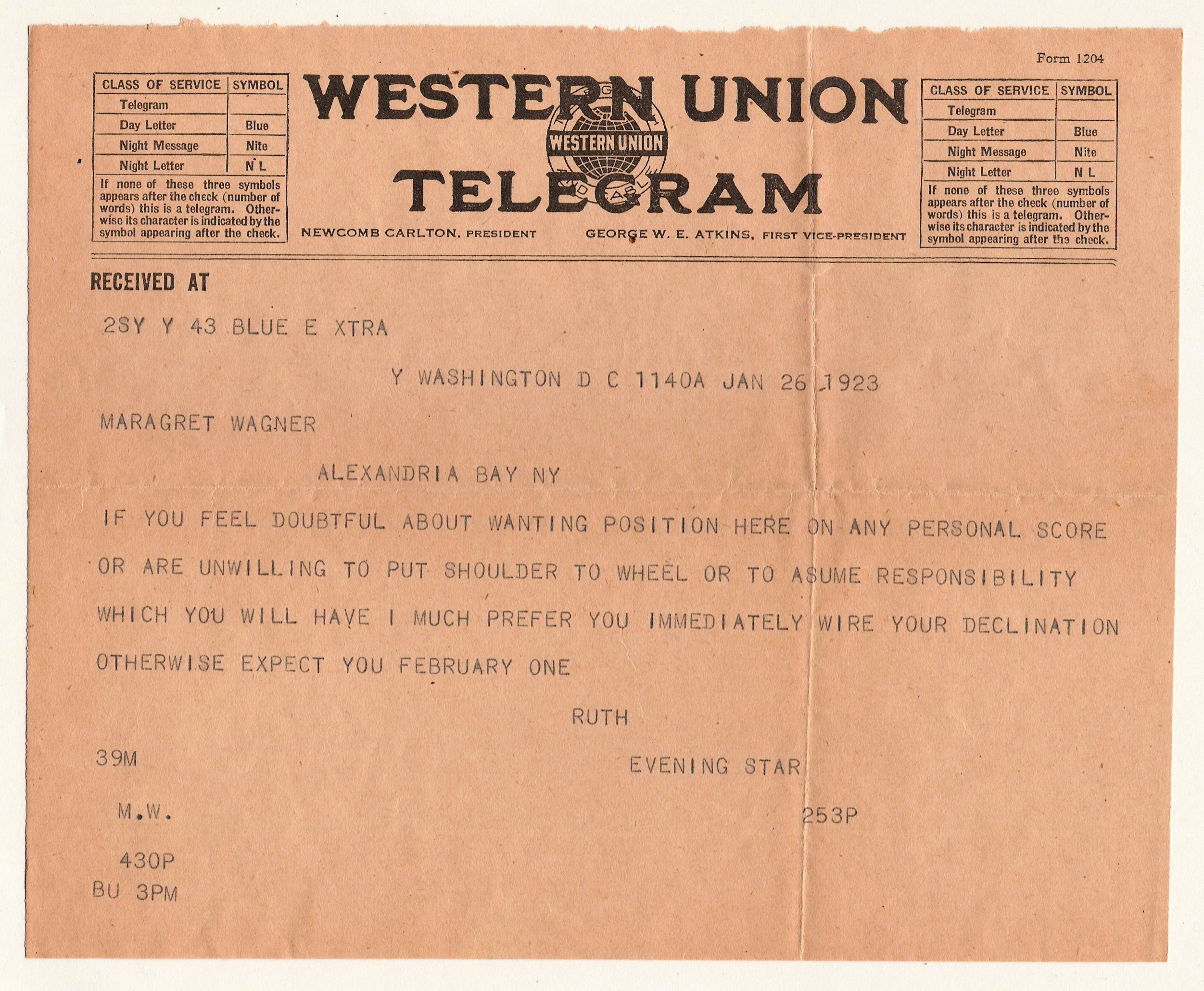
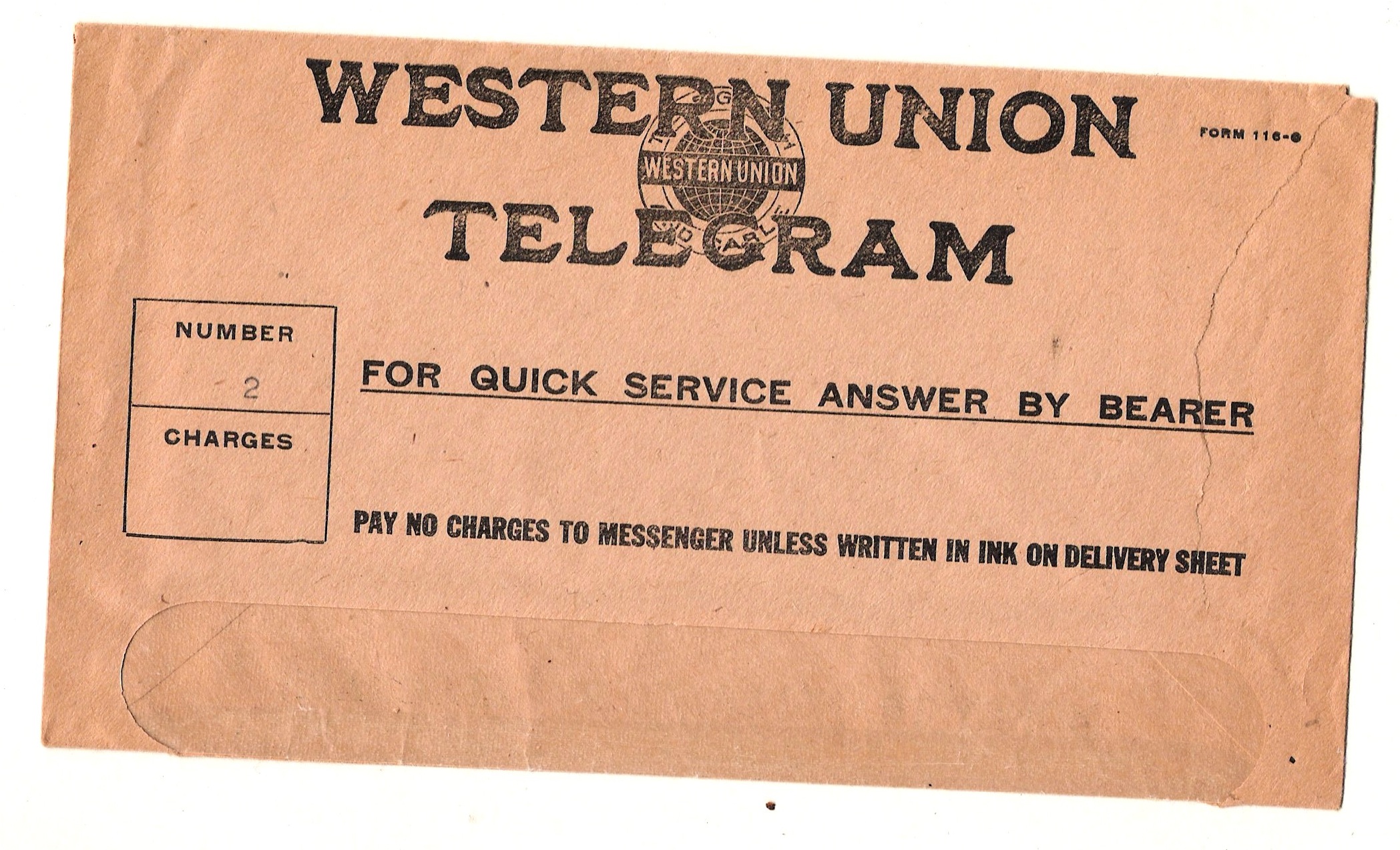
Over the summer I acquired a black tin cash box of my paternal great-grandmother’s effects—interesting word—that had been sitting under a pile of scrapbooks in a closet in my grandparents’ house for decades.  At some point in the box’s life, someone had pried open its lock, so that the lip of its lid protrudes, misshapen.  The box houses a collection of what Gitelman calls “vernacular documents”: legal papers, newspaper clippings, cards, various scrips, bills, insurance correspondence, a handwritten note about a woman of ill-repute, and, among many other things, this Western Union Telegram:

Evening Star Telegram Envelope Evening Star Telegram

Well, actually—and to my disappointment—it’s not a telegram.  In the upper corners of the sheet (which is hand torn at the top) there are boxes indicating “class of service” and corresponding “symbol”; “blue,” seen in the first line of the message after the number 43—what the box calls the “check (number of words)”—indicates that this is a Day Letter, rather than a telegram.  If instead there had been the word “nite,” this would identify the text as a Night Message.  I like to think that the choice to use “blue” for Day Letter, rather than “day” or “d l”—akin to the symbol for Night Letter—has something to do with the daytime sky, but I imagine a little research, which I have not done yet, would reveal otherwise.  (Also: the difference between a message and a letter?  Are messages strictly nighttime things?)

As for the text, it has many additional symbols—letters, numbers—which I can’t make sense of without researching the format of the Western Union Day Letter.  I can tell you, however, that my great-grandmother’s name is spelled wrong—both first and last—and that the Evening Star was a now-defunct DC newspaper.  But Margaret wasn’t a journalist—she was a dental hygienist, and the Evening Star apparently hired her for in-house healthcare.  She did go to Washington and was there for two or so years; at some point she met my great-grandfather, a dentist, in New York City, married and left her job, and had her only baby around thirty.  But this is where the history grows dark: they divorced when my grandfather was a couple years old, and to this day, he’s not very keen on talking about Carleton.  Margaret died of liver cancer at fifty, and I wonder how much anyone really knew of the life she lived in her twenties, the one evidenced by these documents.  Certainly no one still alive knows much or is willing to say much at all.

If you feel doubtful about wanting position here on any personal score or are unwilling to put shoulder to wheel or to asume responsibility which you will have….  I can’t comprehend the tone of this letter.  That is, I’ve read it several times now, and each time I still feel a visceral response to this defensive opening, and I’m still surprised when it ends with an ambivalent job offer.  It’s an offer with admonishment, and part of that admonishment is delivered through the curt style of the form: there’s so much to be said for the warmth that punctuation and pronouns can lend to tone.  But phrases like unwilling to put shoulder to wheel remain assumptive to me—is it that Margaret’s a woman?  And a woman who is not local, but lives in a small town 500 miles north of Washington?  Does the tone, the idiom, become stranger when one realizes the sender is also a woman?  I read this Day Letter, and I feel entirely outside this genre of communication, its demands upon professional etiquette and business courtesy.

Perhaps, also, it’s the way the Day Letter echoes with stories that, in January 1923, haven’t happened yet.  Unwilling to put shoulder to wheel or to asume responsibility is language that bears the same assumptions as legal correspondence from the 1930s regarding Carleton’s unwillingness—and, in fact, his utter silence regarding requests—to provide financial support for my grandfather’s “maintenance” following the divorce.

Gitelman defines artifacts that are “other than codex” as “material experienced (in the moment) and then associated (in hindsight) with impermanence or ephemerality rather than with permanence or preservation.”  She goes on: “Noncodex print artifacts are more transitory than they are archival, one might say, more transactional than accumulative, and the meanings that they embody and convey are thus more accelerative than inertial” (187).  Perhaps the Western Union Day Letter is a richer, more storied, more historical, example of the ephemera that fill Margaret’s box, but what I love about both this and the pale pink banking stubs buried somewhere in there, is the nature of their existence and accumulation: that, despite the ephemerality inherent in their forms, their transactional purposes, someone saved them and they are, in a sense, archived.  As an assemblage they lend themselves to the construction of a narrative, but this narrative renders itself in very different ways than the ones we so often see in codices.

And yet I keep finding myself treating the box like it is a codex, like its contents exist in bound order, trying to hold the layers of artifacts in place as I thumb through in an effort to preserve their order as I found them.  I assume that no one’s rummaged through the box since Margaret, though this probably isn’t true.  I can’t help thinking it’s the design imparted by her hands that’s ephemeral; it’s traces like these that are so difficult to preserve.

Posted in Uncategorized | Comments Off on Vernacular Documents.

Zines

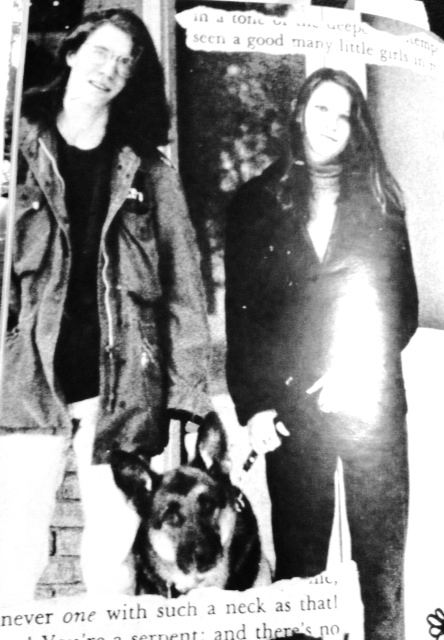
In the Nineties Kinkos was actually a cool place to hang out– like, every slightly punk photo-47rock girl in Minneapolis had a crush on someone who worked at Kinkos. They were open twenty-four hours and we’d go in late at night, make our fliers or whatever, maybe if they really liked us, they’d give us a good deal on color copies (which were a big deal back then).  Anyway, I never made a zine, but I think it’s fair to say that my aesthetic was zine-like, as illustrated by the image on the left, my high school senior page.  You print the photo as high contrast as possible.  Then you photocopy it, glue some words on it (here, torn from Alice in Wonderland) and photocopy it again and again.

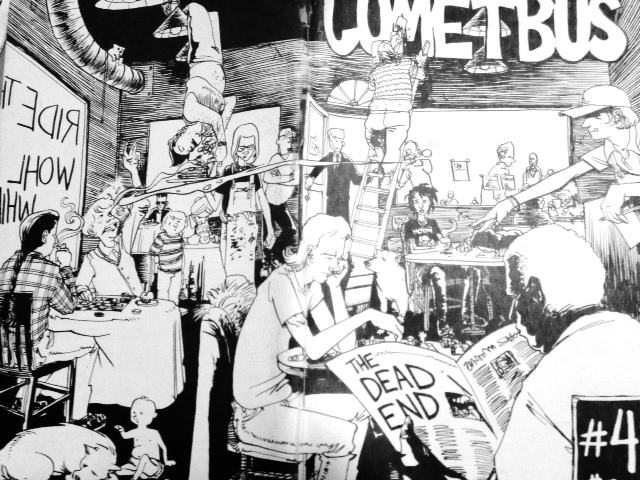
Anyway, a few years after that high school yearbook page, I’d dropped out of college and had moved to Minneapolis and opened a 24 hour collective coffee shop.  By then the Zine thing was in such full swing it was almost not cool anymore.  Almost. But there was this guy named Aaron Cometbus who would hop trains and write zines about the places he went.  When he wrote a zine about our coffee shop (called, in real life The Hard Times Cafe, but in the zine, called The Dead End,) we really felt we’d arrived. photo-48

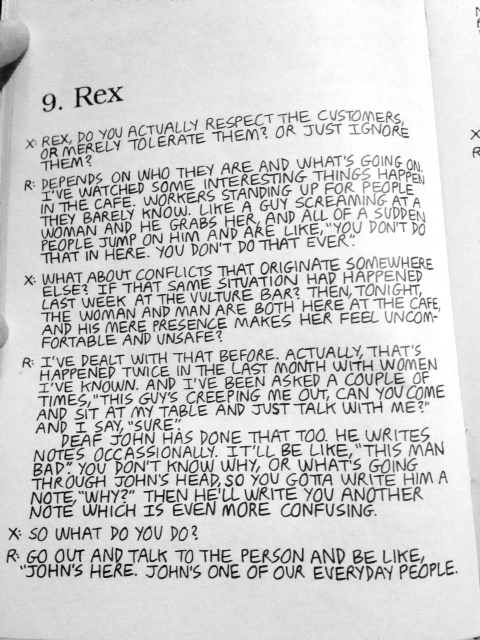
Unlike many of his zines, this one has almost no images, only this picture on the front.  And every page is handwritten except for the title, which is pretty interesting, because obviously he had access to computers, and also because the handwriting (there are at least 80 pages) is so perfect, so time consuming.

photo-49


He must’ve had to write it out a bunch of times.  Plus, this was published in 2000.  The days of hanging out late at nights at Kinko’s were pretty much over.  This was near the end of Cometbus’ reign, I think, almost a nostalgia zine.

Still, the handwriting makes it precious.  I’ve brought it everywhere with me for the last fourteen years.  That drawing on the cover is pretty accurate, by the way.

Posted in Uncategorized | Comments Off on Zines

Pass


GrovePass


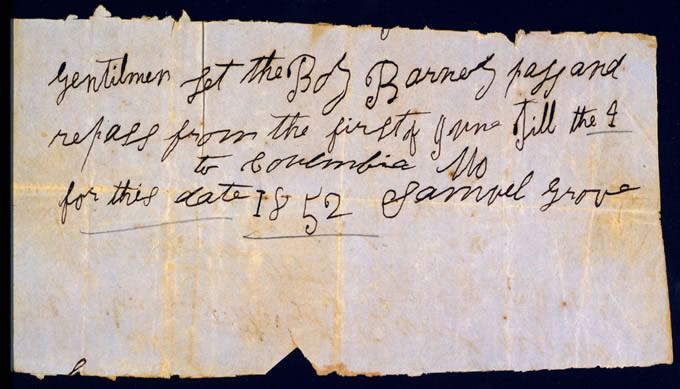
A slave pass signed by Samuel Grove, permits “the Boy Barney” to pass and repass to Columbia, MO from the first to the fourth of June for this date in 1852. This pass is a complicated and sad story about slavery, literacy, and escape.

Grove’s pass is most definitely a forgery. According to History of Ray County, MO, Samuel Grove was one of the original settlers of Tinney Grove in Ray County. He was a literate, slave-owning Methodist Episcopal reverend from Virginia who moved to Tinney Grove in 1840.

We can envision Barney, then, squirreling away different passes he received from Grove, passes that allowed him access to nearby lots or fields. Barney, much like Peter Randolph (Sketches of Slave Life, pg. 27) or Thomas L. Johnson (Twenty-Eight Years a Slave, pg. 12), likely studied Grove’s handwriting on these passes, slowly teaching himself both how to read and write and how to pen his own pass.

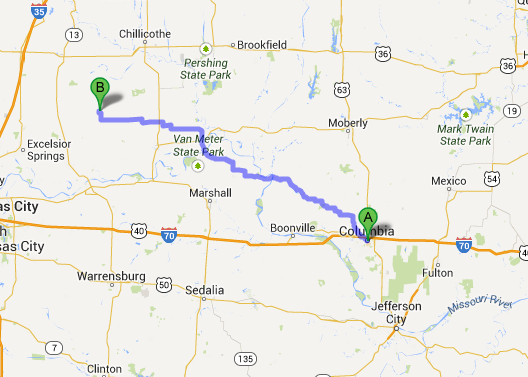
This pass needed to have just enough detail (“first of June till the 4,” “for this date 1852”), but not too much (“to Coulmbia (sic), MO”) to simultaneously seem legitimate, but also give him fairly open access to the 110 miles of slave-country that separated Tinney Grove and Columbia.

Screenshot 2014-02-03 at 1.52.50 PM

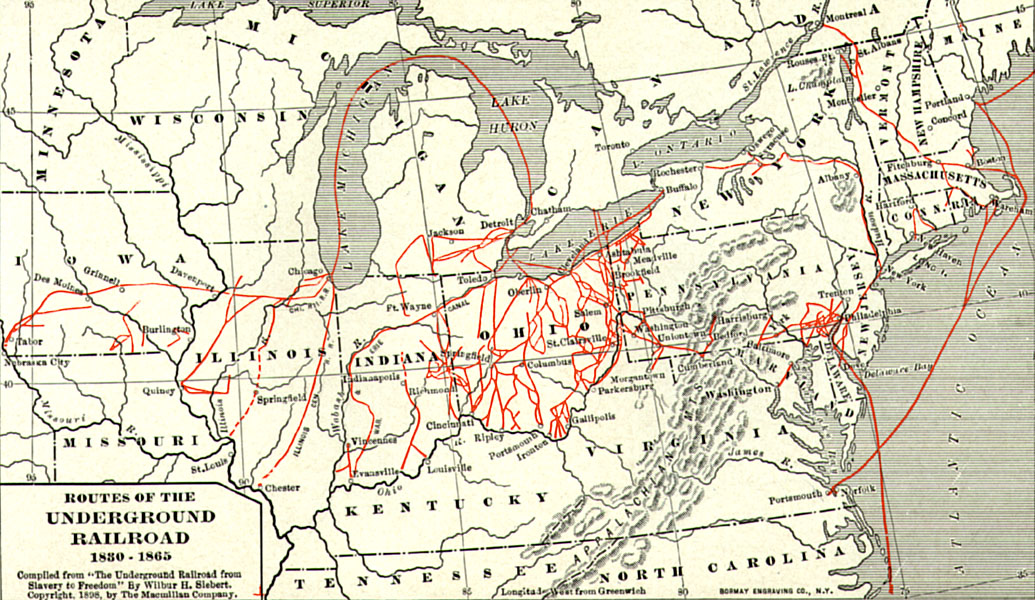
When in Columbia, Barney could hopefully find safe passage via the Missouri river into St. Louis, where he could hook up with one of the northbound routes of the Underground Railroad up through Illinois to Chicago, and across Lakes Michigan and Huron to Detroit.

Undergroundrailroadsmall2

But this pass betrayed him. The peculiar slant to the penmanship, its shakiness with the letter “y” and idiosyncratic way of starting the lowercase “d” with the stem, and not the loop; this is not the handwriting of a literate preacher. The misspelling of “gentlemen” and “Columbia,” the peculiar shift from written numerical adjective (“first”) to written number (“4”) in the dates of the pass, the strange insertion of “Coulmbia MO” between the second and third line, as though the pass was written and that later amended to add more specificity; this is not the direction of a literate preacher.

And true enough, when presented with this pass on June 2, 1852, Joseph Mattose identified the peculiarities of the pass, apprehended Barney, and returned him to Samuel Grove, returned him to slavery.

Posted in Uncategorized | Comments Off on Pass

[we][are][writing]

As I was doing the readings for class – especially the excerpt from The Nature of the Book – I started thinking about one of my favorite novels. (I’m a fiction MFA, so that’s really just typical. Literally everything reminds me of novels.)

The book in question is Jonathan Safran Foer’s Everything Is Illuminated. Whatever your thoughts about Foer as an author, you can probably agree that EII does some smart and tricky things with texts as physical presences. The moment when this is made clearest is this one, in which the elders of the shtetl, charged with recording all of history, run into the problem of wordlessness. They cannot think of what to say, but they must always be recording, and so there’s a solid page and a half of their real-time log of inscription. (I am typing…I am typing…)

Johns takes care to stress that texts have bodies, that they don’t just exist out in some idealized thoughtsphere. This is meant in direct opposition to a kind of history that sets books apart, as if the course of printing weren’t a human venture. The goal of any text that aspires toward respectability is seamlessness – the image not made by human hands, if I may cite my Orthodox background. A dictionary that shows the fingerprints of its makers is not a reliable dictionary. (Or it is – it might be perfectly reliable – but it isn’t perceived as such, and that’s sort of the same thing.)

So that’s all well and good. But then I started thinking about how on earth I’d write something that referenced its own materiality, and things got very meta very fast, and long story short I abandoned my idea of transcribing that page from Foer’s book. It wouldn’t be referential in the right way; what I’d be evoking would be the book, not as a physical object but as a woozy cloud that happened to be embodied in this way or that. Which isn’t what a book is. And besides, the shtetl elders only have the one parchment to write on, so making a copy didn’t make too much sense either.

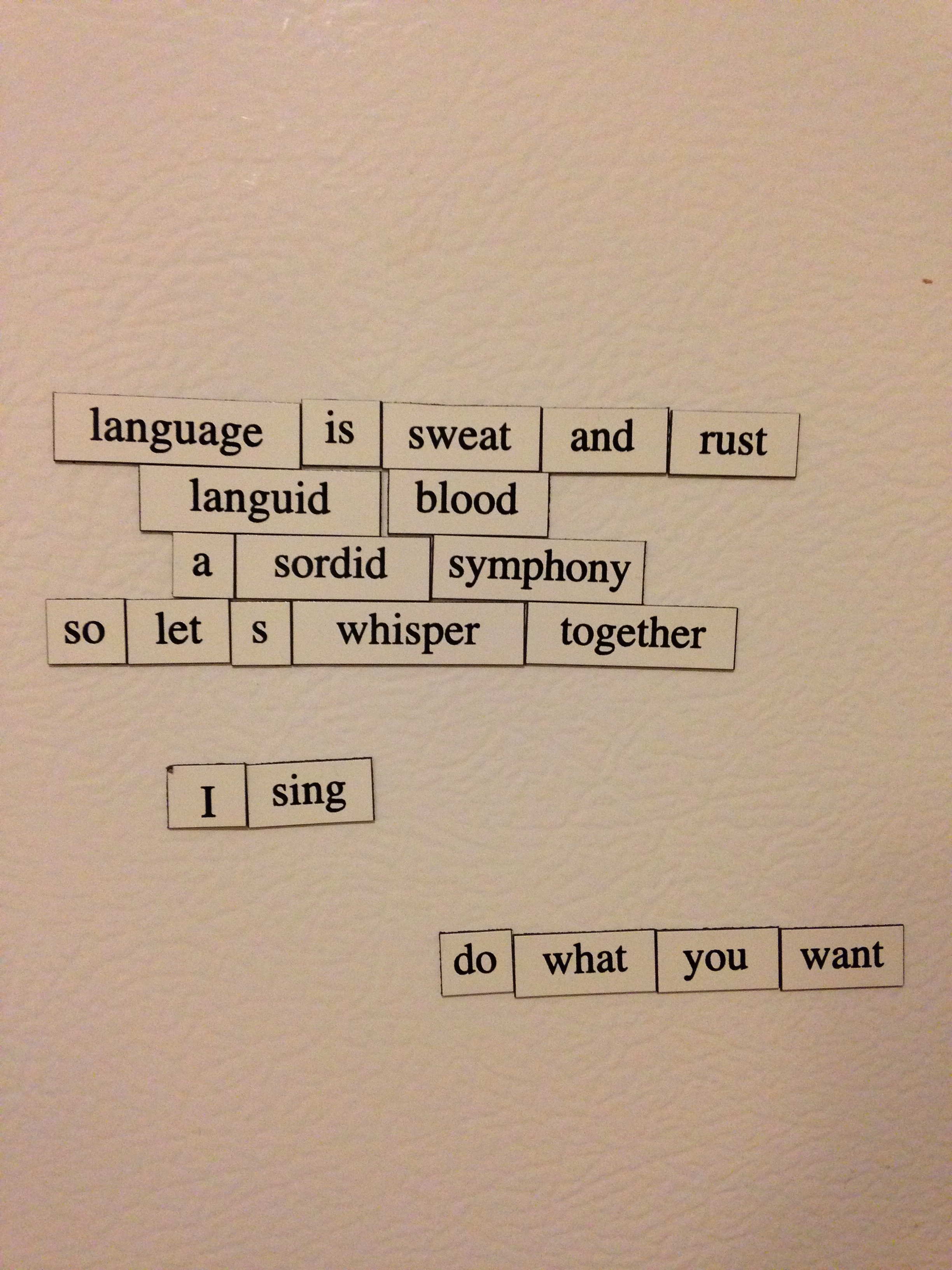
Instead, I went out to the kitchen for a snack and ended up playing with the magnetic poetry on my fridge. (One of the first things that went up when I moved this weekend.) I love it for its untranslatability. You can copy over a poem written in magnets on your fridge, but what’s the point? Half the fun is in the magnets themselves, these little rectangles marked in clear font; there are literally, physically, only so many words in a set, so each one feels weighty.

So that’s where I’ve gone with this week’s signment.’

2014-01-29 00.02.28

It’s clunky and weird, and the words aren’t quite what I’d have chosen myself, and that’s why I like it. To read it, you also read the constraints. Seamlessness is overrated.

Posted in Uncategorized | Comments Off on [we][are][writing]

material awareness

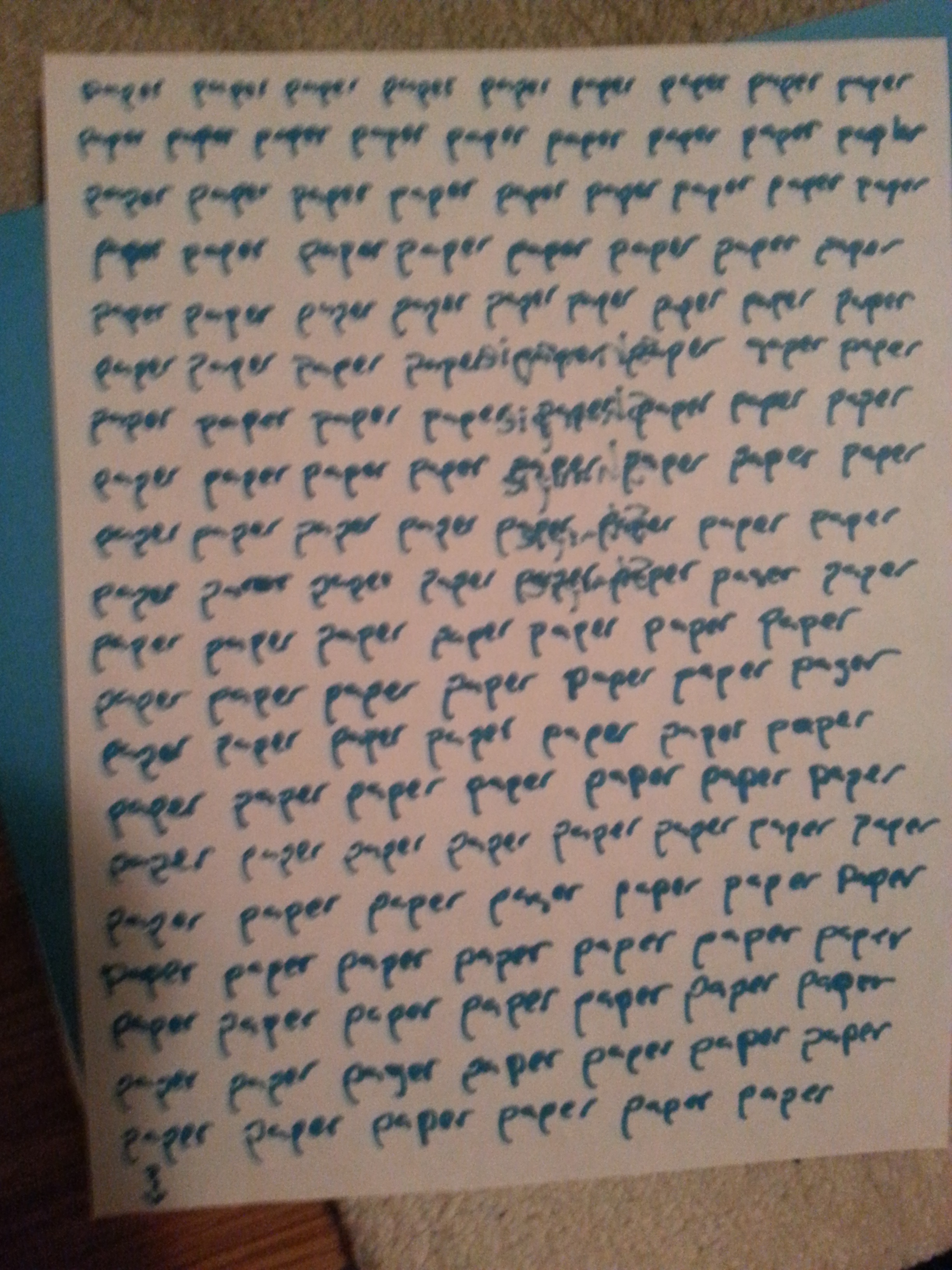
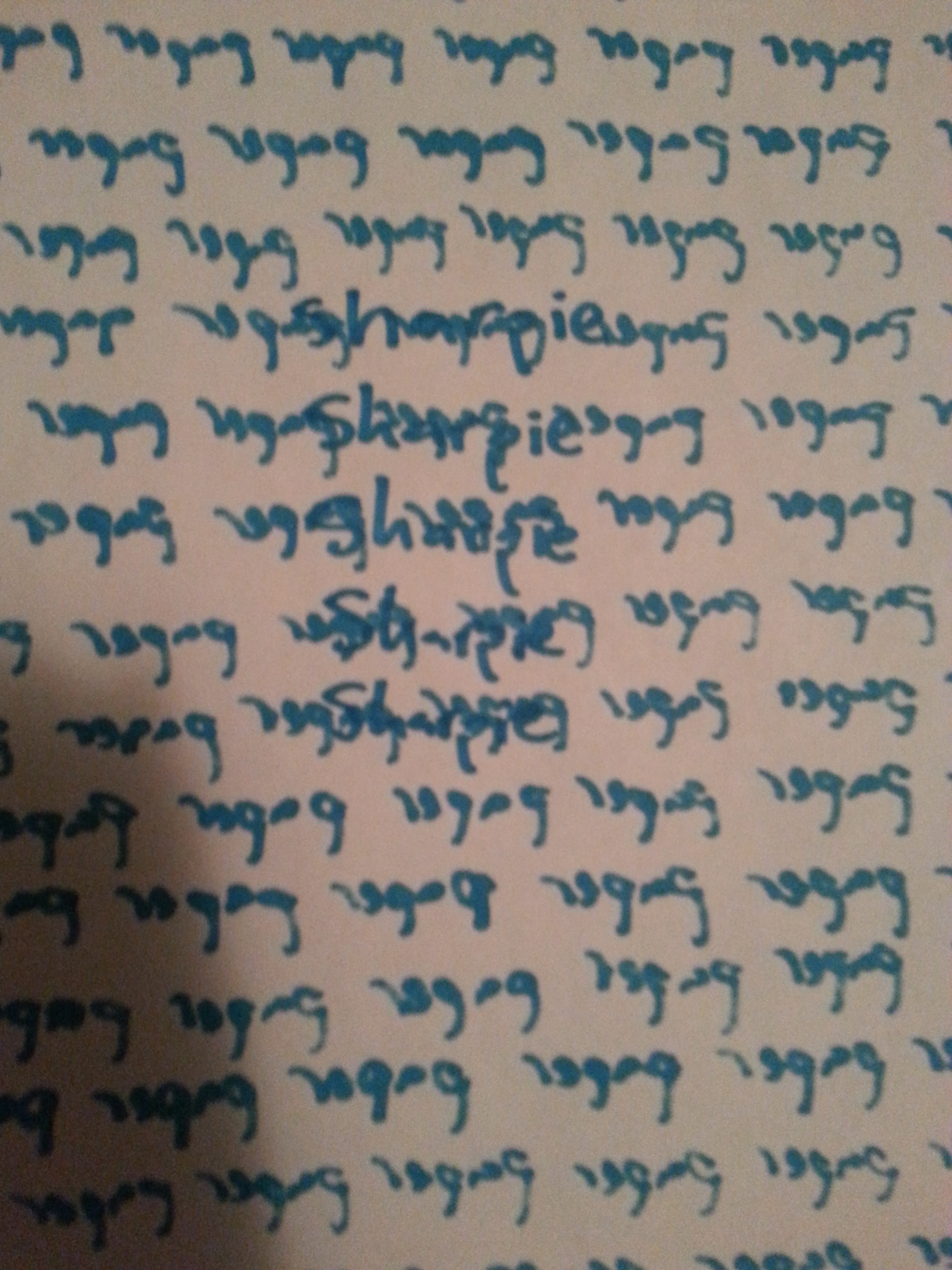
My first thought when this signment was signed in class was: do something with highlighters.  I don’t have highlighters anymore, so that idea didn’t get expanded on.  But I did do something that involved literalness.  I did get to use my Sharpie markers (well just one) and repetition.

20140128_230356 20140128_230405

I like that you can see the words from one side on the other word’s side, sort of blending them together.

Posted in Uncategorized | Comments Off on material awareness

Intractable Materials

For this week’s signment I decided to pick materials that would make writing difficult, in addition to emphasizing their materiality.  I was thinking about how often writing utensils fail me ( I usually use cheap, found pens and pencils) and how much I take for granted our ability to write things down with such ease.  Were I a medieval scribe, I’d be lucky to be literate, just so I could have the privilege of slaughtering a pig, scraping and treating its skin, so I could copy the bible or whatever onto it.  Yesterday I yelled at my pencil (yes, out loud) because its lead broke off when I went to write avocados on my grocery list.  In light of the readings we’ve been doing, I felt like a spoiled ingrate.  So, maybe I felt like teaching myself some gratitude.

I decided to write with wine because so much research has gone into the consistencies of lead and ink, and the ease they afford us daily goes largely unappreciated, by me.  I used an eyedropper because I thought a paintbrush would be cheating– too easy.  Wine and eyedroppers are not meant for writing at all.  Droplets are hard to control.  A big juicy plop could arrive when what you’d hoped for was a tiny driblet.   And white cotton handkerchiefs are also unpredictable.  Somehow, wine pigments don’t spread through cotton fibers very predictably at all.  The sentence I wrote is only three words long, due to these constraints.  But it’s in Latin, so I think that counts for something.

p.s.

as I was trying to type this post, my computer or wordpress or the internet or whatever was lagging like a beast.  I absentmindedly yelled at the undecipherable culprit.


Posted in Uncategorized | Comments Off on Intractable Materials

it turned into a poem review kind of

So I’ve been reading Ana Božičević religiously (which coincidentally means choosing poems randomly from her BOOK! over and over), and trying to do the thing that she does with her language.

The poems I linked to come from EOAGH’s Queering Language issue, and I think there’s something here that might be relevant to the discussion of materiality: if we can queer language, then we most certainly can queer the materiality of our writing.

In her introductory statement for the issue, kari edwards writes:

it is the space one holds, not an essential objectification one is held in, where one is stabilized into things in space, places with borders, bodies with procedures, proper behavior by corporeal containment, compulsory reproductive management, polarizing populations, producing mythological projections, slicing every single living energetic instant into bipolar neurosis for further control of an imagined boundary.

So perhaps it is a destabilization of space, a loosening of the control of imagined boundaries that could be argued as a way of queering language. This is what I mean when I say the thing that she does with her language: I think Ana Božičević writes unstable poems, poems that feel like they go everywhere, do everything, poems that want to just take off and break into multiple pieces at once. She gets frustrated with straight girls:

I want to write a nice long poem for all you straight girls.
Your religion’s rose and glass castles
hold no place for me, I’m out of my princess phase.

And then gets over it:

I’m over it.

She blurs lines between the body and the poem and the poem-as-body:

I can’t even look at myself naked
while I change out of body into the poem.

She talks to her mom:

And after all those centuries, Mom, why do you still worship the boys?

She talks to her dad:

Secretly, I’m a believer. Dad, are you really a believer?

Her poems just go everywhere and do everything all at once, especially when we talk about who the poem is for/to (she addresses “women” in general, a kind of ambiguous “you”), as well as what it’s like to write in ways foreign to her, and in the end she positions herself as “you,” and not, at the same time:

To write in a speech I wasn’t born mouthing
about the ground I wasn’t born sniffing

My face stuffed full of the land and the language of longing

hell yeah. I’ll learn to write just like you,
green stems are growing out of me, I belong everywhere
in you: Hi, I’m you, it’s so filling
when there’s only one of us here.

How do our bodies function in the space of the poem? How do our poems interact with our bodies? How do we interact with each others’ bodies? What makes one body different from another? Can language be something physical that is stuffed into us? And who is this language being stuffed into? These are the sorts of questions that come up for me when I read Ana Božičević’s work, and the things I have been thinking about in writing my own poems addressing the materiality of the composition of the poem.

My main concern in the poem I wrote is to try to play with how my body is interacting with the poem, the way that Ana Božičević writes about her body interacting with the poem.

And what I’m most proud of is that I feel like I’m participating in a queering of language: in the end, I arrive at the possibility that the body/the poem might be located in multiple locations at the same time. The materiality of the poem-as-material and the body are never at rest in a poem, but rather, they are ever-shifting, rearranging around each other and time and space, especially given the multiple drafts that a poem must go through in order to come into being, the multiple readings of the poem that happen physically and mentally.

So to go back to my original idea about the queering of materiality: could it be that to queer materiality, we would need to create a surface without borders? An unconfined space? Do the codices we read about represent this at all? Would it need to be a fluid materiality? What would need to be said?

Posted in Uncategorized | Comments Off on it turned into a poem review kind of