This space intentionally left blank

Two things:

  1. As I mentioned in my post last week, I’m between houses at the moment. I actually just got approved for a new apartment today, though, so I’m almost finished with my career as a part-time vagabond. Still don’t really have access to most of my stuff, especially my books and journals.
  2. My father is a computer programmer, and I grew up around a lot of the things we read about for this class: tapes, discs, hard drives. I used to play with memory boards as a child. (Their markings reminded me of city maps. I need hardly mention that I’m an only child.)

These are wholly unrelated topics but for the fact that they led me to think of this week’s signment in a particular way. There has been a lot of non-writing time lately while I’ve been getting my life in order, but I wouldn’t call it dead time, and I’m second-guessing even my choice to call it “non-writing.” If it’s possible to read almost anything (a meter for gas or electricity, a situation, a face), then can’t I write those too? A hard drive organizes information in a random but specific way; so do I.

So that’s the digression that got me here. I wanted to write my document in a way that reflected the week I’ve been having, and I was going to do it without any of the materials that are personally precious to me (not that you’d really want to have to read my journals anyway). I wanted to write without words, even, or a tool – just my hands.

The result doesn’t communicate all of this, of course. I’m pretty sure that it’ll seem cheesy, actually. But isn’t that a kind of definition of preciousness? Of value to someone, multifaceted, never wholly accessible or inaccessible.

Relevant: Merriam-Webster’s definition of the verb “to gild.”

1:  to overlay with or as if with a thin covering of gold
2
:  to give money to:  to give an attractive but often deceptive appearance to

archaic :  to make bloody

— gild·er noun
— gild the lily

:  to add unnecessary ornamentation to something beautiful in its own right
This post is my gilding the lily. Which is a kind of writing, too.
Posted in Uncategorized | Comments Off on This space intentionally left blank

Bump my participation grade, Prof!

I decided to enact the signment this week, in a small way. I can empathize with the pressure many are feeling to make this writing matter.

Haas reminds us that for Goody, Ong and Havelock, writing turns time into space. (This is also true for Bernard Steigler, incidentally.)

Instead, I decided to turn space into time with my writing. And then I thought, well, perhaps that’s always the case with writing. Isn’t it?

One hardly ever gets to use the word transmogrification. But here, yes. I think so: transmogrification.

Posted in Uncategorized | Comments Off on Bump my participation grade, Prof!

Bestiary

Gilding in and of itself isn’t precious to me. When I was a faux finisher I, on more than one occasion, gilded an entire bathroom. It’s actually kind of gruelling work to gild a ceiling, and the cruel joke of it is that when you’re done, you come home sneezing 24 karat gold.

That said, I know how to gild, I have gilding materials and it makes any dumb drawing precious. My idea was to make an image with space for writing and not to even consider what I was going to write in that space until the image was done.

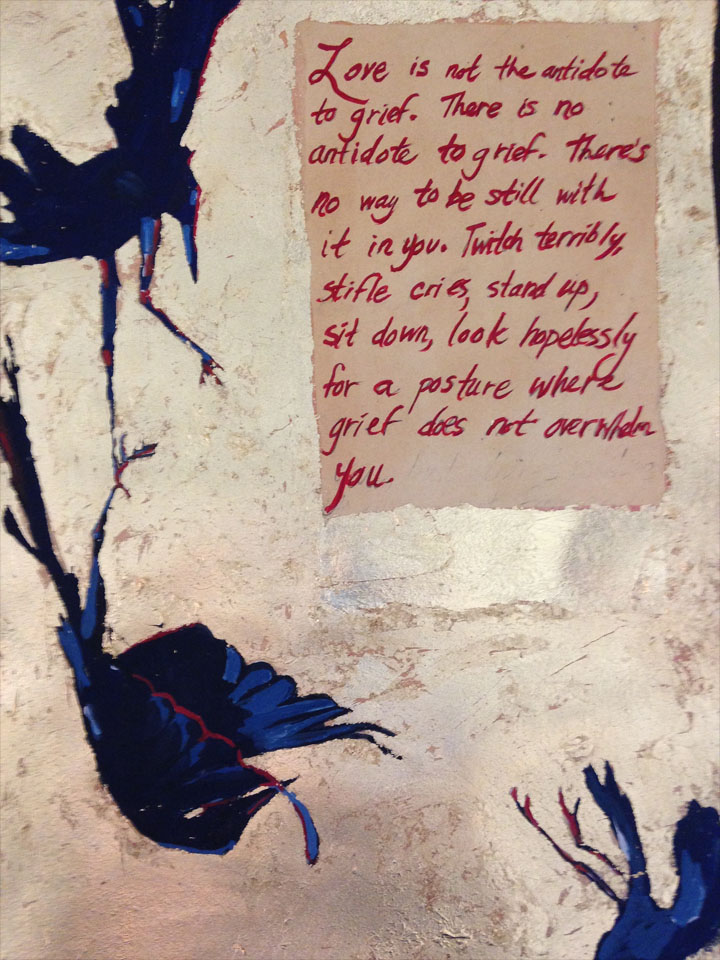
I thought about painting my cat, but that just seemed too crazy cat lady, even for me. Still, the things I like to draw the most are animals, and my cat, aside from being totally precious to me, has right now the strange grace of a creature about to die. It’s painful to see how fragile he’s become, but there’s a beauty to that fragility, that clumsiness, which is a thing I’ve always been obesessed with. So I decided to, in sort of bestiary style, paint some awkward birds, birds falling. The plan was to leave myself a space on this precious page for words and then to try to fill it.

Without going into detail, though, from the beginning of this project to the end of it, my week got much worse.  I had wanted to compose something for the particular space, but for some reason, I kept being drawn to a paragraph I’d written in my first novel, which I revised for this image.

I read recently about an imagined bestiary of affects.  I picture this as sort of a page of that bestiary, the page titled “grief.” Here it is:birds

But hmpf– gold looks so much more lovely than in a photograph.  The cheap trick doesn’t really work here.

The thing I found most strange is that I had a particular amount of space and I had to fill that space with words that fit.  This was hard to do, and, in fact, I cheated and gilded a blank space because my words weren’t long enough, and though I originally wrote it in pencil, the erasure marks show on this kind of paper.


Posted in Uncategorized | Comments Off on Bestiary

It was difficult, actually.

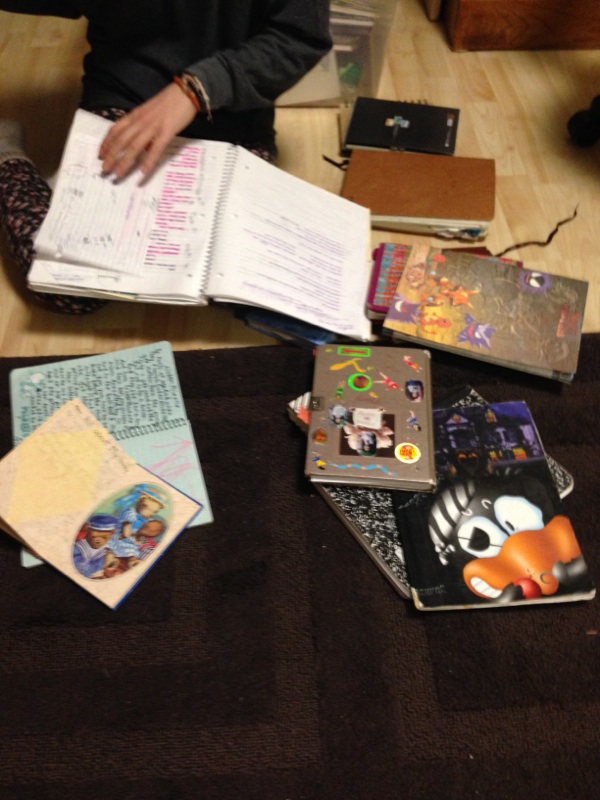
Michelle and I were considering writing in her old journals. Of which there are many. They are very important to her: every now and again she pulls them out to remind herself (I think) of before. To look at how different her life is now. Which is a simplified version of what is really going on, but I’m not sure even I understand completely.
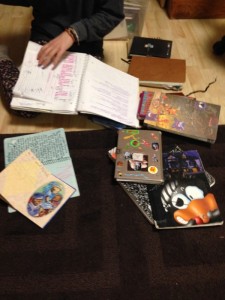
IMG_1813

I know, for me, it is difficult to return to the past. My former selves stare back at me from the page, pushing back against my ego, destroying my illusory self-permanence. Yet Michelle ritually takes part in this destructive act.

I often think that the present is how it has always been and always will be; I am constantly believing in this fallacy. And it takes a greater awareness of the present and the past to overcome this, an awareness that is difficult for me to procure under most default/daily/normal circumstances.

(The way her life was before. I am using language that avoids the subject, because the subject matter is difficult, and I do not wish to interrogate the subject deeply.)

So this is why I have chosen not to use Michelle’s journals. I do not feel comfortable, myself, with the content of her past. It makes me feel guilty; scared. The temporality of it throws me for a loop. Is the writing of her past the writing of her present if I am reading it in the now? Each time I revisit the past, it becomes new again. New, and scary, and lurking, somehow, beneath my consciousness, this remote history that only she has access to. My only point of entry is to be with her in the present.

(In some ways, the girl who wrote these entries is right there waiting to talk to me about them. In some ways, she is gone completely.)

In this instance, writing in her journals feels like more than an act of production, of artistry, or even defacement. It is an act of ownership. Perhaps because we live in a literate society, because we live in a capitalist society, because we believe in things like free speech and private property, when I write on something, I feel like I am making it my own. Even those who are illiterate, those who are physically unable to write can put their mark on a contract. There is something significant in the act of writing, something permanent, something you can’t undo. When you sign something, you take full responsibility of all the consequences of that signature.

(Is it defacement? Am I destroying value? Is this what I am scared of? Am I changing it? How am I measuring value in this case? How is she? How do you?)

I do not want to write on Michelle’s journals because they are not mine to own. Especially not when it is difficult for her to own them in the first place.

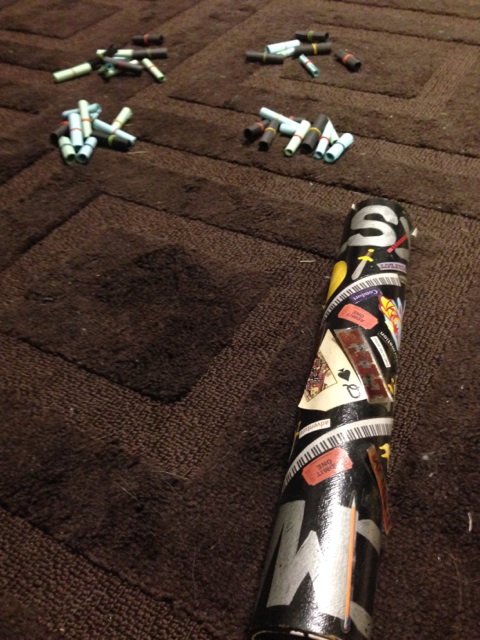
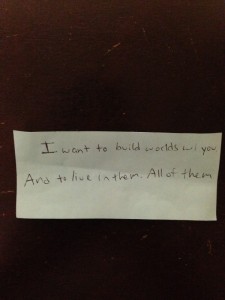
What I’ve decided to write on is something that my friend gave me as we began our undergrad careers apart from each other for the first time. We’d had a strange slightly-more-than-friends-but-not-really kind of relationship, and so this object meant a lot to me at the time. It is a small paper towel tube that she painted black and coded with various symbols that pertained to our interests at the time: a queen of spades, a piano, a ticket, a sword, a dragon.
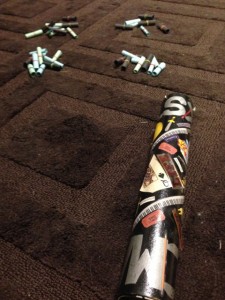
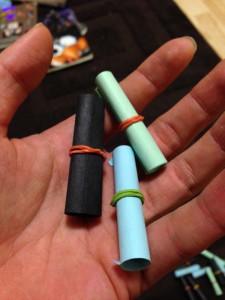
IMG_1812IMG_1814

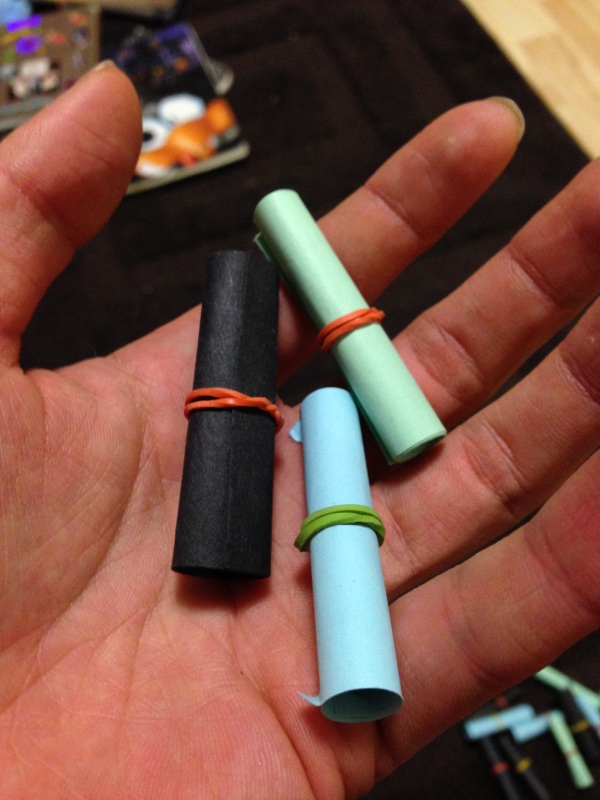
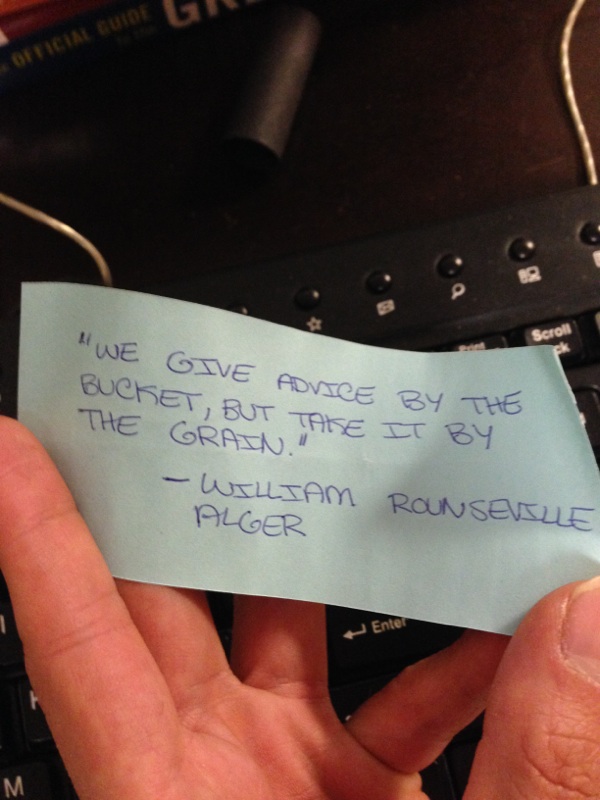
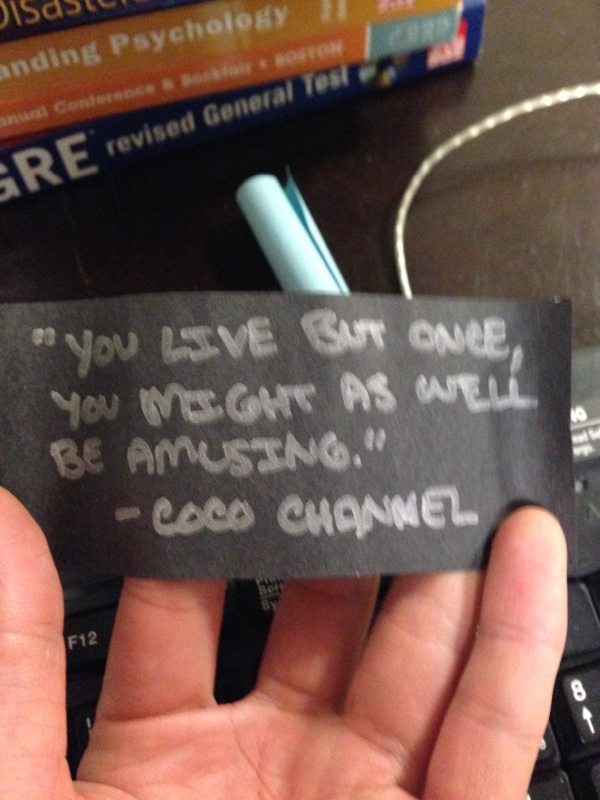
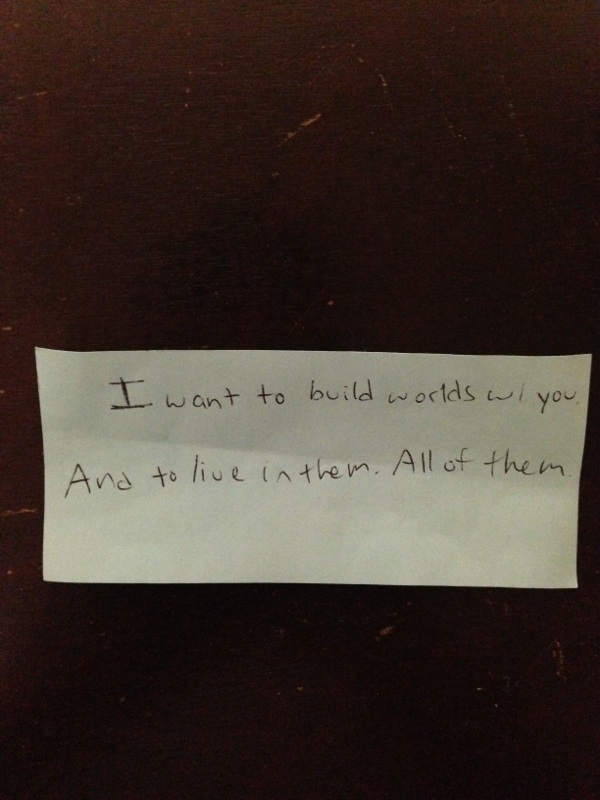
And on the inside of the tube, she sealed 37 small, rolled-up pieces of paper, each with a different quote on it from people that she thought were inspirational.

An example:
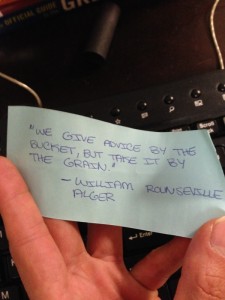
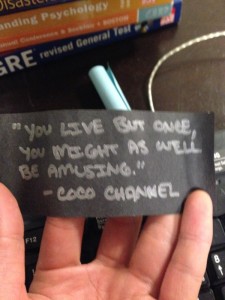
IMG_1815 IMG_1816

This is my own history. Or, our history. It is something that has been given to me. And so I feel justified in writing on it. The destructive quality is lessened; I am not an outsider, entering into sacred historical space. I belong in this history; the object is my own.

The quotes that she included in this gift were never meaningful to me in the way that they were to her; even as a college freshman, I thought they were sort of cheesy. But I understand the impulse: how do you create meaning in the face of meaninglessness? In the face of departure/instability/loneliness? Often it is easier to defer to others to create that meaning for you. But what is important, ultimately, is not the “content” of the sheets of paper: it is the act of making that takes precedence. In the absence of “content,” the “formal” qualities take precedence.

So I’ve been thinking about this a lot. And what I think I want to do is I want to bring these pieces of paper to class. And I want everyone in class to write on one themselves.

I want you to do this with me. To write something, anything, on the piece of paper. And give it to someone you love. Because I think that is no longer a taking ownership. This is what I want to avoid. I do not want to possess what I write on. I want writing to be a selfless act. I do not want to take. I want to give.

This is why I cannot write on Michelle’s journals. I cannot take that complicated history and reduce it to something of my own creation. I cannot do justice to her story. There is too much for me to accurately convey to others, to myself, back to her. There is too much to own.

It is not enough to write on a piece of paper and give it to someone. I know this. We cannot ease the suffering of others, not in the way that we want to. This is what I feel in the face of the past. We can never write enough, never learn enough, never say enough.

The only thing to do is to continue to give these little pieces of paper with writing on them. To give and give and give again. And in that conscious giving, we can try to understand.
IMG_1817

Posted in Uncategorized | Comments Off on It was difficult, actually.

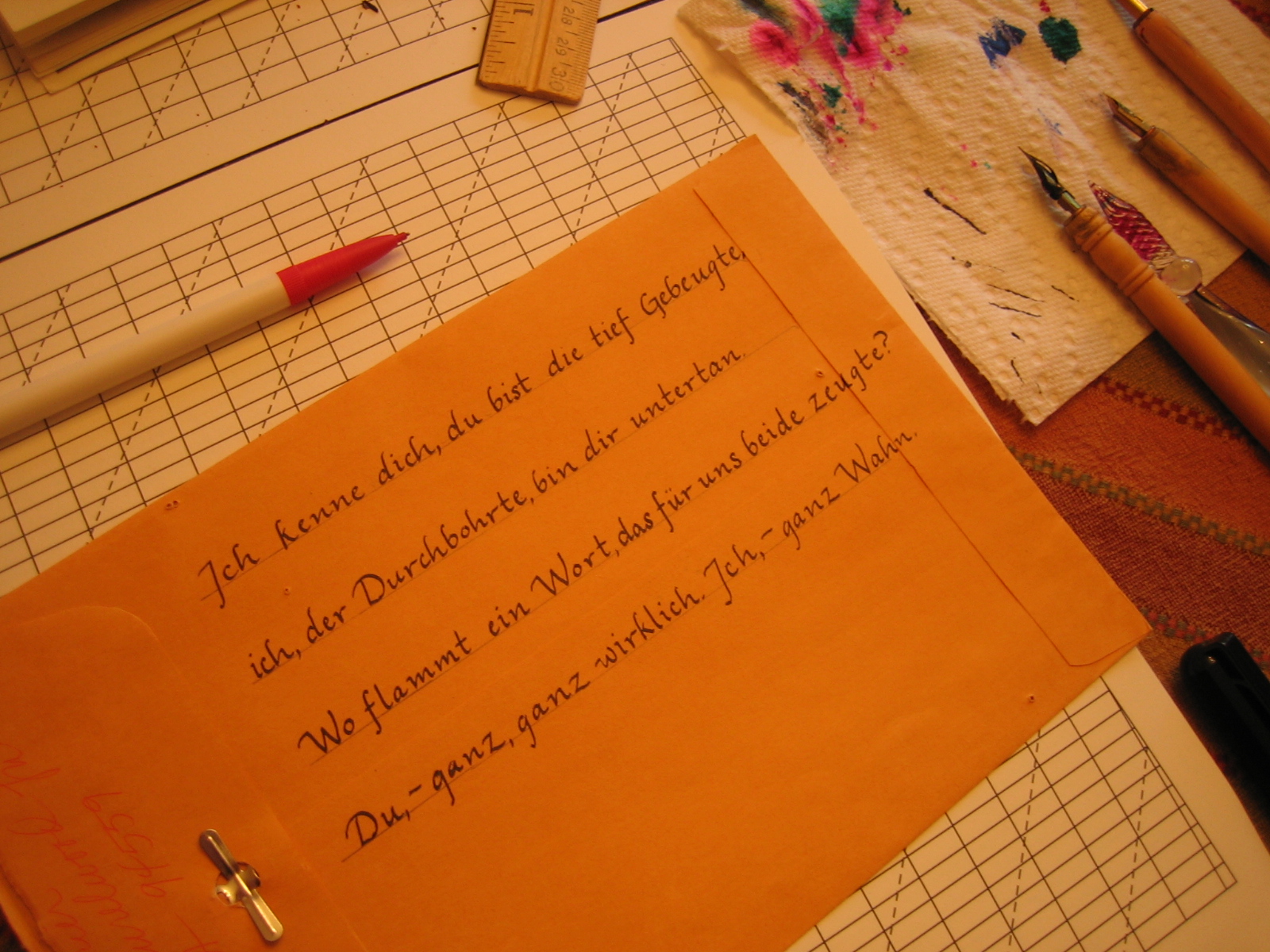
Letter-writing, calligraphy, and Paul Celan.

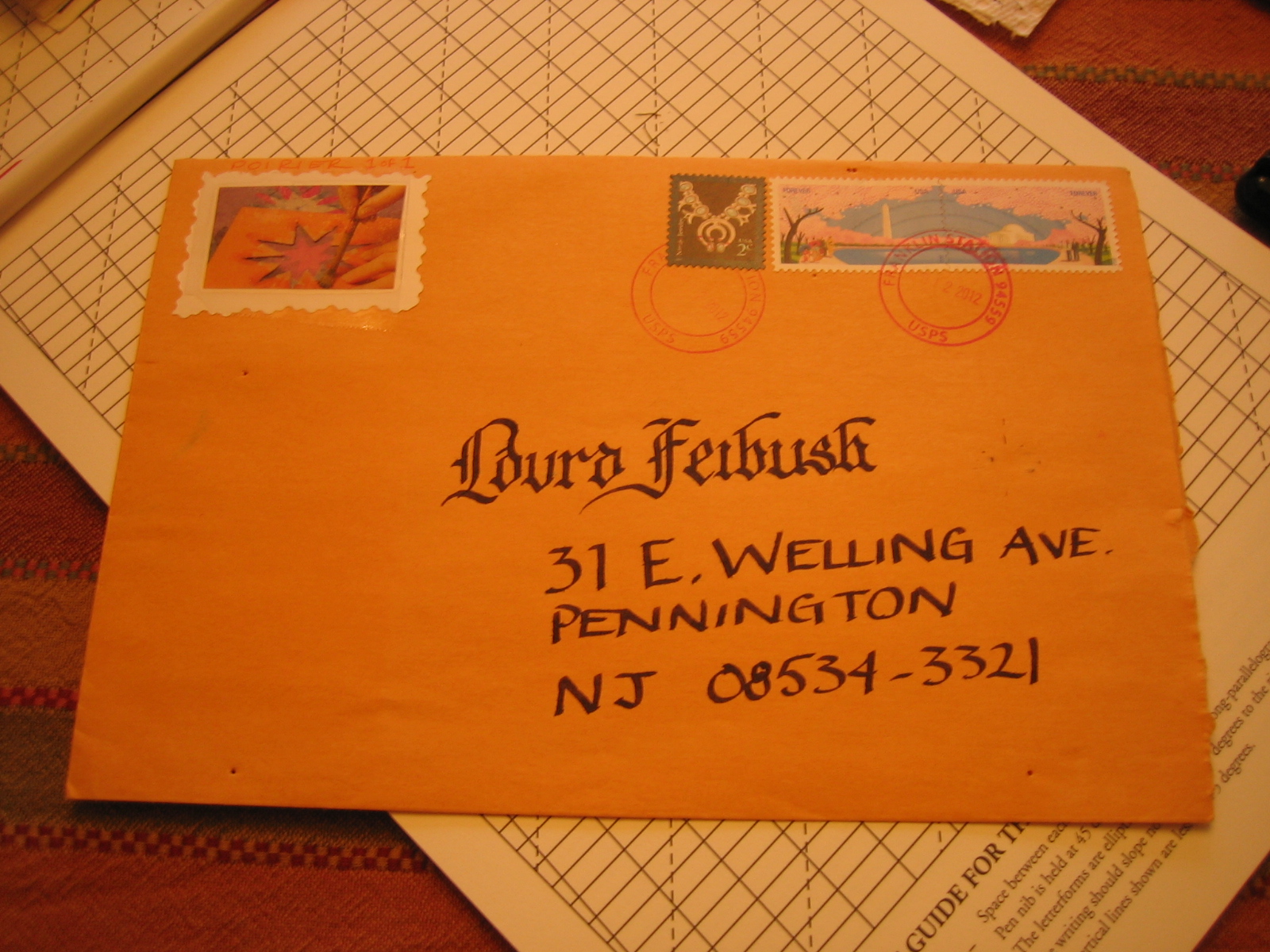
For this signment, I liked the idea of working on a surface that had already been through some layers of meaningful mediation.

IMG_4537
mail art? perhaps.

This envelope was sent to me this past summer by a friend of the family, a person with whom I’ve exchanged letters since childhood—she was perhaps my first epistolary correspondence and certainly one of my first writer-friends. She calligraphed my address onto it in this special form of beautiful inscription, and the envelope has also been marked by its handling in the mail. Some time later, she gave me my first calligraphy pen and the instructional book she had used to learn lettering when she was younger. In a multi-layered response, then, to the forms of meaningful inscription she has contributed to my life, I calligraphed a verse onto the back of this envelope that also became important to me last summer, four lines from the German poet Paul Celan.

I know you-- you're the one bent low.
I know you– you’re the one bent low.


Posted in Uncategorized | Comments Off on Letter-writing, calligraphy, and Paul Celan.

Cheap Reprints

Precious paper I did not have, so I opted for a photograph.  Not an old photograph, not a photograph I don’t have the negative for, not even a photograph housing beloved faces.

The photograph I chose is precious because it makes me feel weird whenever I look at it. So I put it up on my wall last year.  The weird way this photograph makes me feel changes over time, depending on how my memory of that moment changes.    Memories are skittish creatures.  They don’t stay put.  I constantly, and consciously, tinker with my memories.  I enjoy trying to change my mind about things past, things that no longer matter, except that my present reaction to them makes me who I am.  If I can change my mind about a particular memory then I can be a different person, in relation to that memory.

Why write on a photograph?

Why not write on a photograph?

I wonder if fixing words forever to the surface of a photograph might also mean fixing, with language, the memory the photograph pretends to capture.  Those fixed words might finally push me to make up my mind about that moment.


Posted in Uncategorized | Comments Off on Cheap Reprints

Precious Paper (Anna)

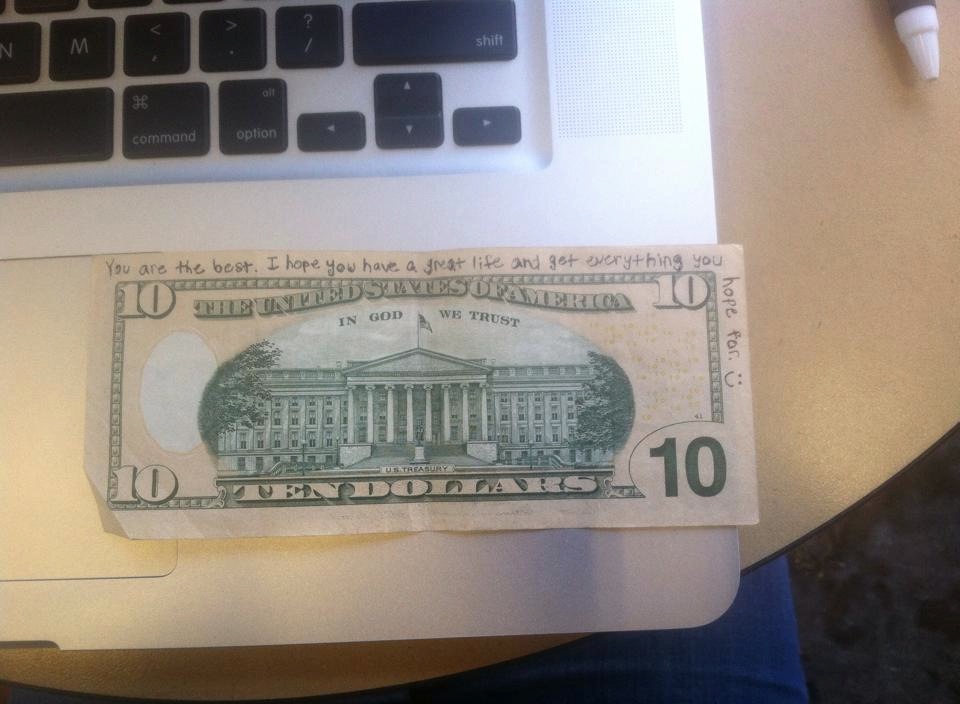
Unlike “M,” it was difficult for me to disregard the second OE definition of “precious.” When Annette articulated our signment in class, the combination of the words “precious” and “paper” immediately led my mind to money. The U.S. dollar is intimately tied to the materiality of paper. The word “dollar” itself carries with it an implicit second noun (“bill”), which in turn carries with it another qualifier (“paper”). This is not the case for all currency, as anyone who has been startled by the vastly different material experience of the “pound” or the “yen” can attest. The idea that a value as high as $5 can be contained in or represented by a coin is surprisingly disorienting to an American and certainly requires reconsideration in one’s choice of wallet.

However—and this revelation may seem fairly obvious—following this train of thought regarding paper bills has led me to a fairly interesting place when combined with M’s definitions. Arguably, there is nothing materially precious about paper, at least according to the OE. Materially precious seems to be equated with monetary or trade value in the dictionary definition, and paper is notoriously cheap, taken for granted within our society (until it isn’t). Yet, the idea of monetary value itself has become collapsed into paper. When I “see” money in my mind’s eye, I see paper. In a similar way, a citizen of Great Britain or Japan might see a round metal object, but the metal will not actually be a precious metal, according to official classifications. These materials are not actually precious at all, and yet my instinct was to claim them as precious. I am sure this says something about the state of global economics and trade and the credit system or whatever and I could say “Marx”! However, what I ended up thinking about was how underutilized bills themselves are as writing surfaces. We pass money to other human beings more consistently than any other paper product, perhaps with the exception of receipts. As debit and credit cards take over many transactions, this passing of paper primarily occurs within the service industry. (Well, illegal industries too.) The service industry is the last stand in the tradition of a representation of the dollar via a material that lends itself easily to writing. It’s quite difficult and suspicious to write on the plastic of a card. It’s easy to write on a paper bill, and it doesn’t actually degrade the monetary value as long as you keep your writing to the margins.

So, since it seems that the value of a bill is both material and immaterial at the same time (since the actual materials have been divorced from use value or availability of the material itself), I decided to return something like use value to the material of a $10 bill. In returning this use value, I am also adding a layer of immaterial value by making the paper bill an unexpected medium of communication. We might say that due to the amount of human to human sharing involved in the life of a bill, the medium already always afforded this function and waited to be realized. Or, that bills carry their symbolic nature around with them (Look, I framed the first dollar my company ever made! etc.), and that writing on the bill simply adds or emphasizes its inherently symbolic nature (as something precious). Or that I have gone all Haley Joel Osment on this signment and simply done something cheesy by translating something so impersonal and inhuman into a tool for personal, human-to-human communication. Either way, I wrote something nice on this bill. Now, I’m going to tip someone with it.

money

Posted in Uncategorized | 1 Comment

A First Time for Everything

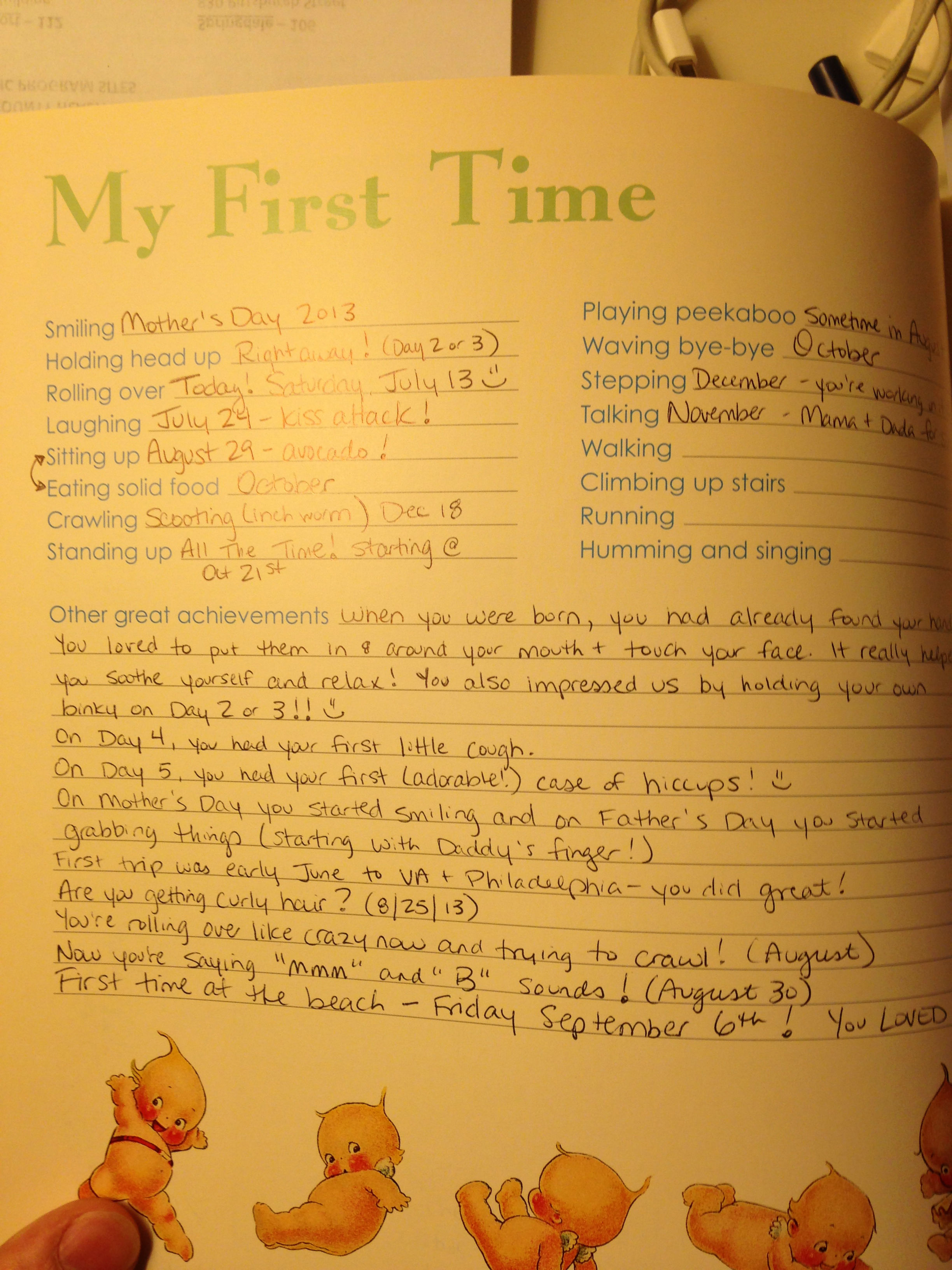
My First TimeThere is little in this world more precious to me than my wife and my son. As such, I accumulate sentimental pieces of writing that pertain directly to them. These include things like notes, cards, letters, and so on.

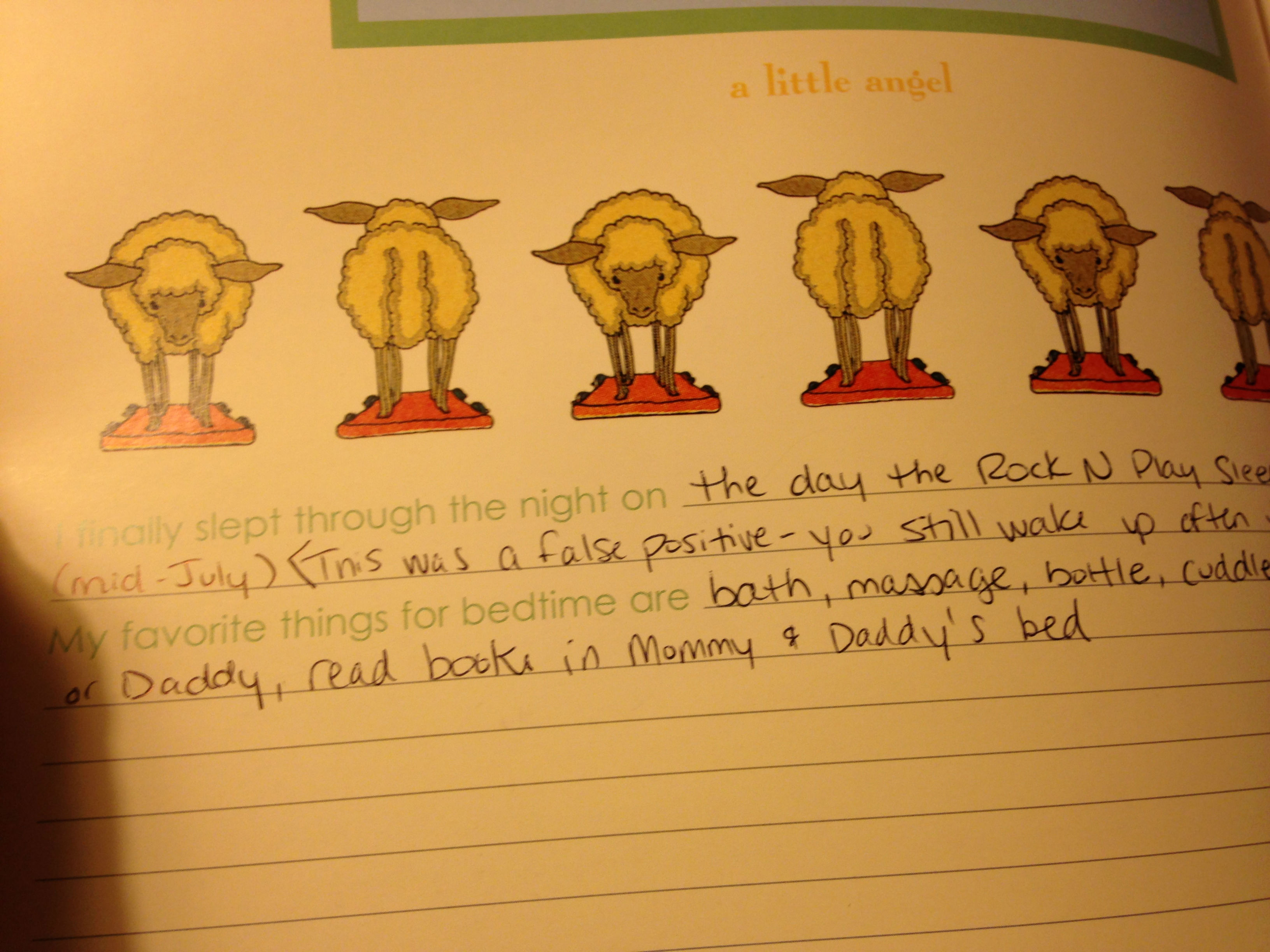
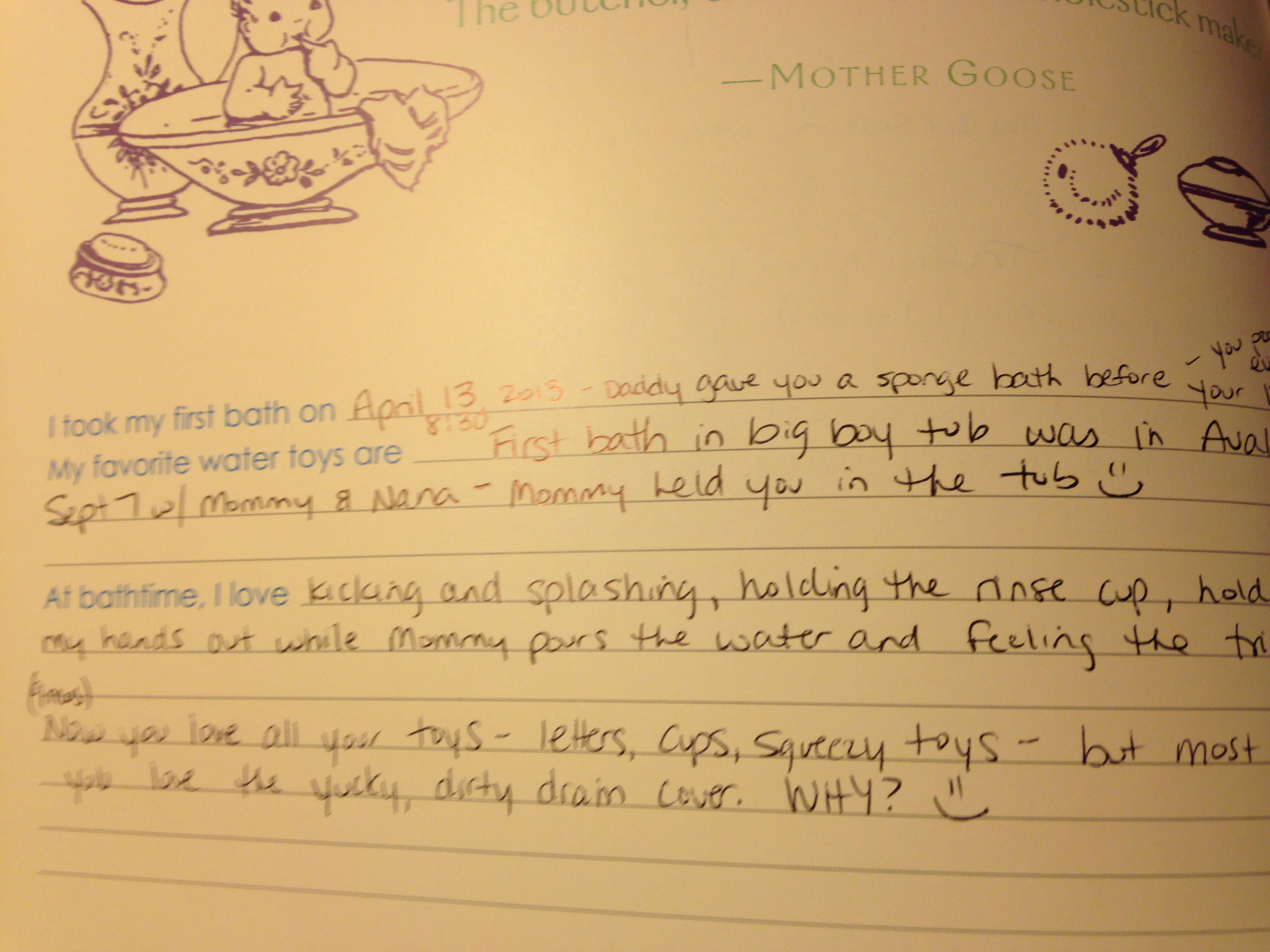
With my son, there are a wide variety of sentimental pieces of writing. Take our baby book. It’s filled with cute worksheets and prompts, spaces for pictures and lines for little stories. It’s a pre-fab scrapbook, a collection of prompts for us to jot down observations which we can later return to as prompts for us to recall memories from a time during which we were getting very little sleep.

Sleeping Bathtime


It’s a wonderful little piece of kitsch. It’s rewarding to look through even now mere months from some of our earliest entries. Sometimes we have to go back and correct ourselves (as we did with the sleeping entry) or we add on to our little stories as our son grows older (as we did with the bathtime entry because he transitioned from a infant tub to an inflatable tub to a fullsize tub).

We appreciate the ready-made-ness of the baby book, because though we both fancy ourselves fairly creative types, we often balk when confronted with an overly generalized task like “make a scrapbook celebrating your child’s early life.” OK, should we do this before or after hanging out with our son? And should we do this instead of sleeping or instead of eating?


I must admit, though that the ready-made-ness is consternating at times, because it’s insisting that we remember very specific types of things. Cute things. Fuzzy bunny things. No entry for “Baby’s First Fever” (this weekend, incidentally) or for “Baby’s First Time Biting the Cat.”

Couple that with the fact that there are a lot of other weird and interesting “firsts” regarding this, our first child. We are swimming with fun little materials, written and otherwise, that we want to hold on to, objects which are as good of prompts as any note we might leave ourselves. Things just as precious.

Hospital Bands

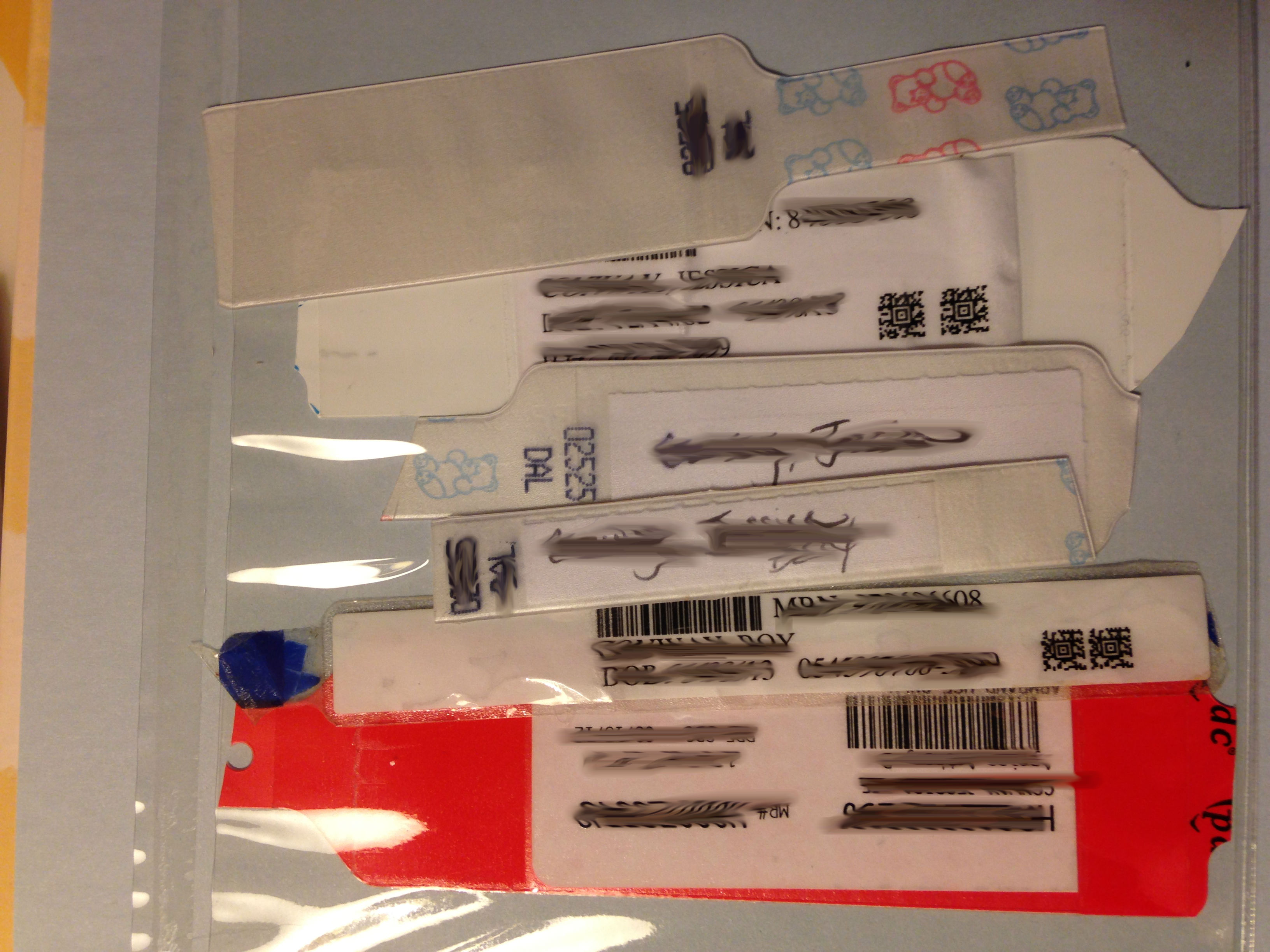
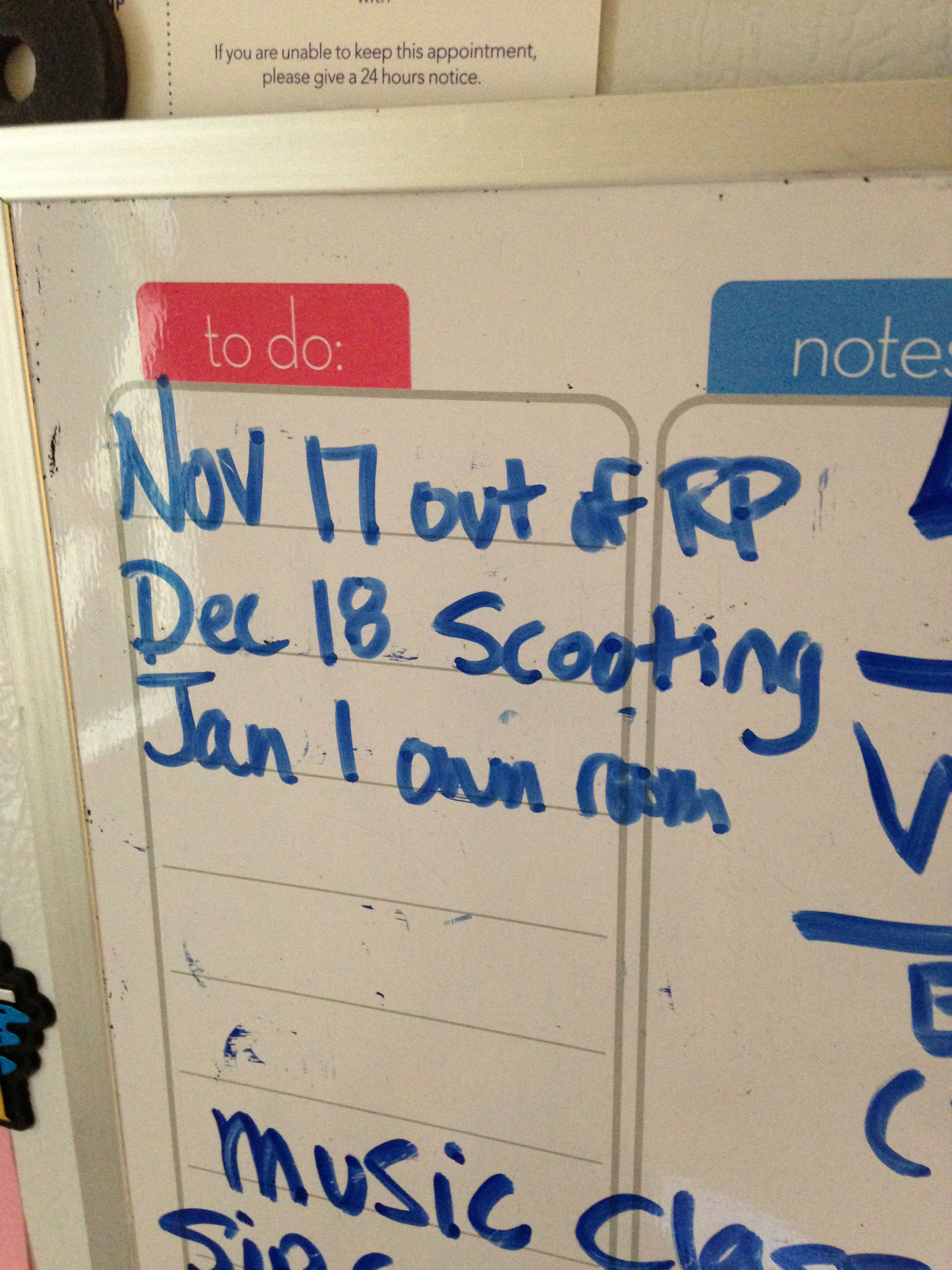
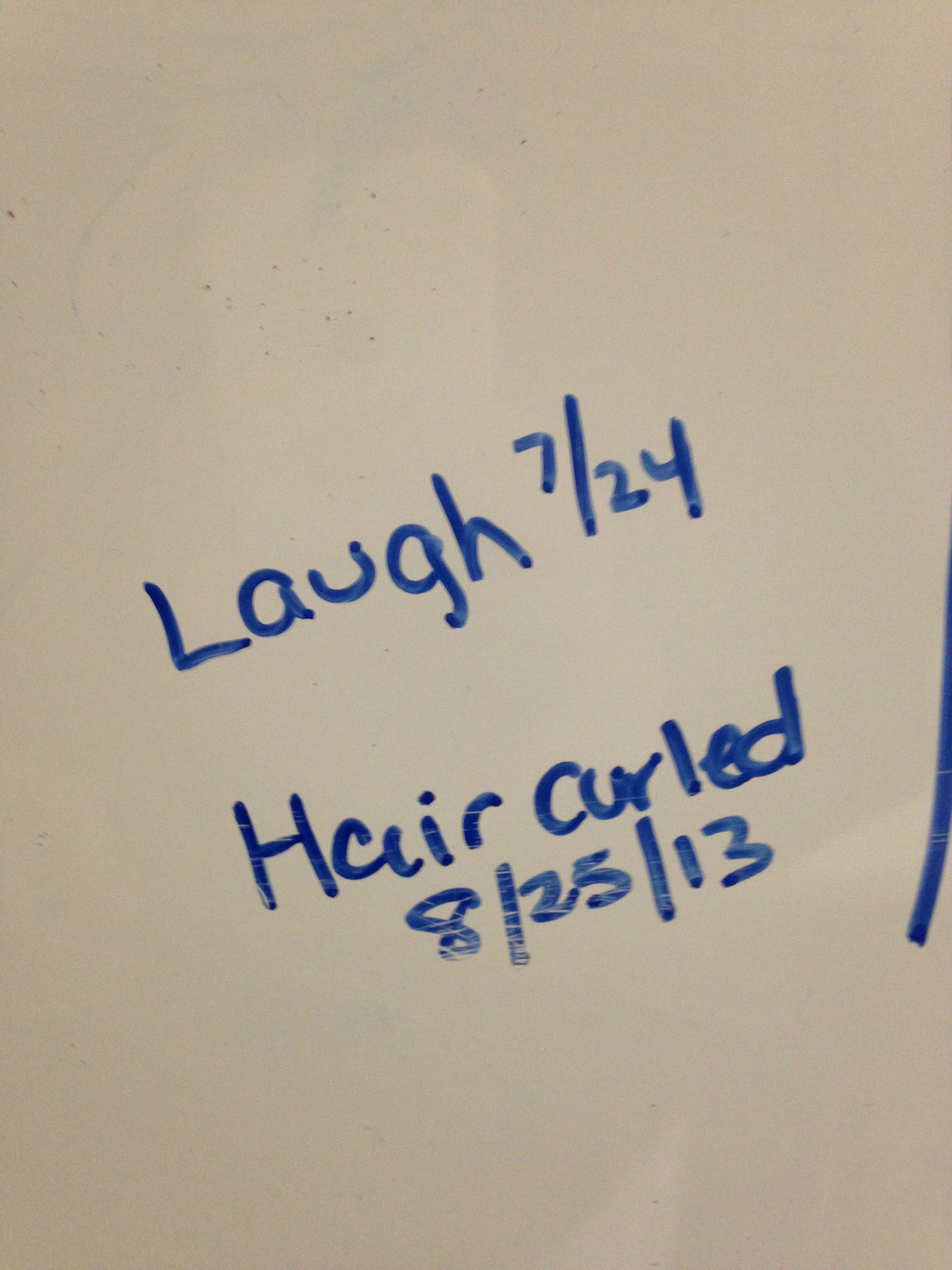
Plus, there are impermanent pieces of writing that remind us of other firsts, pieces of writing that we meant to act as short-term reminders, but which have slowly evolved into weird writings, liminal writings, halfway between temporary (by virtue of their media) and permanent (by virtue of our painstaking efforts to keep them going against all odds). Notes that we left ourselves on dry erase boards, but never erased even after they have jogged our memory and prompted us to “capture” the fact in our more permanent baby book.

Marker Firsts 1 Marker Firsts 2

So, in light of these competing types of writing, I was so inspired to compose a document that existed in a variety of different realms. Something permanent and impermanent. Something sentimental and clinical. A keepsake that looked back and projected forward.


**EDIT/EXPANSION BELOW**

I realized I was unintentionally vague about the writing that ended up creating. Here’s the skinny: I took a copy of my son’s birth certificate (weird, formal, institutional writing that we both want to hang on to and need to hang on to), and I wrote a bunch of different “First times” (prompted by our kitschy baby book) on it in pencil (prompted by those impermanent/permanent notes that we leave ourselves about our son’s firsts). Basically, I wanted to make a document that sort of embodied some of the strange, sentimental writings that we’ve collected since our son’s birth.

The process of writing all those “First time” prompts was at times sweet (“First ‘I Love You'”), at times heart wrenching (“First Major Illness”), but almost always controlled by my reflection on my own childhood. For example, my son will have a first GI Joe and Matchbox car and Barbie because we will buy him those things. They may be the only ones of these he ever has, but he will still have a first.

The weird institutional documents insist that we remember specific identifying things about our son (ourselves). Date/time of birth, name of mother, name of father, social security number, and so on. The Babybook insists that we remember other quirky, but cute identifying things about our son. First bath, first food, first time sleeping through the night. But we will remember firsts about our son, some idiosyncratic to us, some to our family.

Or maybe we won’t remember these things at all. Maybe they’ll be erased like a pencil mark or a dry erase board.

Posted in Uncategorized | 1 Comment

Surface

When I started thinking about what surfaces are precious my first thoughts were: notes or objects from family and friends.  I ruled out family because I was not going to write on my grandfather’s family tree or letters either of my parents have written (although Noel’s tracing paper would have solved that!).  Similarly I wasn’t going to write on letters from any of my friends.  It strikes me now that I could have printed out some of my long email exchanges w groups of friends, but I don’t think that would be fair to them to share publicly their words, even if I chose some fairly innocuous emails.

So I opened up my drawer where I keep notebooks, stationary, stickers, and other miscellaneous items.  The choice was obvious! I chose to use a page from my collage book.  I’ve had this notebook now for I think sixteen years, and I have somewhat consistently collaged in it for those sixteen years.  It’s about… 4/5 filled up.  I can go through it and note different fashion trends: ah the stacked glitter lipgloss!, those shoes are so mid aughts, I guess daisies were big that year, and so on.  So this notebook is important to me as something I have had for a large portion of my life, and as a place to be artistic in a fun, low stakes way.

As for what to write, I decided to do something journal-esque.  It’s sort of stream of conscious, sort of word collaged.  The subject matter was not so important, I just didn’t want to put that sort of pressure on it because then I wouldn’t write anything on it! Not dissimilar to creative writing: you can’t always wait for that “brilliant” line to do some writing, especially when the brilliant lines often come in the midst of writing (or at least for me).

–Amanda

Posted in Uncategorized | Comments Off on Surface

Precious (adj., adv.) Of great moral, spiritual, or other non-material value; beloved, held in high esteem.

“Inscription is a form of intervention…” ~ Gitelman

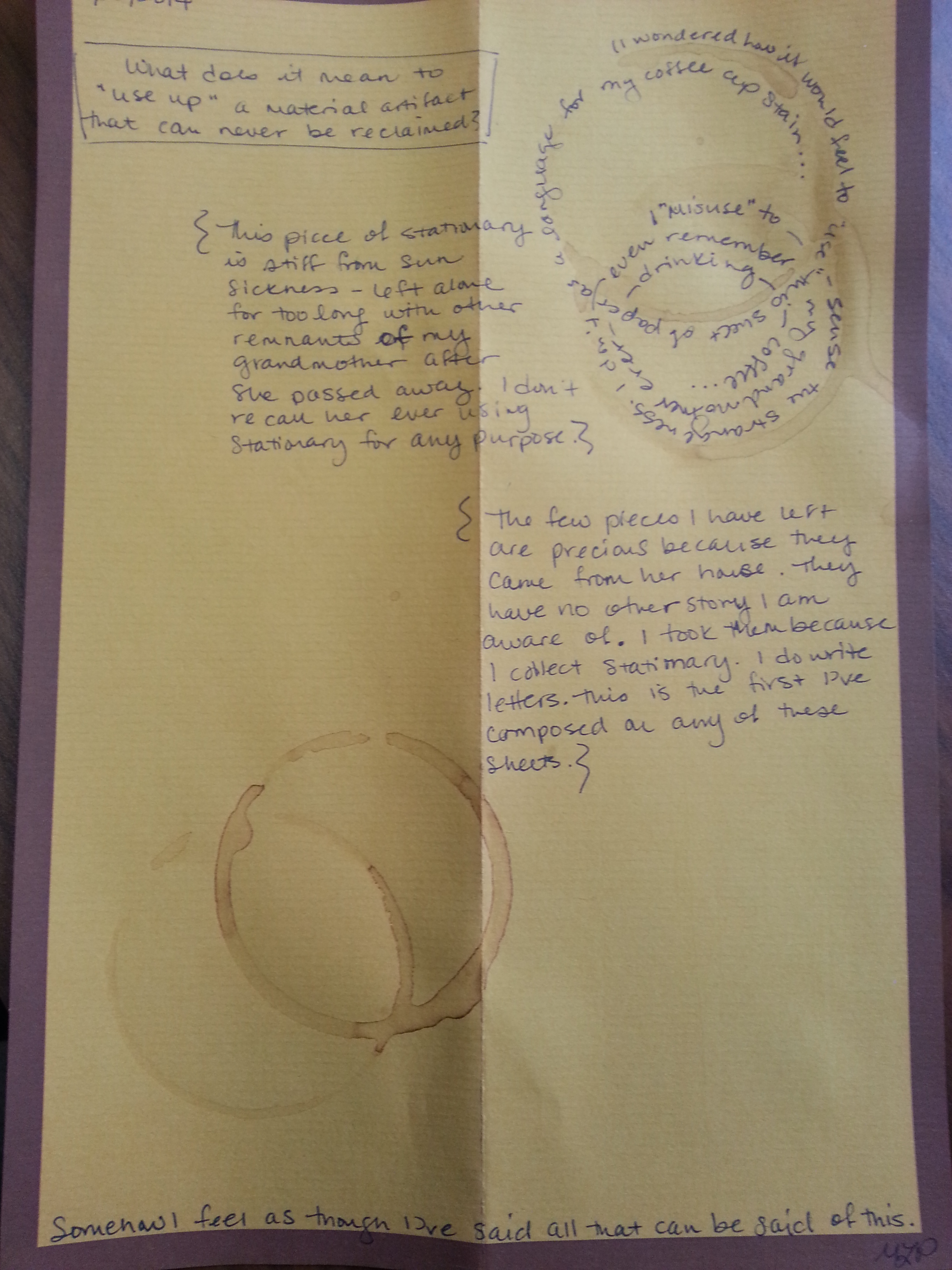
I borrowed the tea (in my case coffee) ring idea from the poet Susan Tichy, whose tea poems (visual poems with tea rings) chronicled her morning tea drinking. The ephemera of it. I compose this as much as I write it. A part of a morning ritual of reflection… a reflection that begins where they day’s writing and reading begins, but that which takes me through a bit of lost family material. There’s nothing special about this paper or its preciousness. This image is more the blog post than these ramblings. Not sure what I did here, just that it all feels rather incomplete.20140121_104047

A visual poetry aside:

When we were instructed to compose on some precious surface, I thought of a few of my visual poetry projects, so I thought I’d share a couple images.

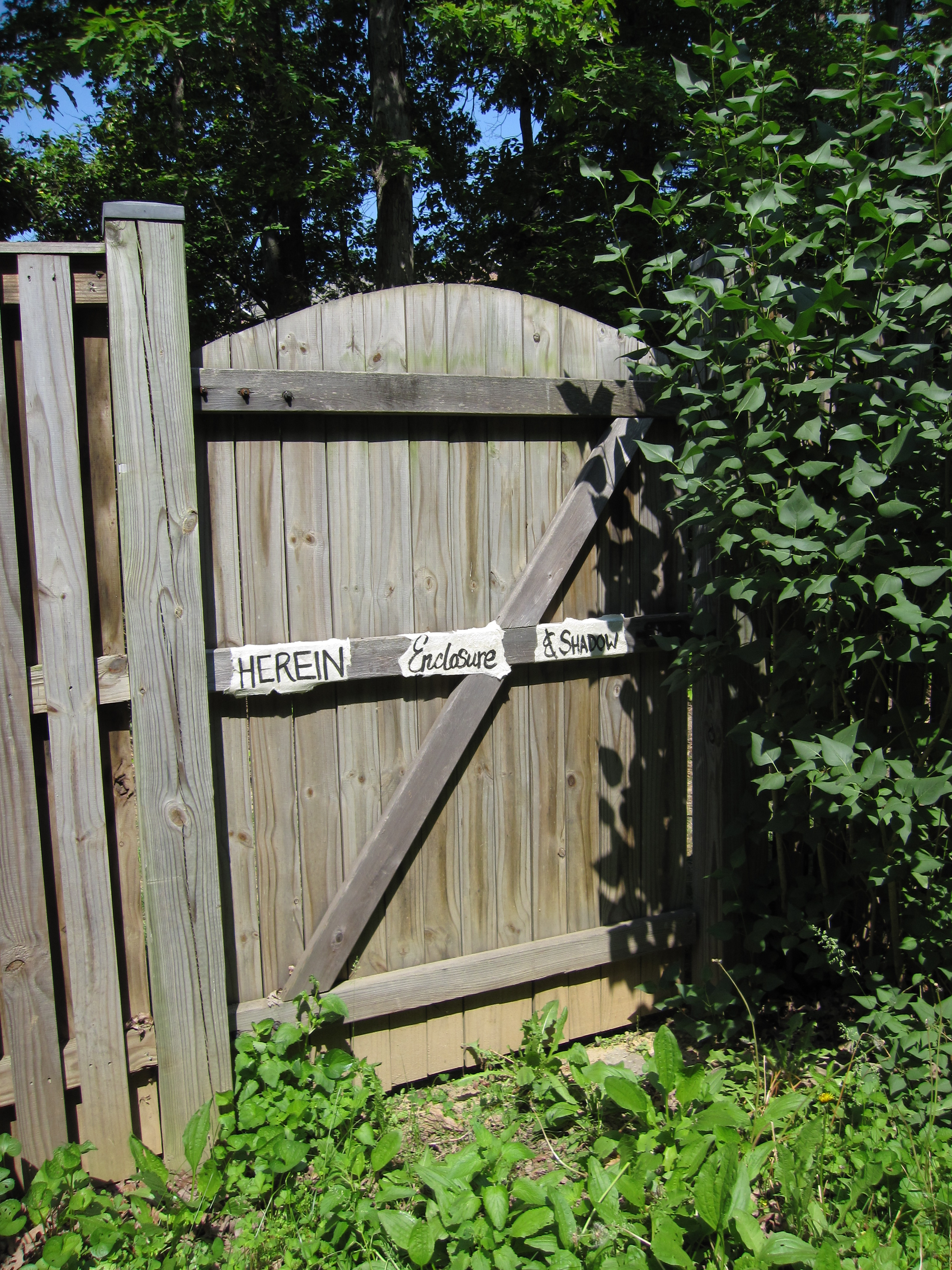
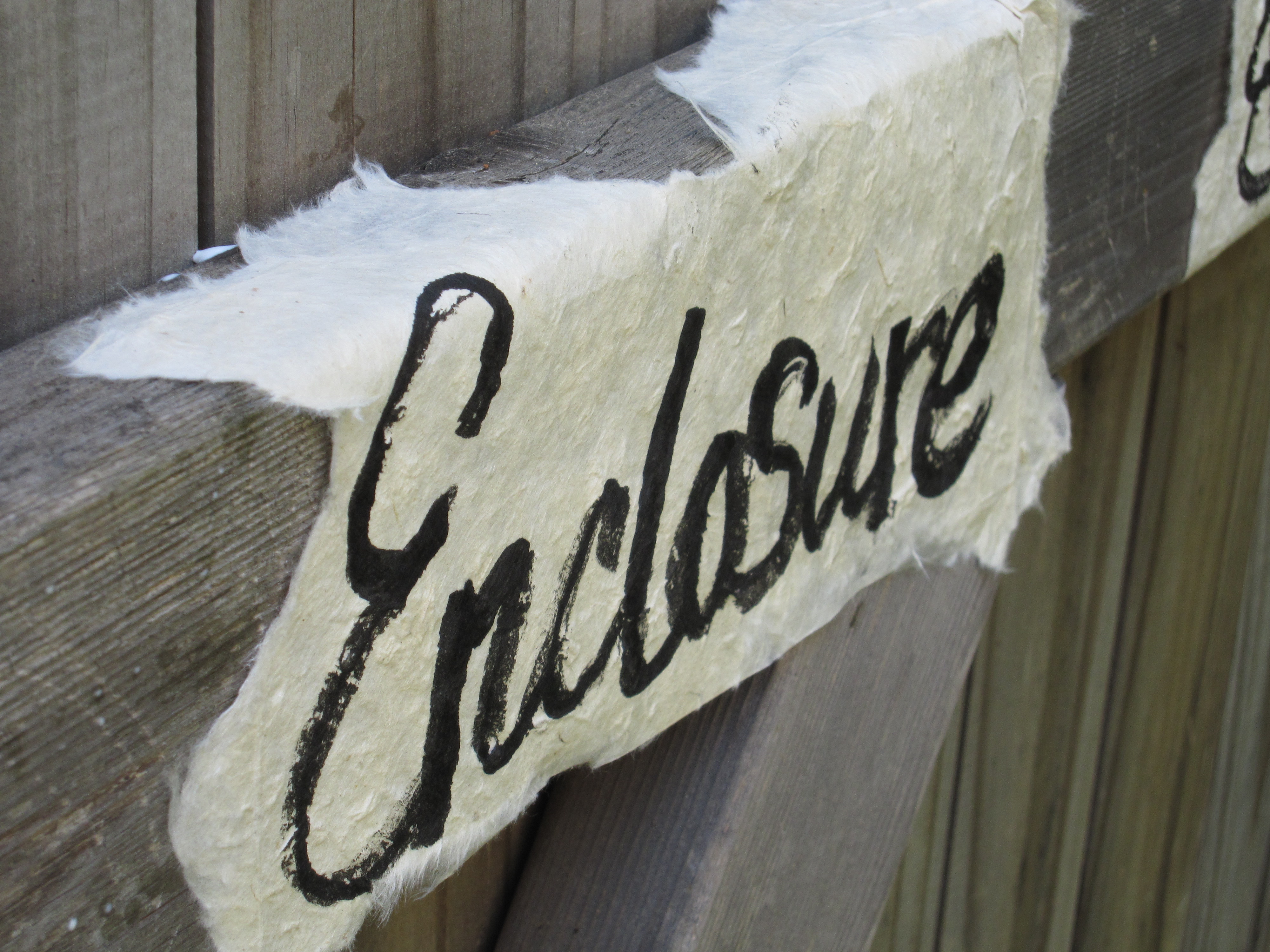
The first is a visual poetic project inspired by Ian Hamilton Finlay’s Little Sparta gardens. Although while his inscriptions are on stone, mine were crafted on sheets of natural fiber paper that, over time, disintegrated from exposure to the elements. I only documented the work as initially installed, as I moved from that location soon after its “completion.” All I know is that it is no longer there.HEREIN Enclosure

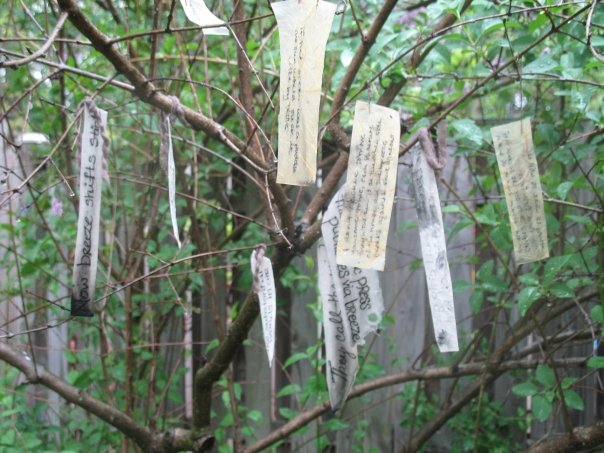
I also include here a visual project for an ecopoetics course on another delicate “precious” fibrous paper, whose disintegration I did witness and document.

2848_166099920050_347844_n

Also, this is just to say… capture creates a kind of ethical dilemma for me with these projects.

~ Moriah


Posted in Uncategorized | Comments Off on Precious (adj., adv.) Of great moral, spiritual, or other non-material value; beloved, held in high esteem.