3. 14159265358979323846264338327950288419716939937510 58209749445923078164062862089986280348253421170679

In the spirit of Pi day, I thought I’d share how I managed to memorize 100 digits of Pi five years ago. I no longer remember it — but I know this is the way in which I memorized it.

I have been thinking a lot about embodied files: in order to remember something as outrageous as 100 completely random numbers, you have to think really hard about the organization of that randomness, and try to create storage units that can make logical what is not.

The device is also a narrative one: it starts with the important number being 2, then in part 2 that number changes to 0, after 2 talks to the father at home and the father talks about his own growing up. Once 0 leaves the house again, he becomes emboldened by this and becomes a 6! But upon returning home, he returns to a 0.

I’m trying to think about how files are stored and recalled. In this case the numbers are stored in these 4 containers, with part 2 having a little bit of an extra hidden compartment, and this categorization allows me to access the contents within.

Without the infrastructure of all this, the raw data is unmanageable. There is simply too much for me to handle, or try to memorize.

But with these sort of heuristics I am able to allow my memory to expand beyond what it ordinarily is capable of. This seems to be the goal of the file: to serve as something else outside of memory that can serve as memory. But I think here I can argue the case that I can create something inside my memory to serve as memory — and I wonder about the implications of this, I guess.

Already memorized:
3.14159

XXXXXXX

PART 1

a. 2 functions as “turn,” 5/9 repetition:
2 — 65 35
89 79

b. repetition of 3s:
323

c. even number swaps:
84 62 64

b. repetition of 3s:
3383

a. 2 as turn:
2 — 795

(notice the symmetry)

XXXXXXX

PART 2

a. 0 as “turn,” repetition of 8:
0 — 28/84

b. my dad graduates HS:
1971

| My dad activates this side-plot.
| Here begins a slow escalation of “turns”
|
| a. 9s and 3s
| 6 — 93 993
|
| b. my area code and another 5
| 7 — 510 5
|
| c. how old I was at the time
| 8 — 20
|
| d. 4 is 44 and 5 is 2+3
| 9 — 74
| 9 — 44 5
| 9 — 23

a. 0 as turn
0 — 781

(again, notice the symmetry)

XXXXXXX

PART 3

a. a bunch of even number turning on 6.
6 — 40
(6 — 28)
6 — 20

b. This little mirrored 89.
89 / 98

a. return to base with 6 – 28 again.
(6 — 28)

(still symmetrical)

XXXXXXX

PART 4

a. the zero here activates the final chapter,
which is 2 series of 3-4-2, but with things in them
0 – 34(8)2 / (5)342

b. 7-11 backwards. I would always stop by on the way home from school.
11 7

a. Aaand we’re home.
0 – 679

(still symmetrical)
Posted in Uncategorized | 1 Comment

A File of Non-Places

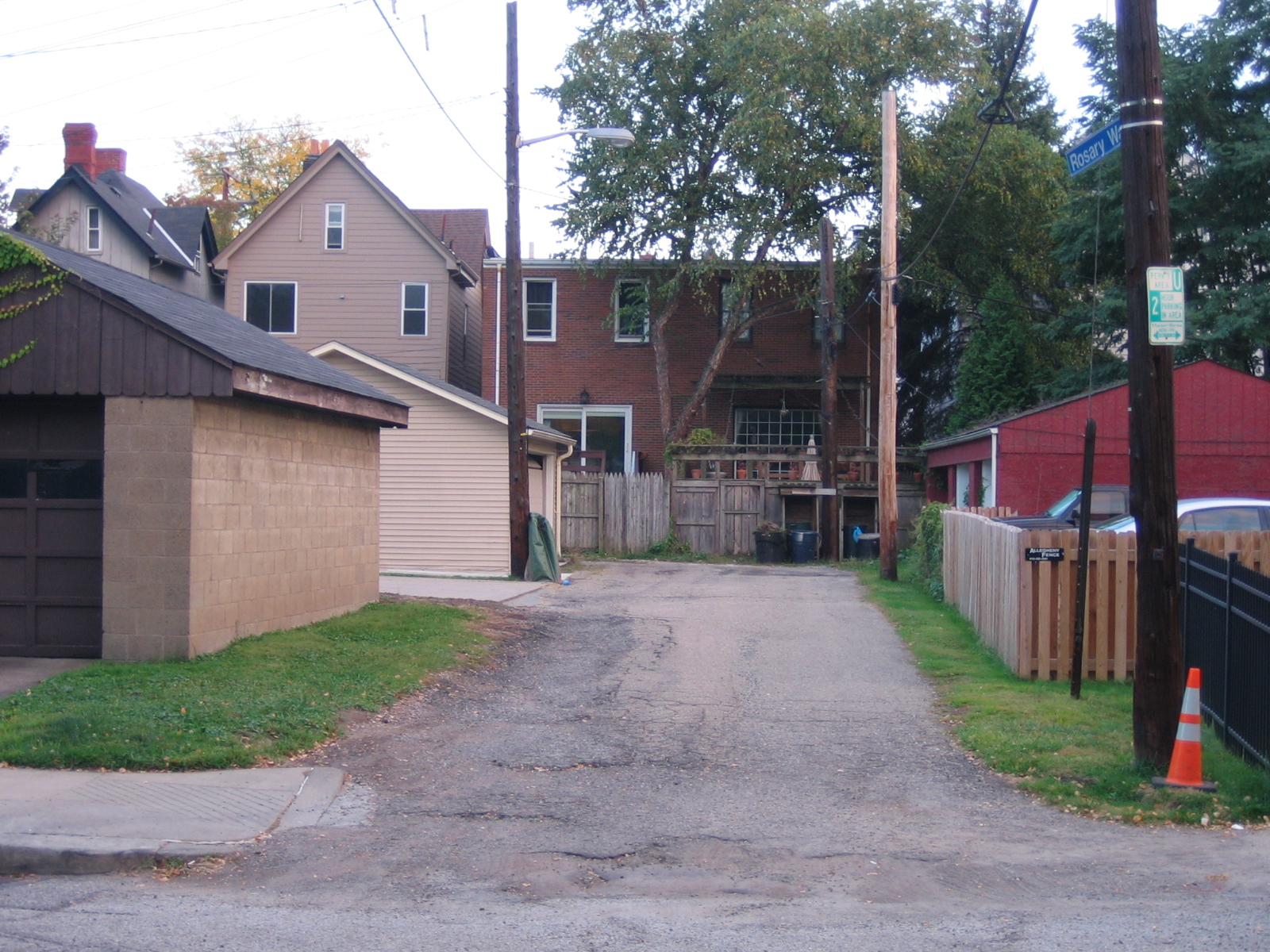
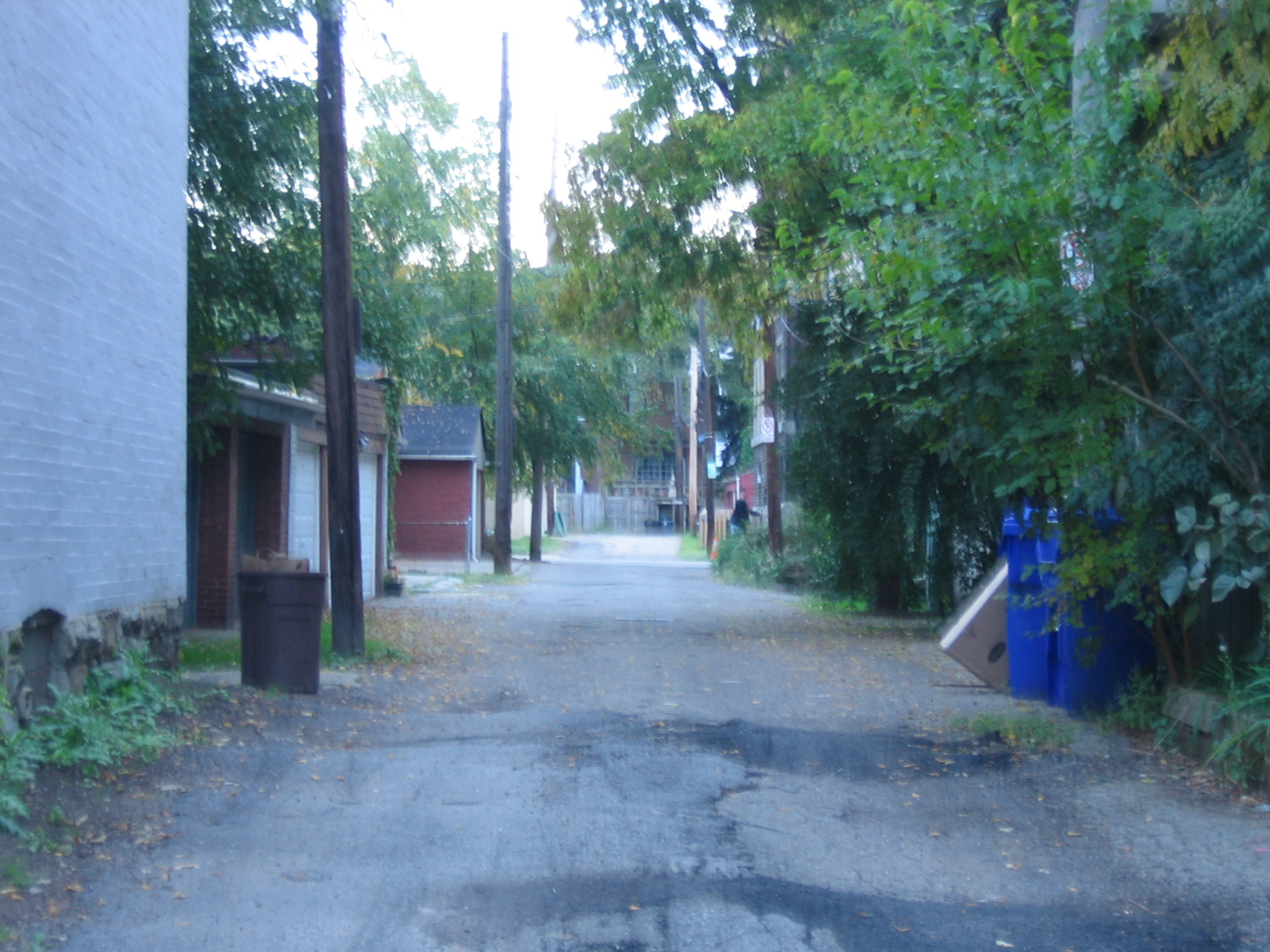
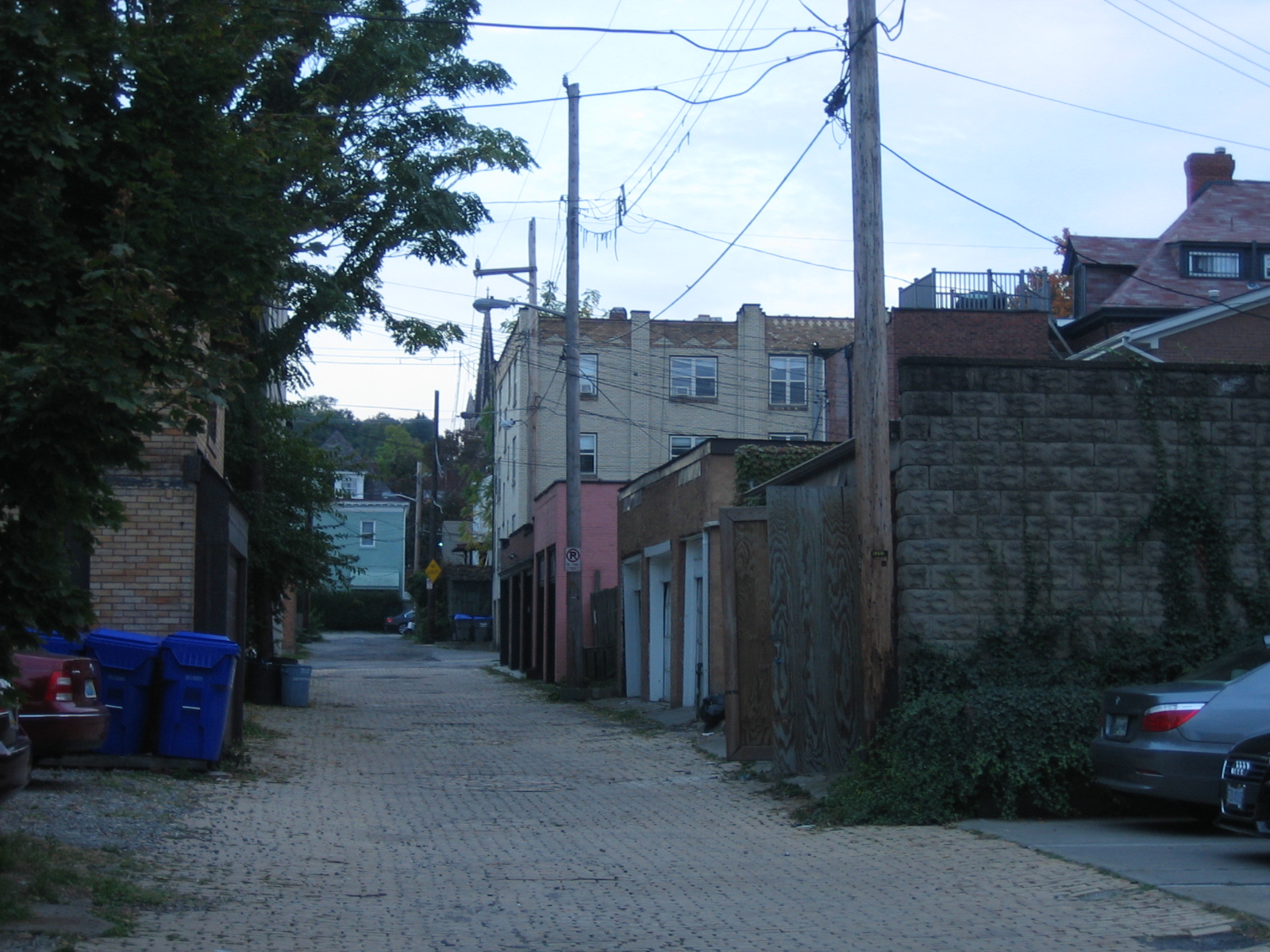
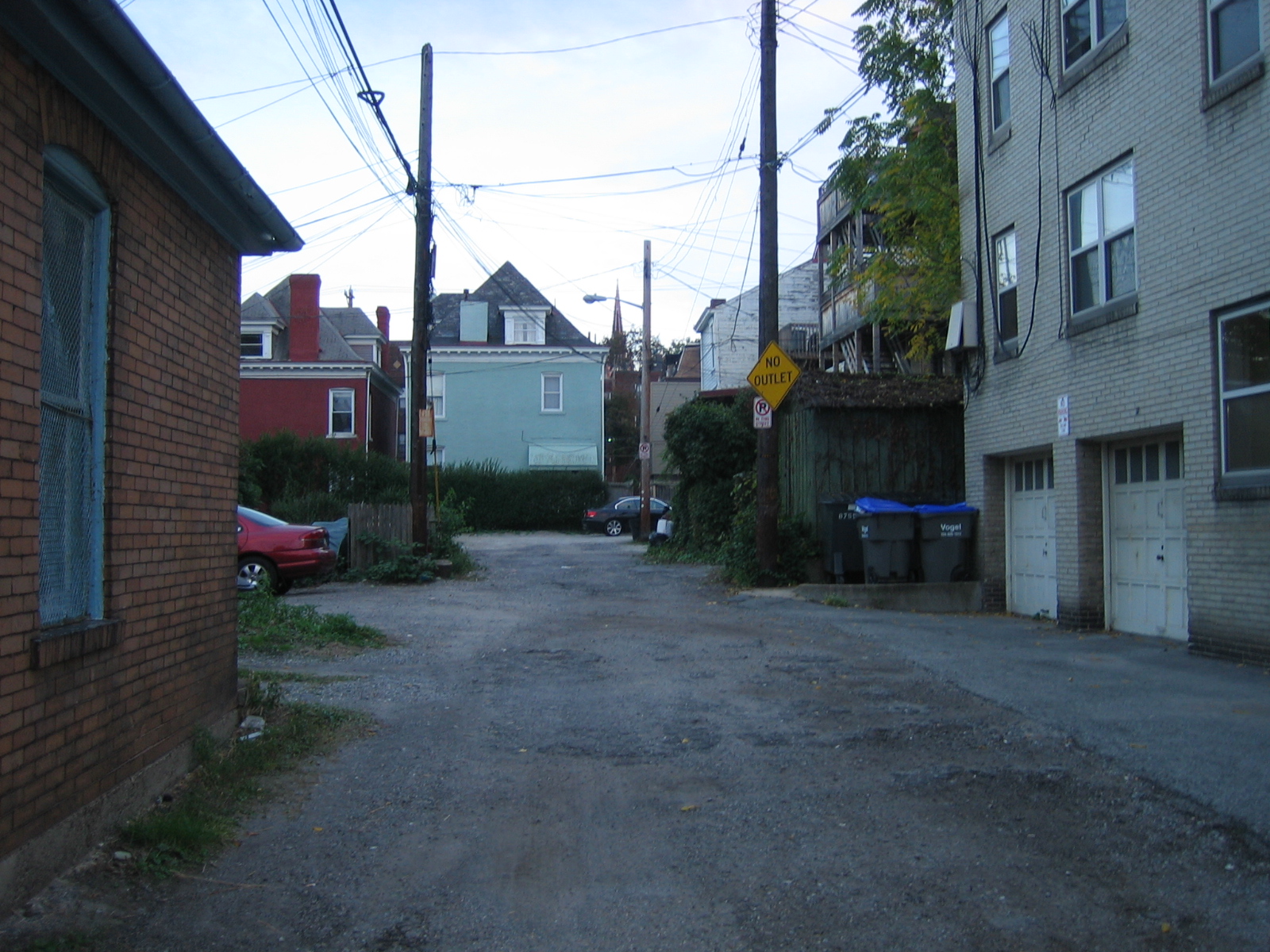
In the fall, I started taking pictures of back alleys, lanes, in-between city spaces. There are no postcards of these places, but we spend so much time in them and moving through them in our day-to-day. I think I was meditating on home and place at that time, having just moved here to Pittsburgh. Then I sort of forgot about it, moving on to think about other things as they took my attention. So now this file of non-places comes back to me, or rather I come back to it, like a visual catalogue of how I was thinking and feeling in the fall– attracted somehow to these nameless, unglamorous, yet essential spaces in a city that still felt somewhat anonymous to me. This was what I was seeing, or perhaps looking for, or both. It’s interesting to me that I made a point of capturing and collecting non-things, non-places, keeping and organizing them like we would significant things, like certificates of completion and receipts from the dentist and little pictures our moms drew us from time to time. Can you make a file of (non-)places? Have I done that? I like that this is making me reframe and resituate my thinking of the built environment, as our discussion of graffiti did as well.

IMG_4388

IMG_4383

IMG_4374

IMG_4372

Posted in Uncategorized | 6 Comments

Unravelling.

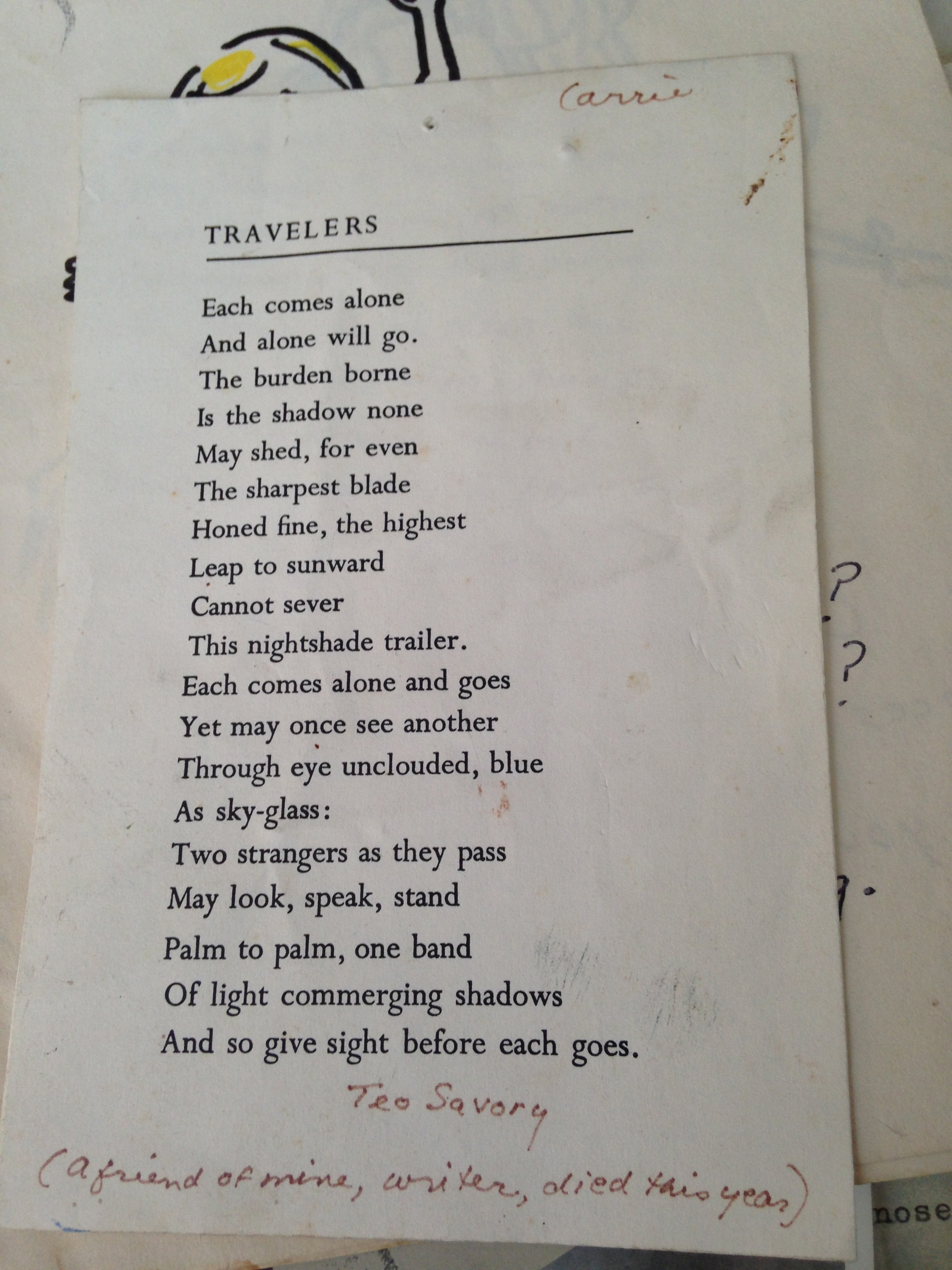
I have had jobs in which I had to do a lot of filing, but eventually it began to drive me crazy.  There seemed to be no end to it: stacks of paper that seem to grow larger, no matter how much you chipped away at them.  Perhaps it took me a long time to file.  I can’t remember the rules, but I remember that my old boss had a much different logic for filing than I did.  Eventually I, like Ignatius Reilly, began filing things (not everything, but the things I thought he wouldn’t notice) in the trash.  My own filing system is more about standing the test of time than anything else.  I make big piles and then every so often go through those files and throw away the things I can’t be bothered with.  Eventually, if the pile is small enough, I put it in a folder and call it a file.  Here are the partial contents of one, titled “Memorabilia” (not to be confused with another file, labelled “Miscellanious Memorabilia” or another file labelled “Miscellany”) The randomness is important to me. I feel like the fragmented nature of this collection helps me remember the full scope of my life to date. It is, in many ways, the “illogical record of lived experience” that Drucker and Noel talk about below.  And of course, a “logical record of lived experience” would make no sense at all.

A poem sent to me by my aunt after my friend committed suicide when I was 16.  It's particularly notable that I kept this, since I've moved around so much and almost have nothing remaining from those years.
A poem sent to me by my aunt after my friend committed suicide when I was 16. It’s particularly notable that I kept this, since I’ve moved around so much and almost have nothing remaining from those years.
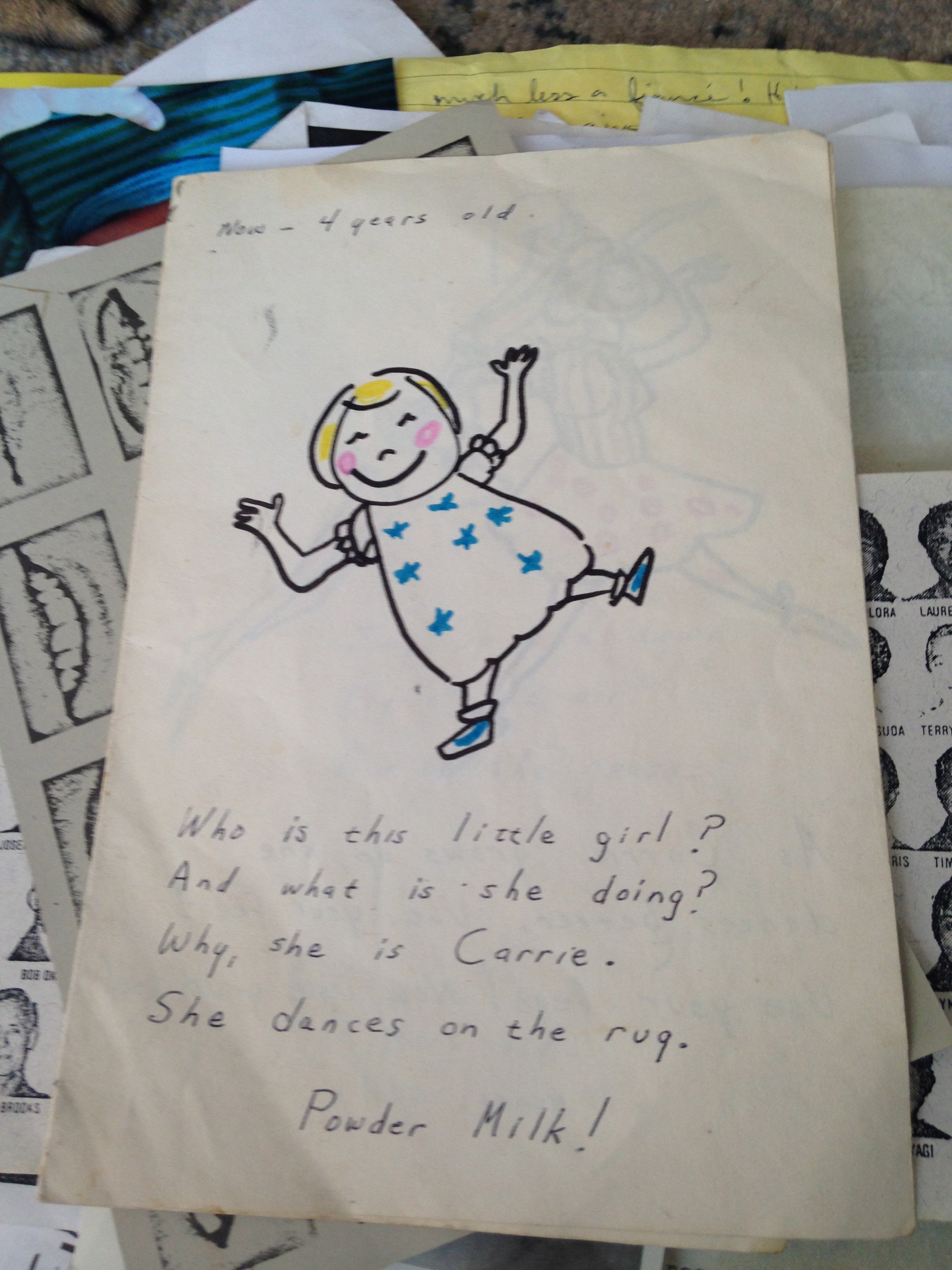
My father wrote and drew books for us, in the hopes we would learn to read early.  We did.
My father wrote and drew books for us, in the hopes we would learn to read early. We did.  “Powder Milk” was a song I loved from Prarie Home Companion.  Later, I would go to high school with Garrison Keillor’s daughter.  Very Minnesota.
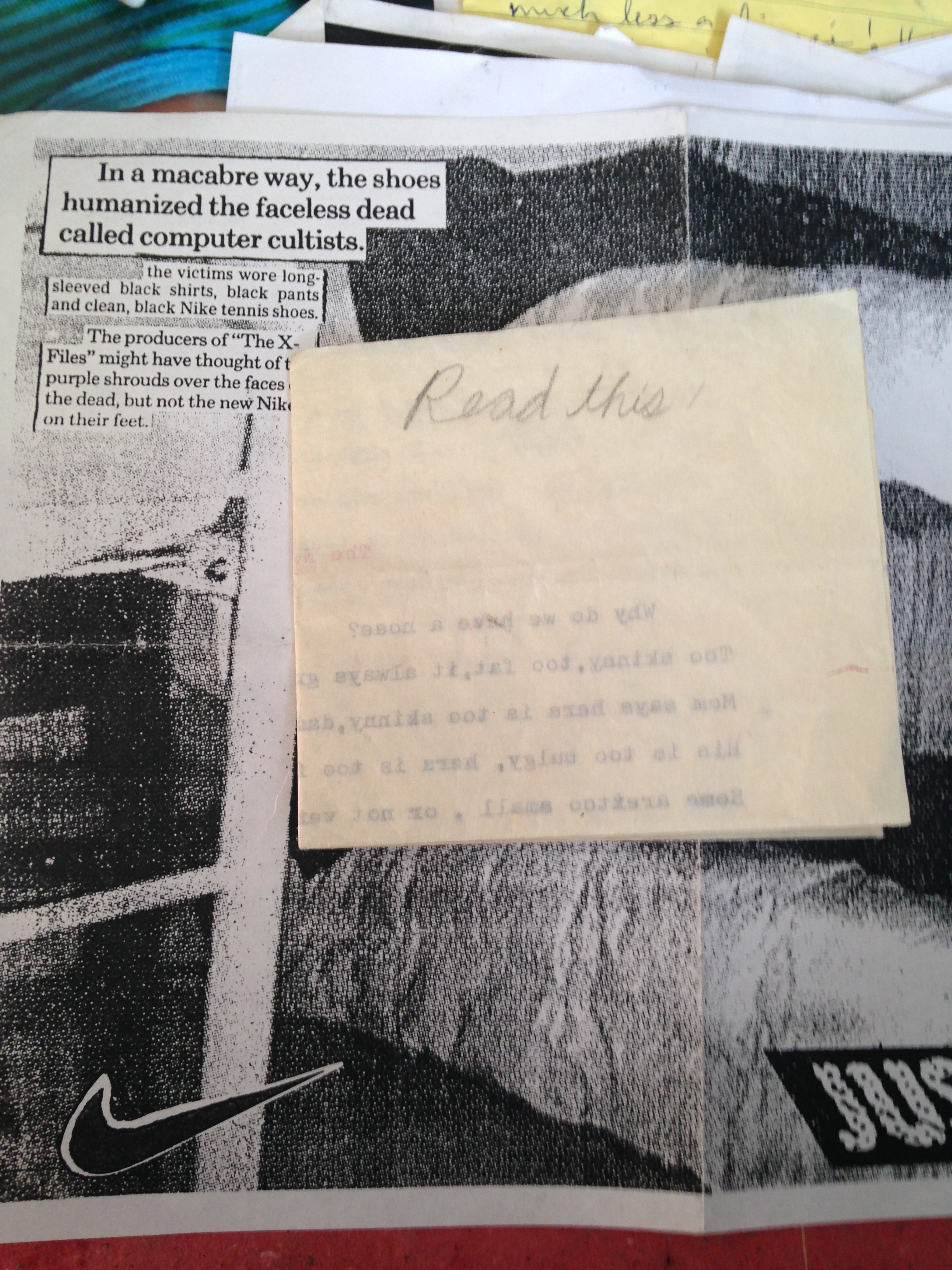
I'm trying to draw your attention to the "Read This," which is a copy of one of the first poems I wrote (The first, "Fondue Party on my Head" is lost to eternity) but I suppose you might be drawn to the description of the doomsday cult. This was when "Just do it" had just come out and my friend made that "advertisement" surely at Kinkos, probably because he had a crush on some girl who worked there. He was my roommate for a while and I sometimes wonder what ever happened to him.
I’m trying to draw your attention to the “Read This,” which is a copy of one of the first poems I wrote (The first, “Fondue Party on my Head” is lost to eternity) but I suppose you might be drawn to the description of the doomsday cult. This was when “Just do it” had just come out and my friend made that “advertisement” surely at Kinkos, probably because he had a crush on some girl who worked there. (It says “just do it” in the corner.)  I wonder whatever happened to that guy.


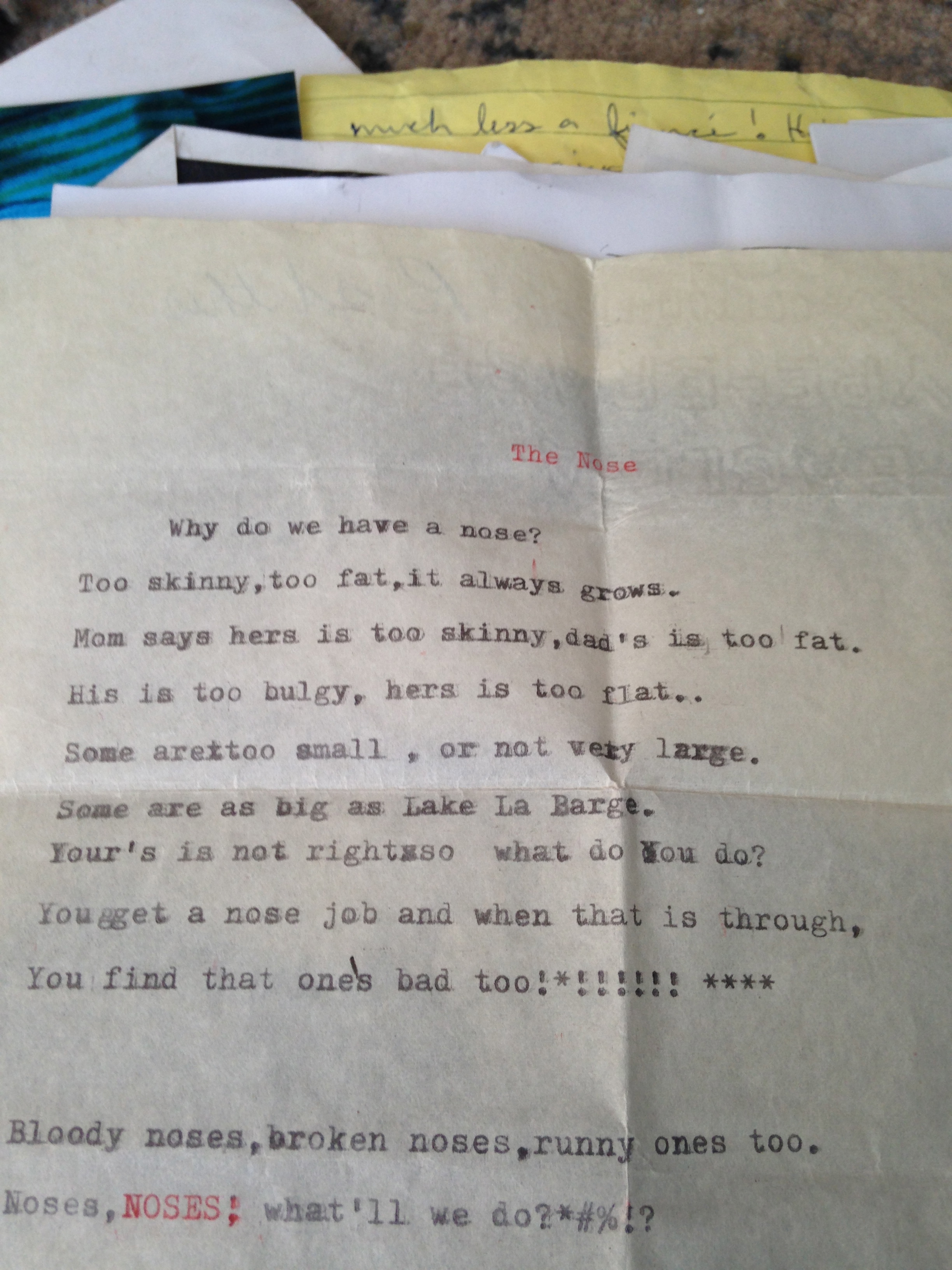
The poem in question.
The poem in question.  C. Hall, age 7.
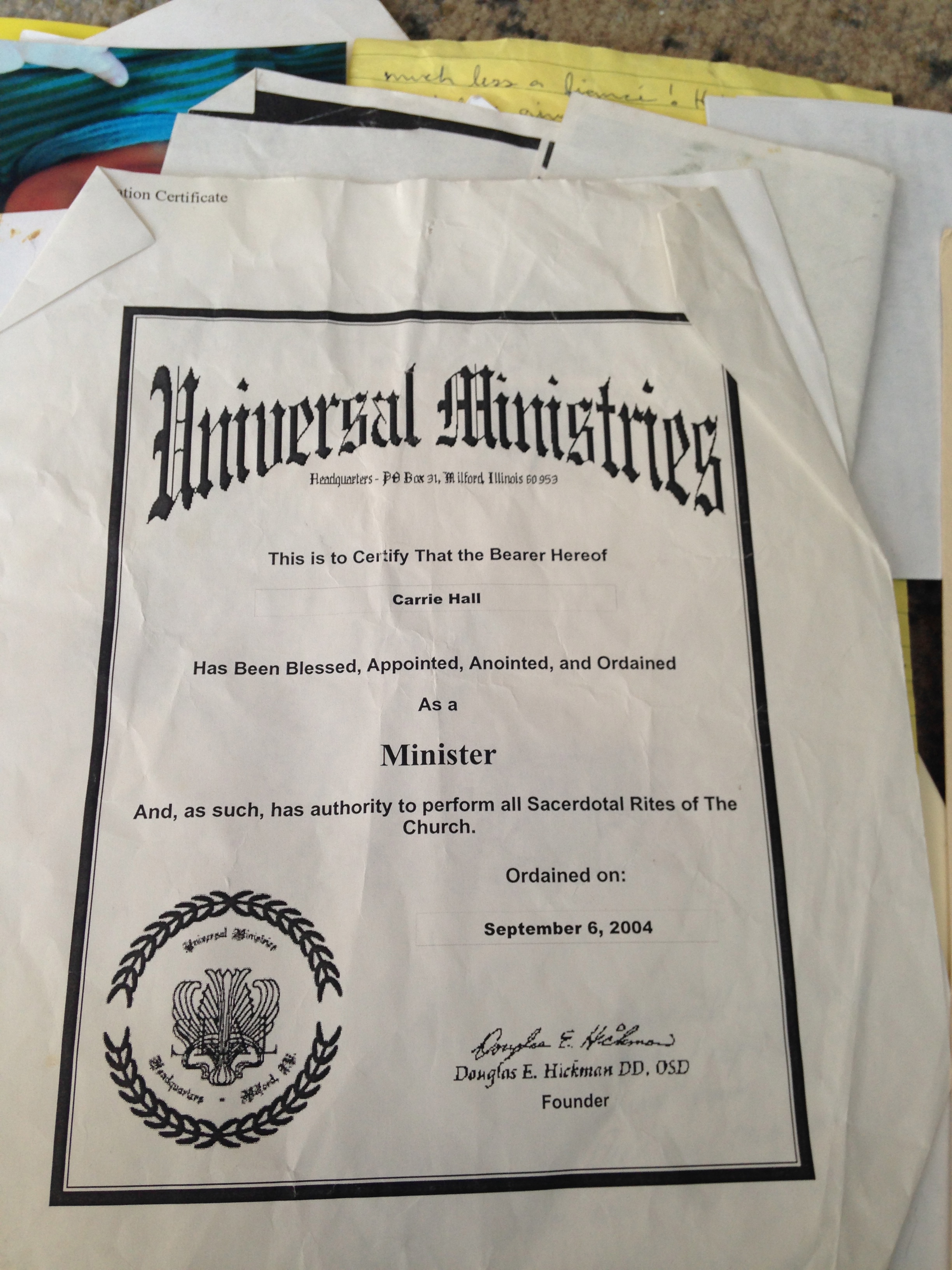
I was ordained online so I could officiate a friend's wedding, but it was called off at the last minute.  The (very long) story surrounding it is one of the worst I've ever been involved in, so I'm not really sure why I keep this memento.
I was ordained online so I could officiate a friend’s wedding, but it was called off at the last minute. The (very long) story surrounding it is one of the worst I’ve ever been involved in, so I’m not really sure why I keep this memento.
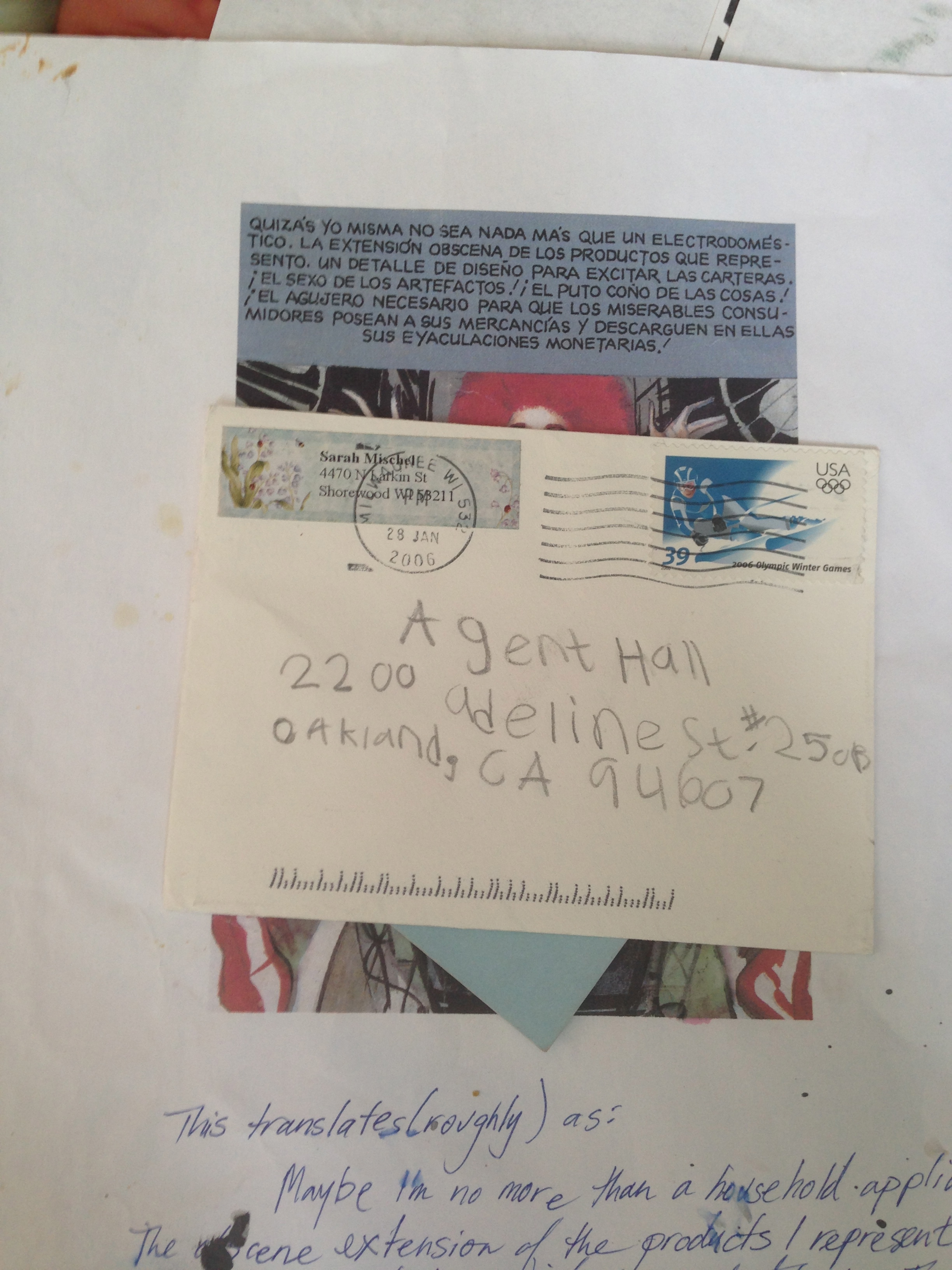
A letter from my niece, then 7 or so, now 17.  For at least 8 years we wrote to each other as secret agents.
A letter from my niece, then 7 or so, now 17. For at least 8 years we wrote to each other as secret agents.
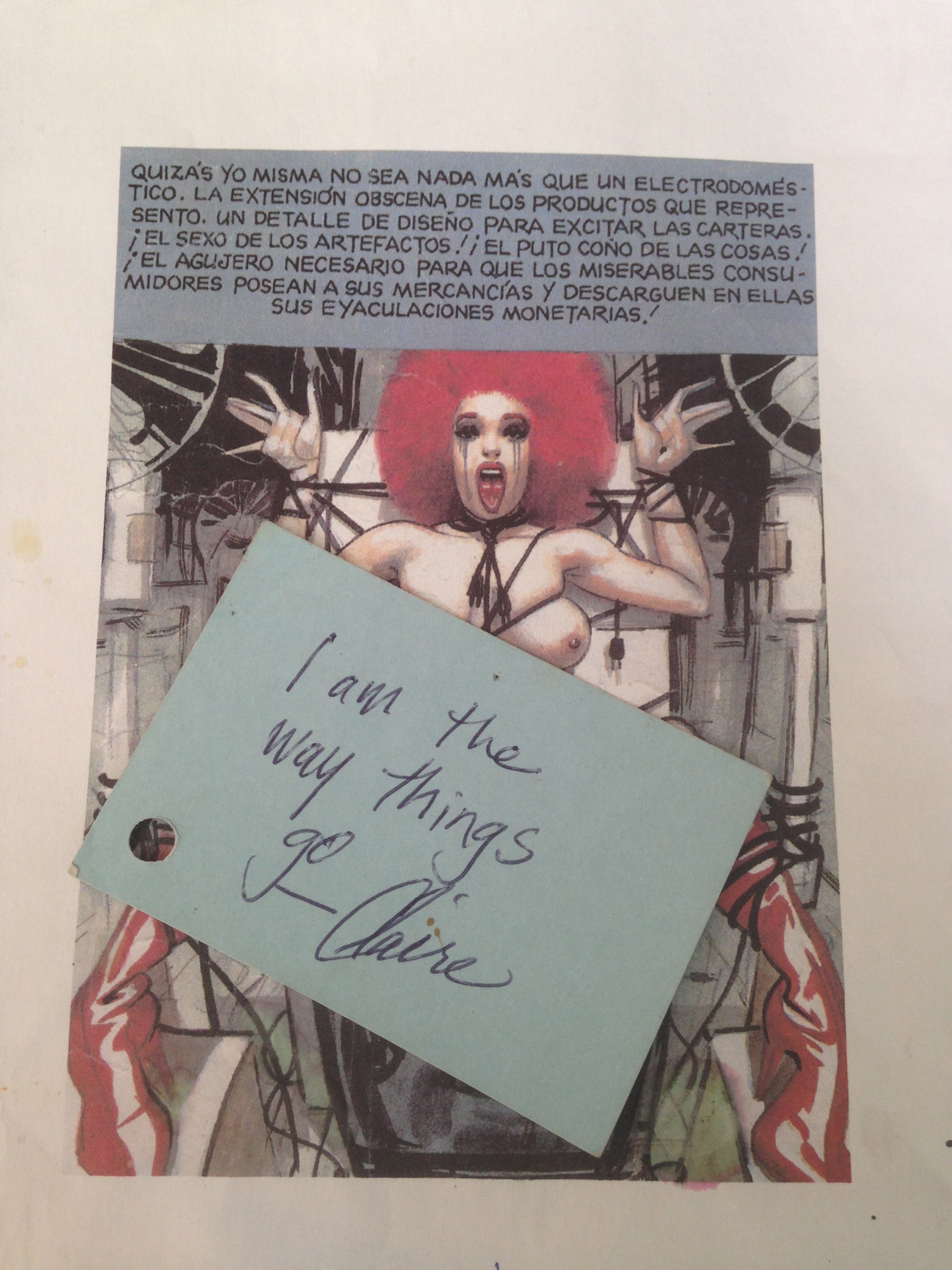
From a Spanish comic book.  Translates: "Maybe I'm no more tha a household appliance.  The obscene extension of the products I represent.  A design detail to excite the pocketbook.  The sex appeal of objects!  The f@#$ing c#$t for things! The necessary hole for the miserable consumers to stash their merchandise and discard their ejaculations of money!
From a Spanish comic book. Translates: “Maybe I’m no more tha a household appliance. The obscene extension of the products I represent. A design detail to excite the pocketbook. The sex appeal of objects! The f@#$ing c#$t for things! The necessary hole for the miserable consumers to stash their merchandise and discard their ejaculations of money!”  The quote on top is from a play.  I think it’s God talking.
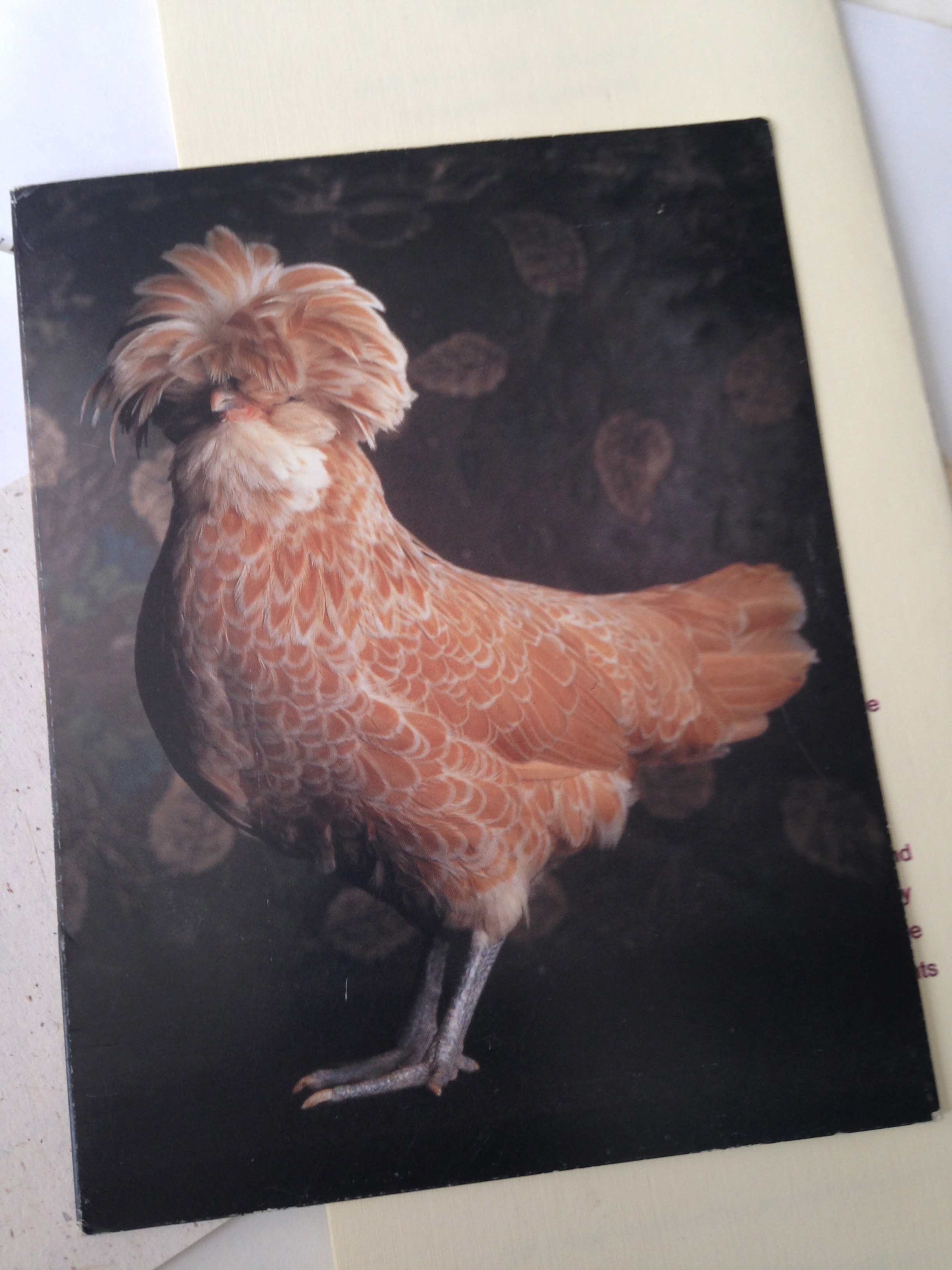
For Michelle, an unsent card of a show chicken.  I liked him too much to send him away.
For Michelle, an unsent card of a show chicken. I liked him too much to send him away.


Posted in Uncategorized | 3 Comments

Archive: House.

DSC_0233 DSC_0234 DSC_0236 DSC_0237 DSC_0240 DSC_0241 DSC_0242 DSC_0243 DSC_0244 DSC_0245 DSC_0246 DSC_0247


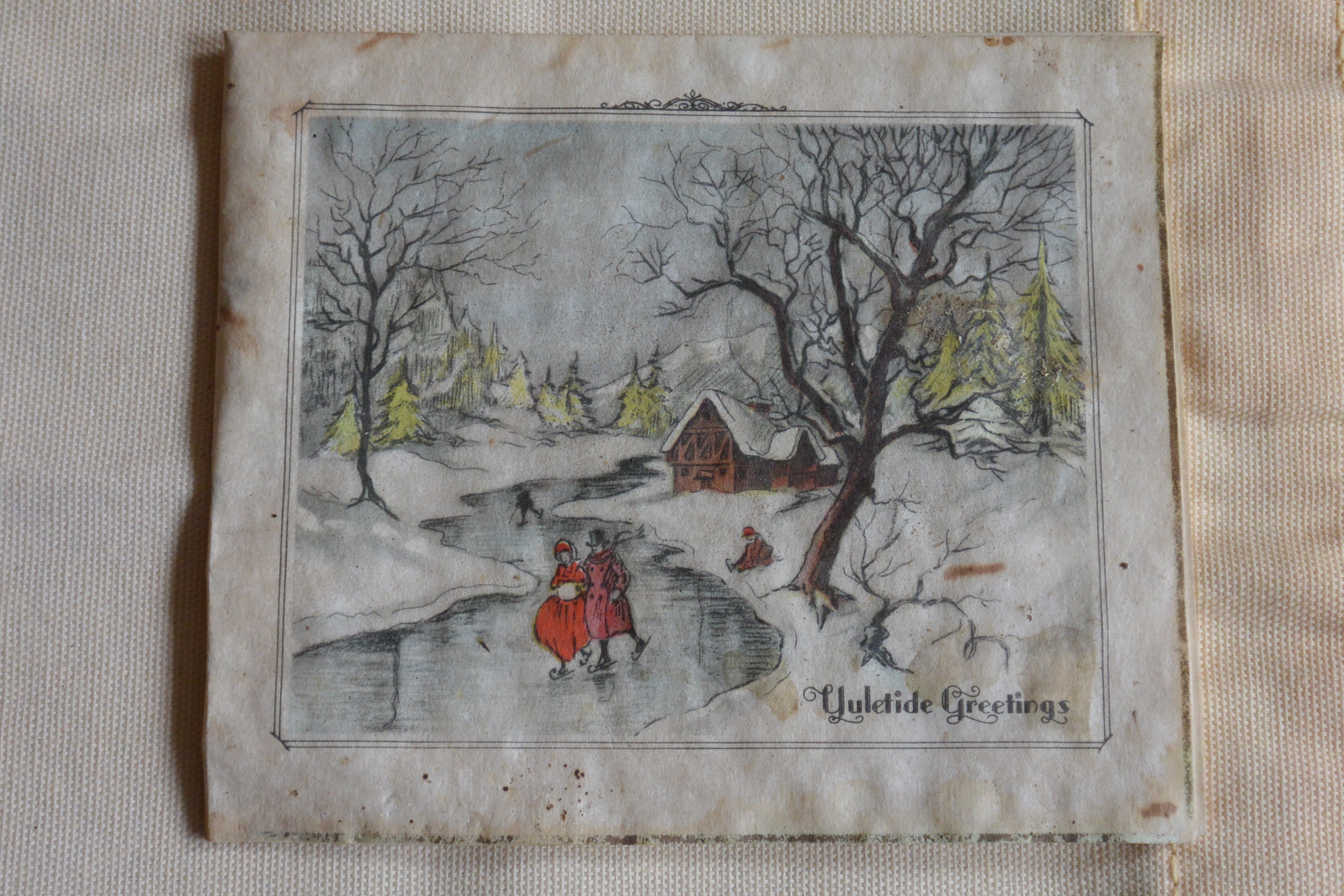
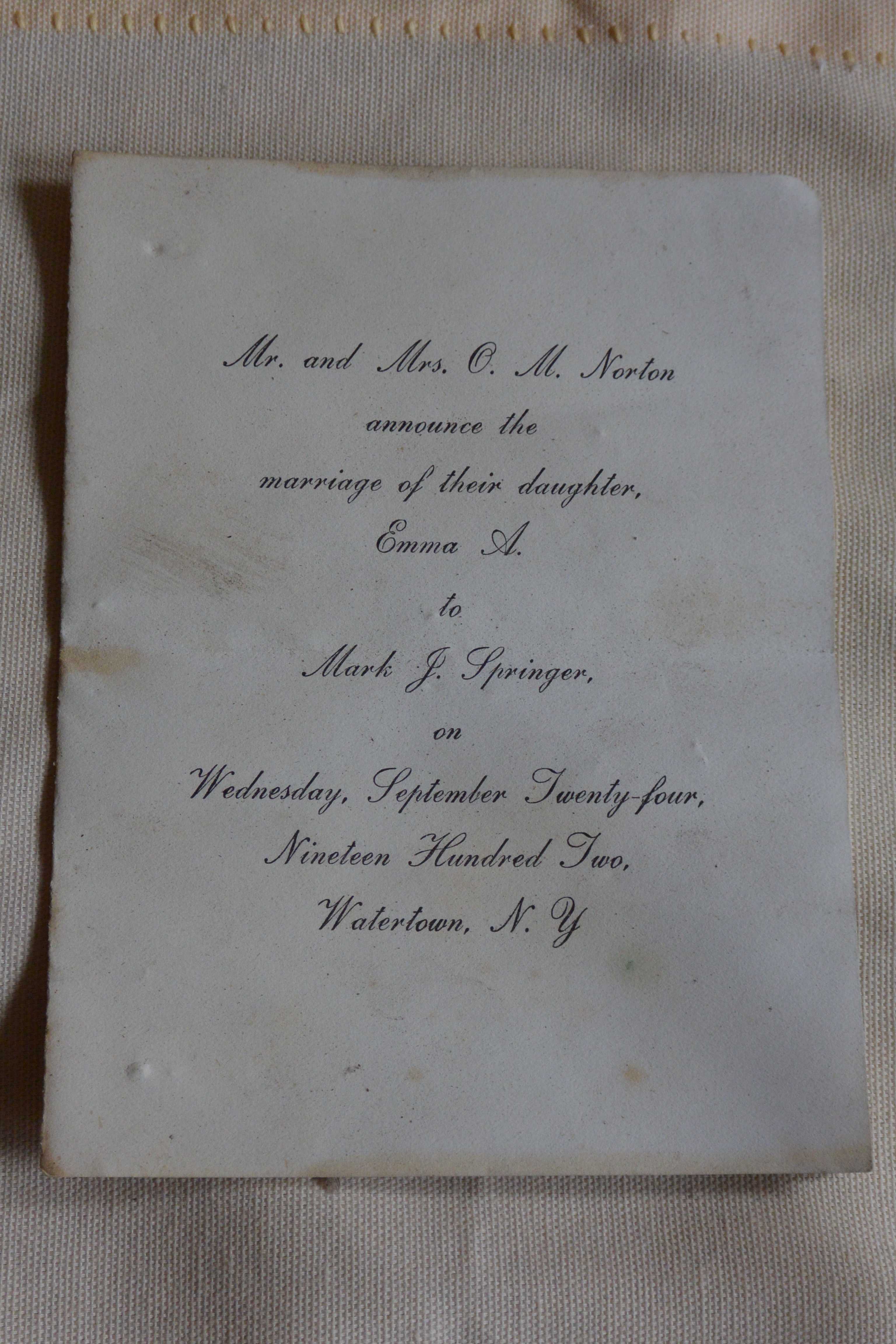
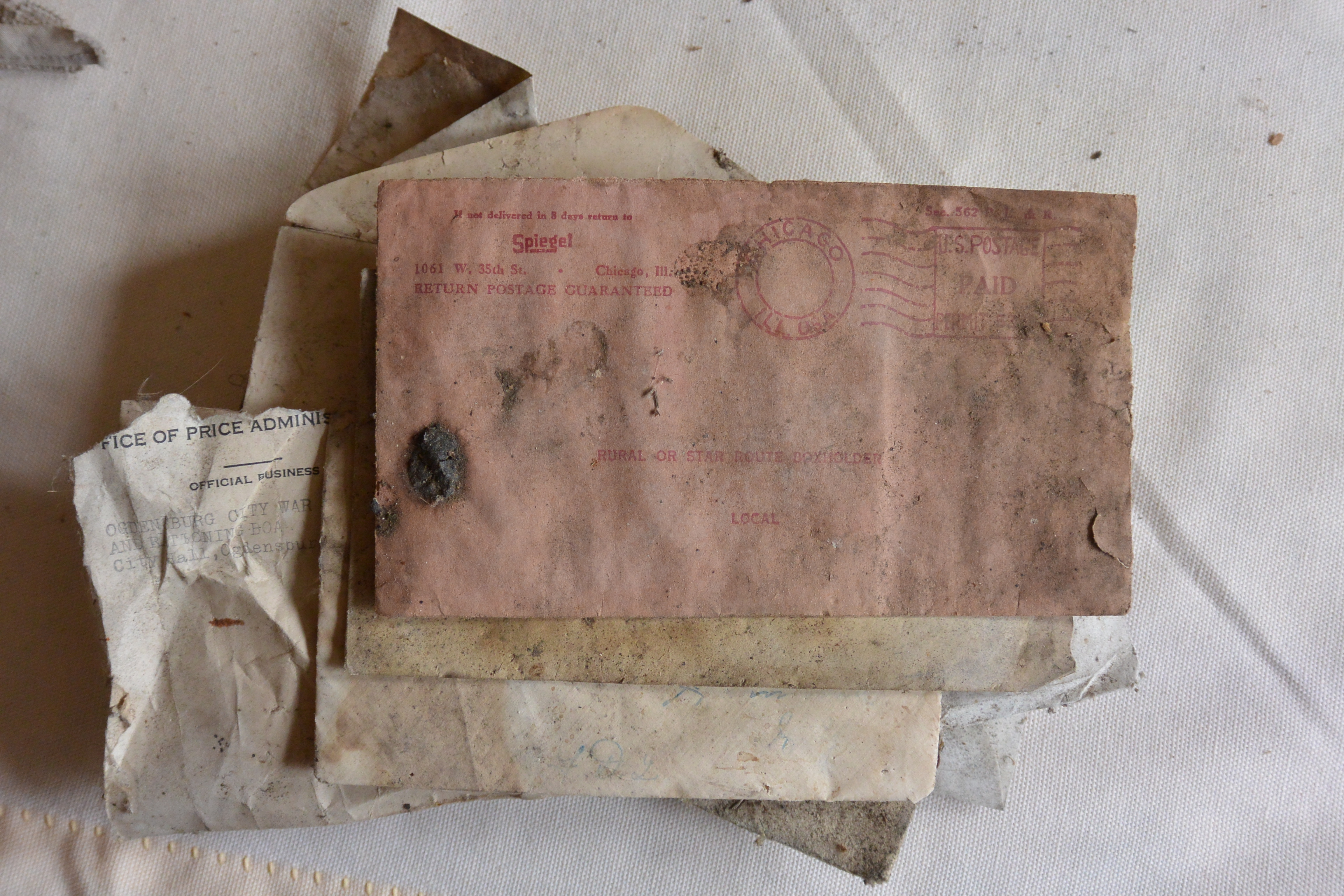
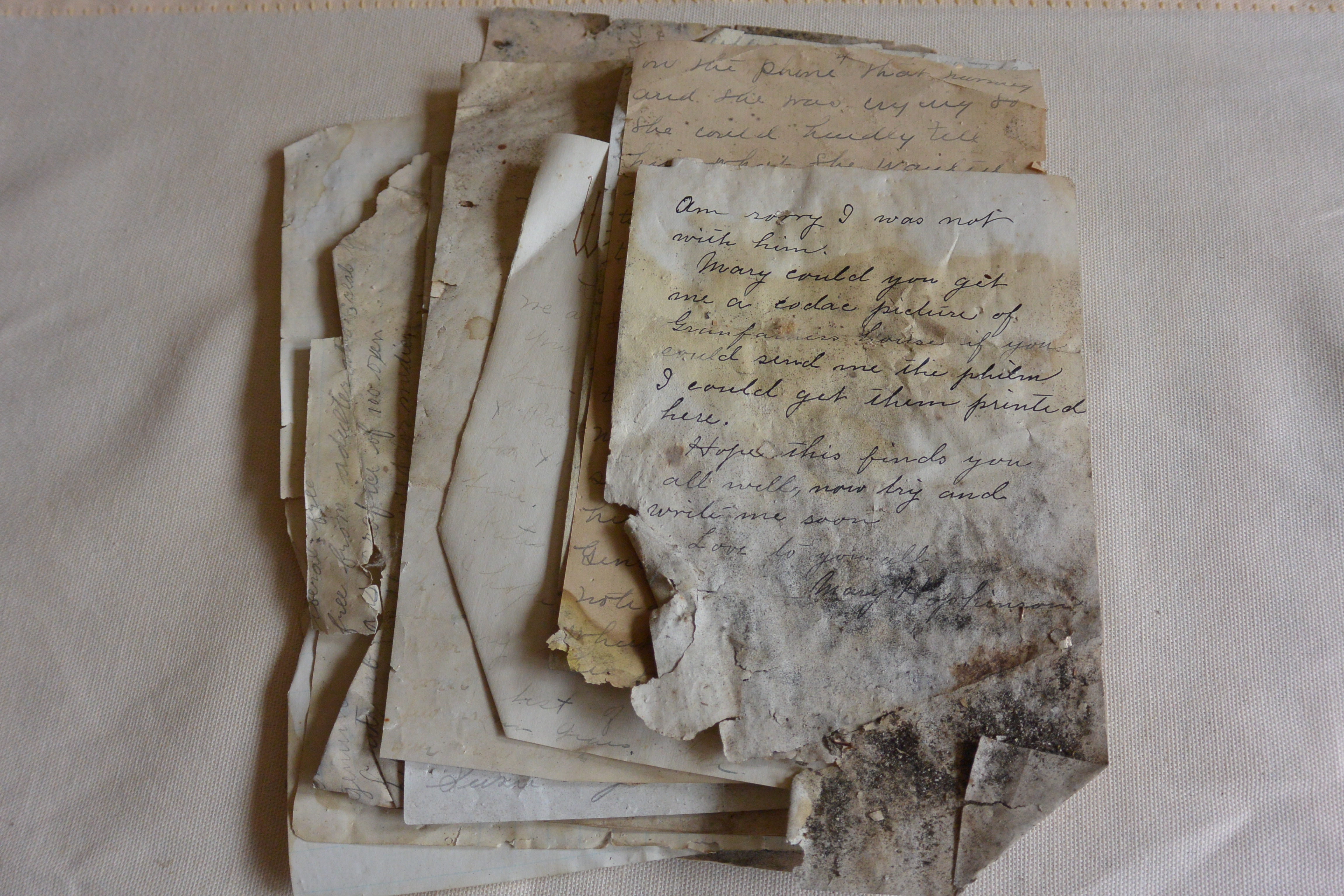
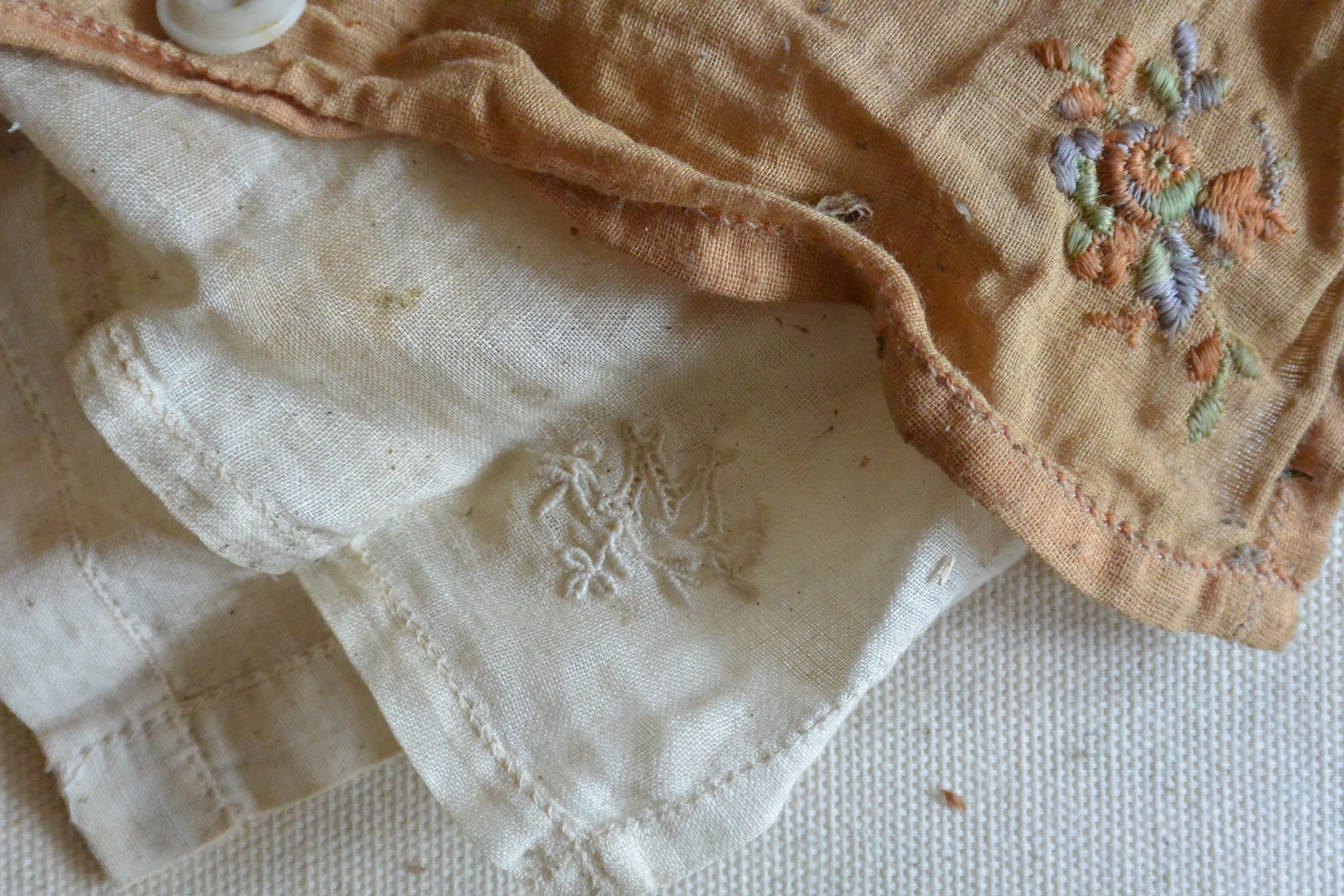
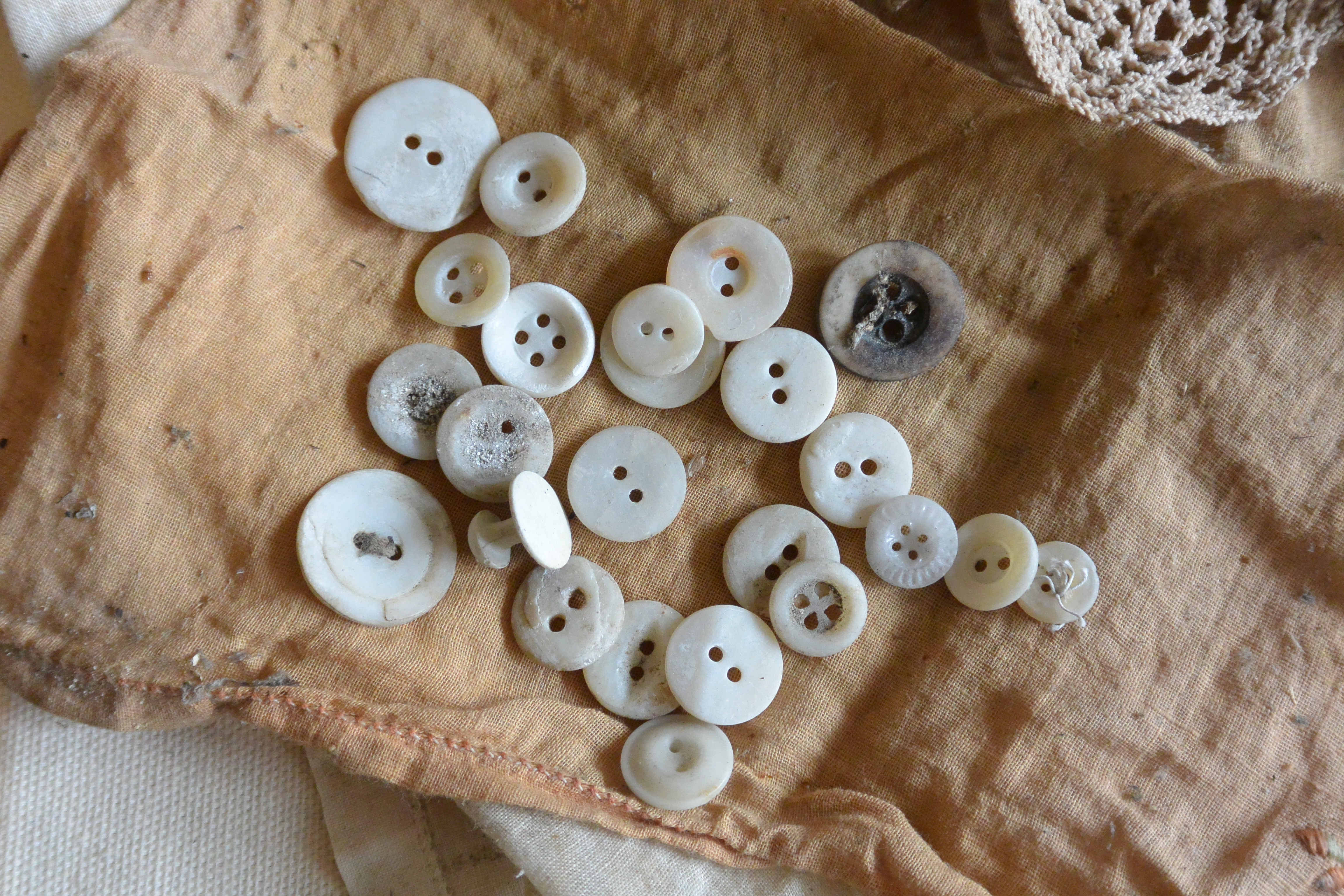
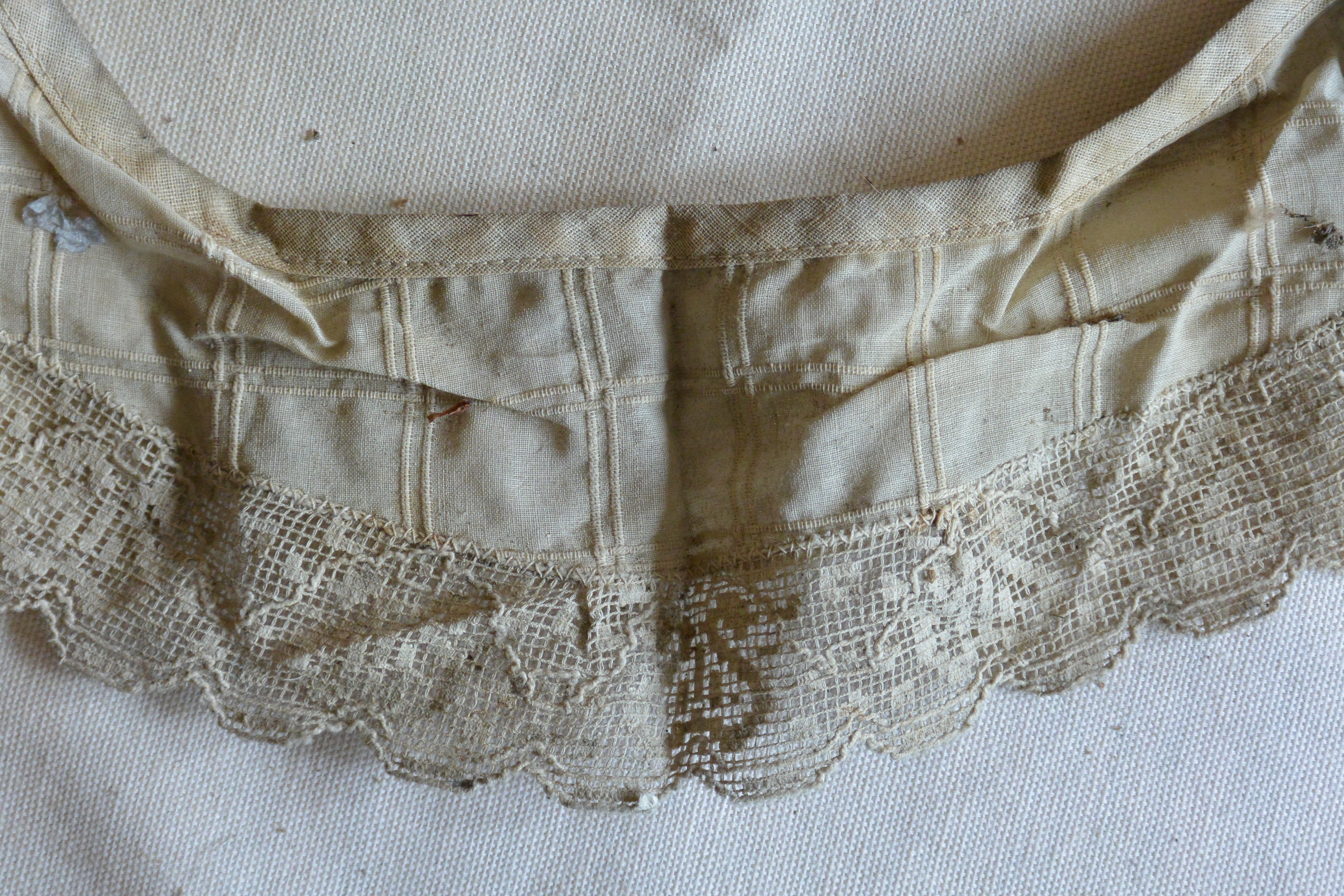
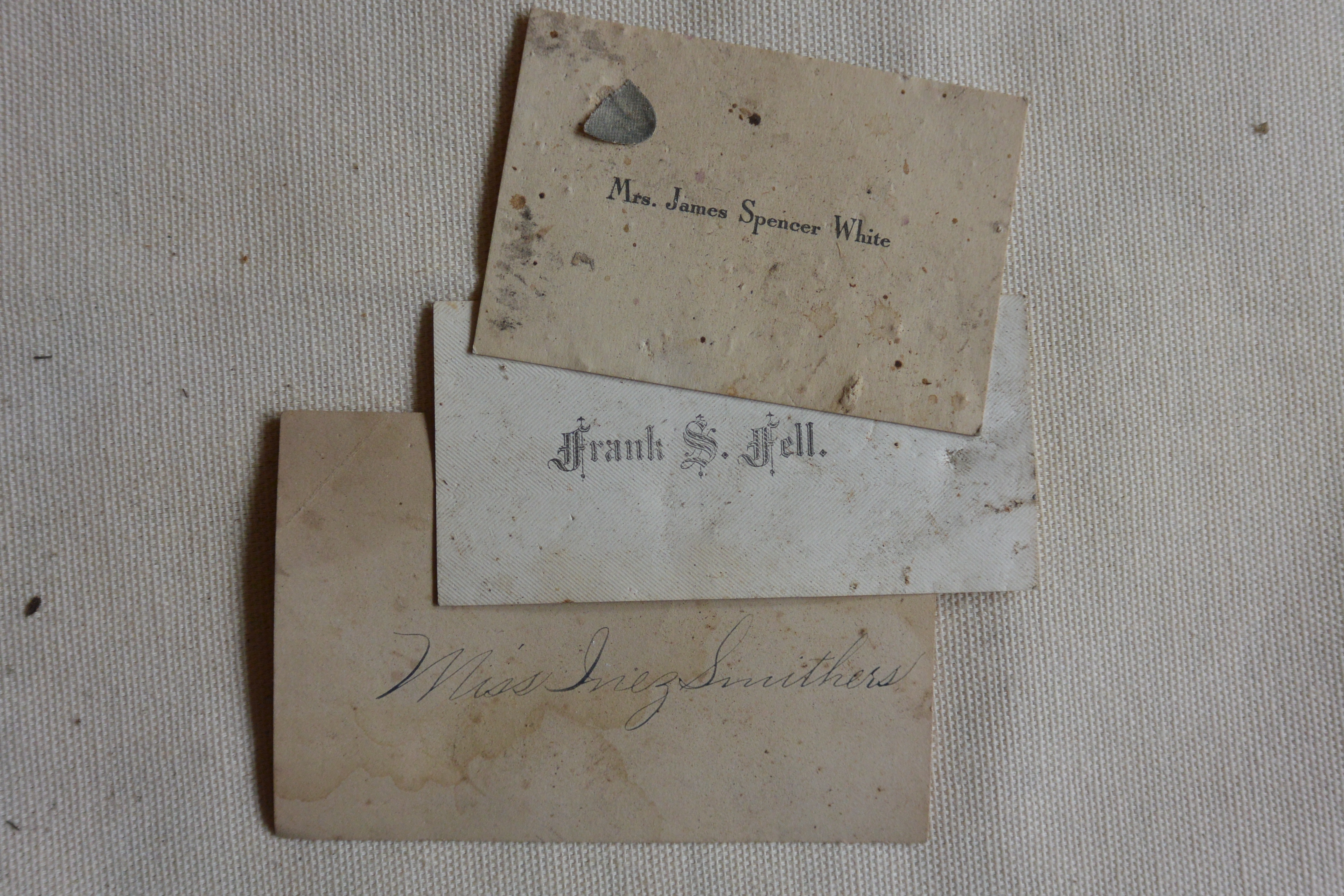
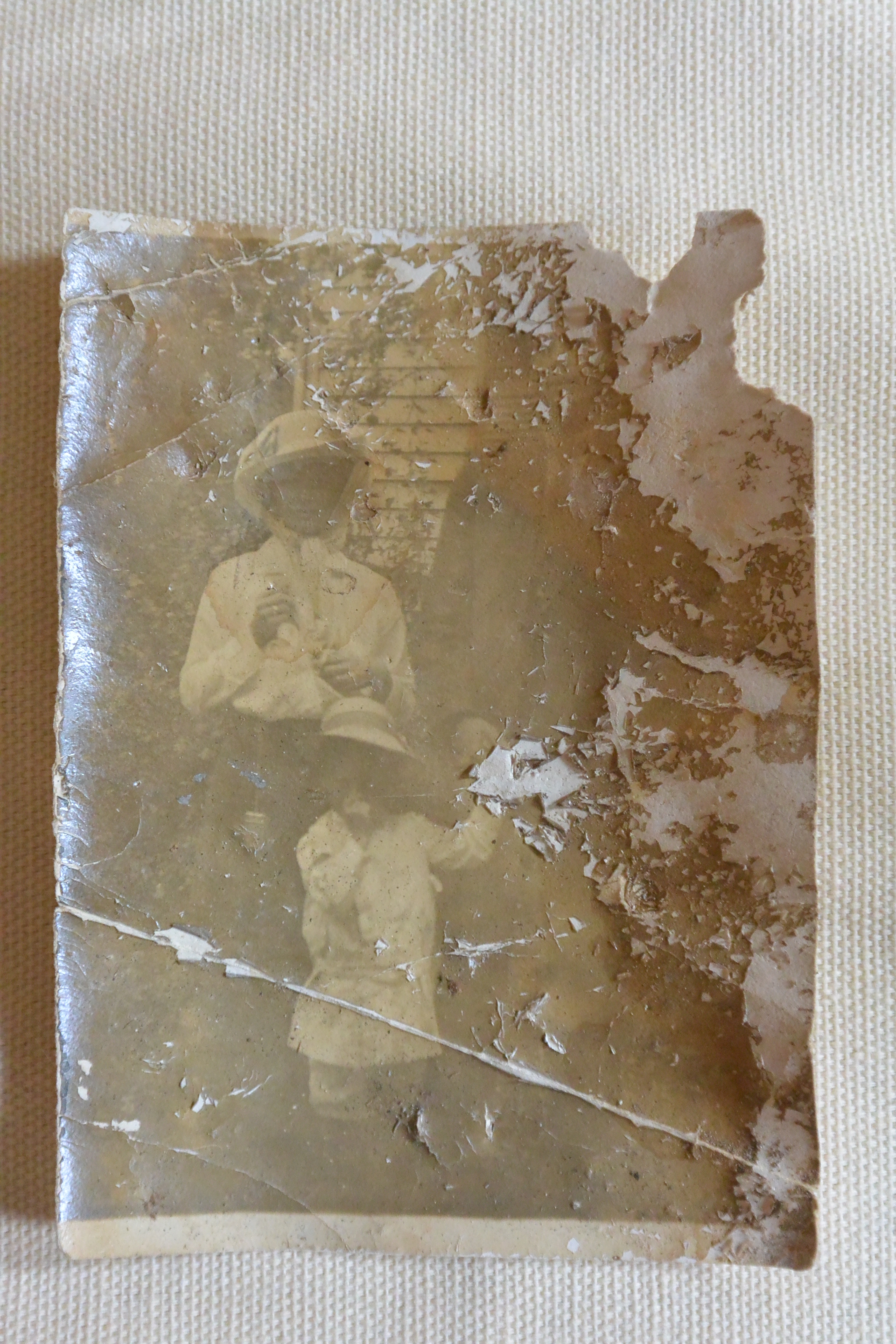
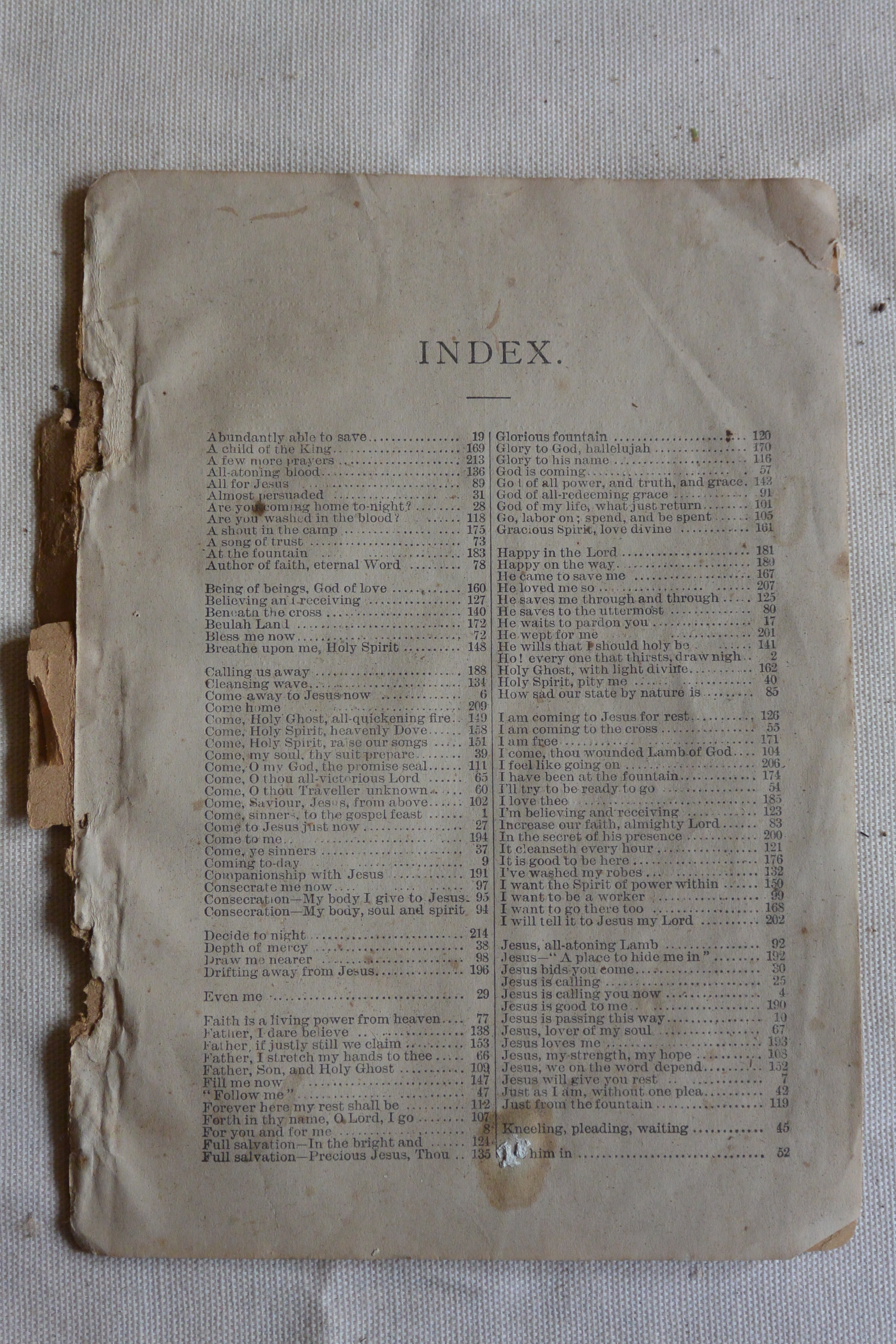
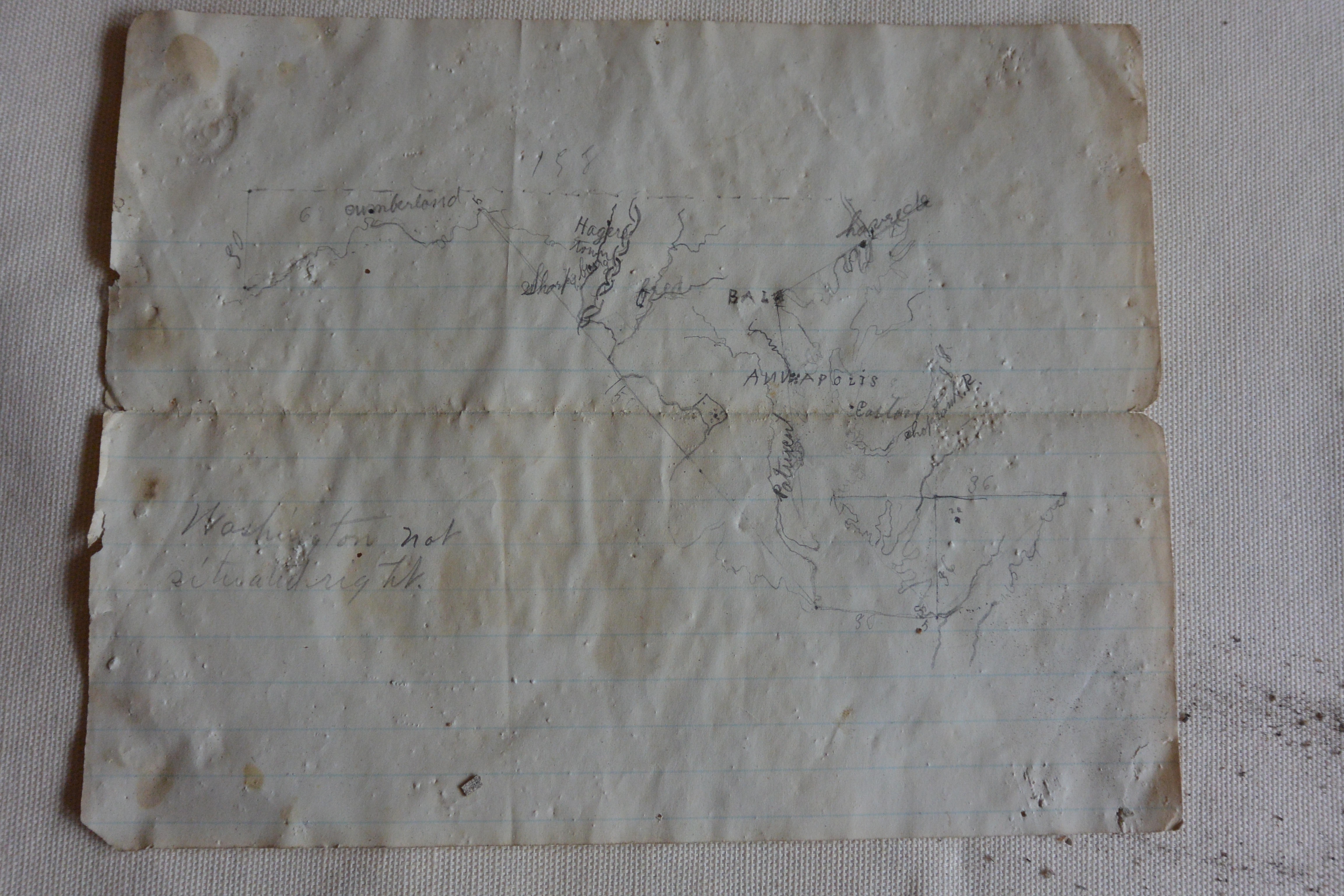
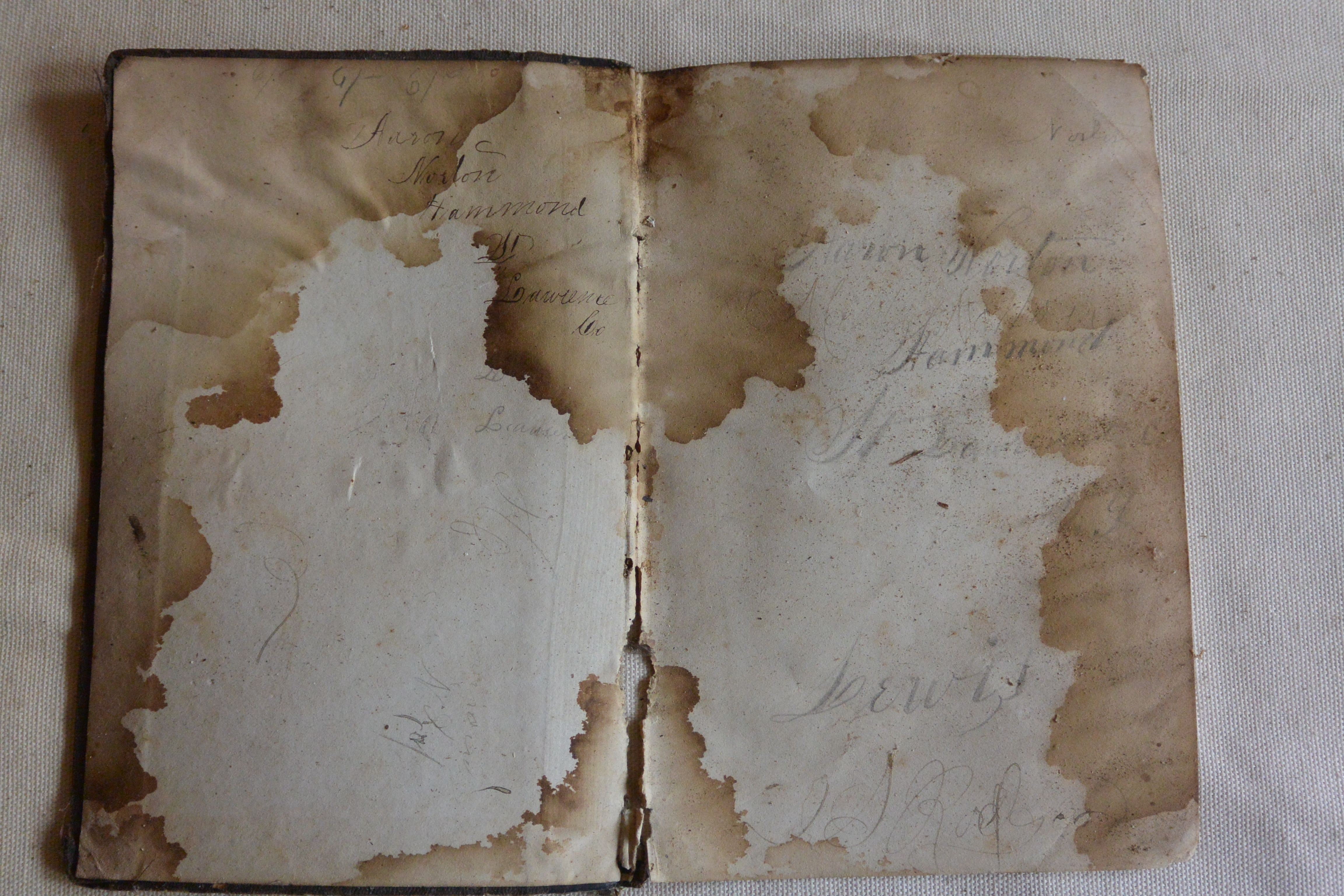
From top to bottom: “Yuletide Greetings”; a marriage announcement, 1902; an assortment of empty envelopes; an assortment of letters and other handwritten scraps; three hand-embellished hankies; a collection of bone buttons; a lace collar; three calling cards; a family portrait, taken in front of the house; fragment from an index; a hand-drawn map of Maryland with the note, “Washington not situated right”; the inner front cover of a book, on which someone has practiced their handwriting.

I had this idea that I would do a good deal of public memory field work when I was up in northern New York last week, but mostly I was stuck inside thanks to a blizzard (Wednesday), bitter cold (Thursday; Friday), and heavy snow (different from a blizzard; Saturday). But I did manage to visit a house that has been empty my entire life, and I also interviewed a 94-year-old woman named Agnes, who said that she couldn’t remember anyone ever living in that house, either.

The house was stripped of fixtures and furniture long ago, but scattered throughout its rooms was another kind of debris—letters, postcards, empty envelopes, newspapers and clippings, photographs, calling cards, some handmade things—which, taken altogether, might have been at one time one small box of personal mementos left behind for mice and wind to dismantle and disseminate.

My mother and I collected as many of these things as we could before our hands stopped wanting to work in the cold. I’ve been doing this for about a year now—assembling material records of the things left behind in uninhabited houses in my town—and most of you know by now that I’m a collector/keeper of various text-based, personal, and familial archives anyway. Most of these archives have come into my possession by accident, or I’ve composed them without too much forethought, but the house archives are conscious gatherings/assemblages. I feel, for some reason, reluctant to conceptualize this work, to say why I am doing this or to what end. Suffice to say: making these records is part labor of love, part labor of anxiety (these places can disappear overnight), and part field research of the repositories and materialities of history and memory.

I often think of these words from Johanna Drucker: “It is the capacity of material documents to record change that makes them such believable witnesses” (“The Future of Writing in Terms of Its Past”). The content of these documents, the still apparent if fragmentary context of their original purpose, serves as one kind of witness, while the changes wrought upon them by their own decay serves as another, and it is the layering of these kinds of witnessing—the layering of different kinds of time, of history, of weather, of human and animal presence—that makes them particularly poignant for me.

In another essay in Figuring the Word, “The Art of the Written Image,” Drucker writes,

Memory serves us well through this material and returns embodied as the witness to our having made certain moments into a record on the page while the temporal life of writing aches towards the future, longing for the recovery which is available, again and again, through the physical form inscribed with information in the trace of the material. Writing inscribes many paradoxes and tensions in its materiality—between idea and material, personal experience and social order, logical structures of thought and the illogical record of lived experience.

I would say the same about archives, about the processes of making, recovering, and engaging with archives, all sorts: such work, for me, is always a negotiation, a both-fraught-and-pleasurable reconciliation of the tensions between the logical and illogical—between lived experience and decay—between assemblage and disassembly—between the presence and absence of memory, story, history, context.


Posted in Uncategorized | 1 Comment

File (n): to rub smooth, reduce the surface of

As usual, I turn to the OED for a definition/title of my blog post — and while I could have selected the verb of “file” we’re discussing this week, “to place documents on a file” (on? interesting, OED…), I realized the alternate definition of the verb is somehow also appropriate. While beautifully mismanaged piles of papers sit under my desk and in boxes, the digital file system I revisited for this week’s ‘signment has, arguably, less (and also, maybe more) “surface.” Organizational files, however, only give the semblance of perfect systems of arrangement. We all know when we pull up that file folder (or, at least if you pull up any of mine) that the documents within are out of order (whatever order might be logical), messy, wrinkled, coffee-stained… etc.

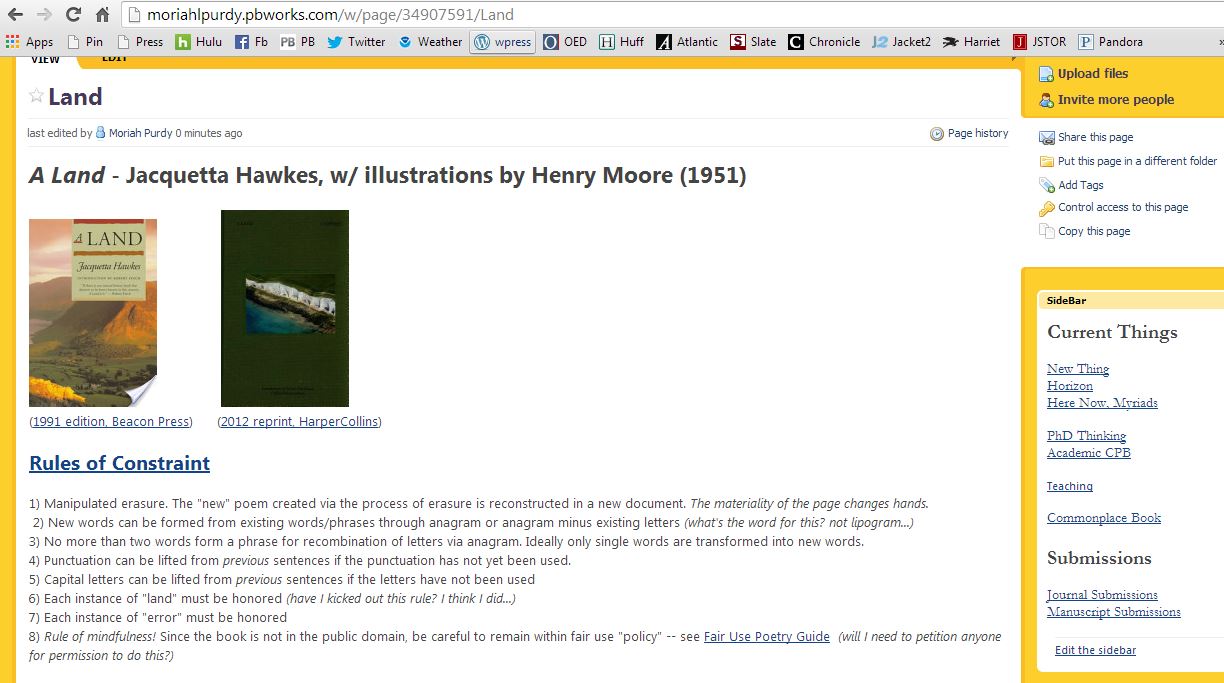
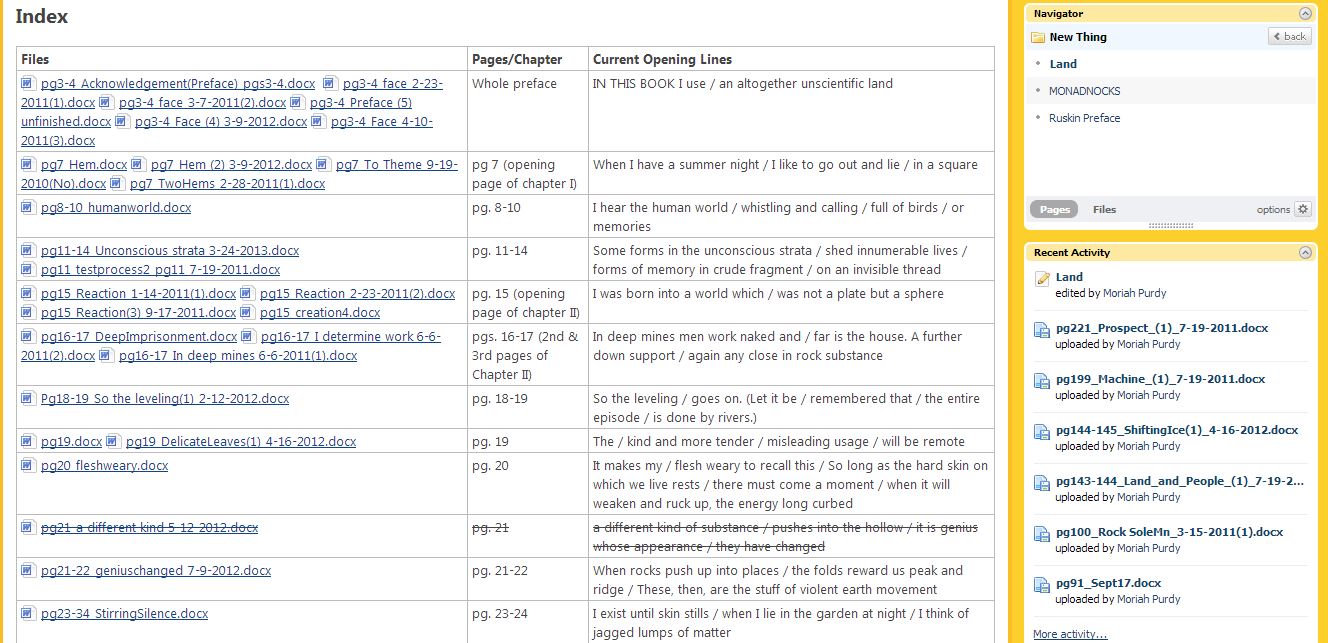
Organization is very important to me, though I’m not sure I’ve ever thought of the stories my personal file systems tell of me until this week. I took the opportunity of this week’s ‘signment to reorganize my digital file system for a current poetic project (one I’ve been slowly plugging away at for around four years now). I keep my files organized in a personal wiki space via PBWORKS. I like the freedom the format provides me — to hyperlink file names to files, and also to annotate in the same space. It seems more useful to me than a list of files in a file folder on my computer. Plus it keeps the files “safe” in the cloud. The project is an erasure of Jacquetta Hawke’s A Land. Much like my West Elm erasure, except the results of the erasure are reproduced in a new Word document. The change in materiality also offers some affordances, like the ability to create new words of old ones via anagramatic methods, or lift capital letters and punctuation from other places. Here are my constraints:

WikiScreenshot1

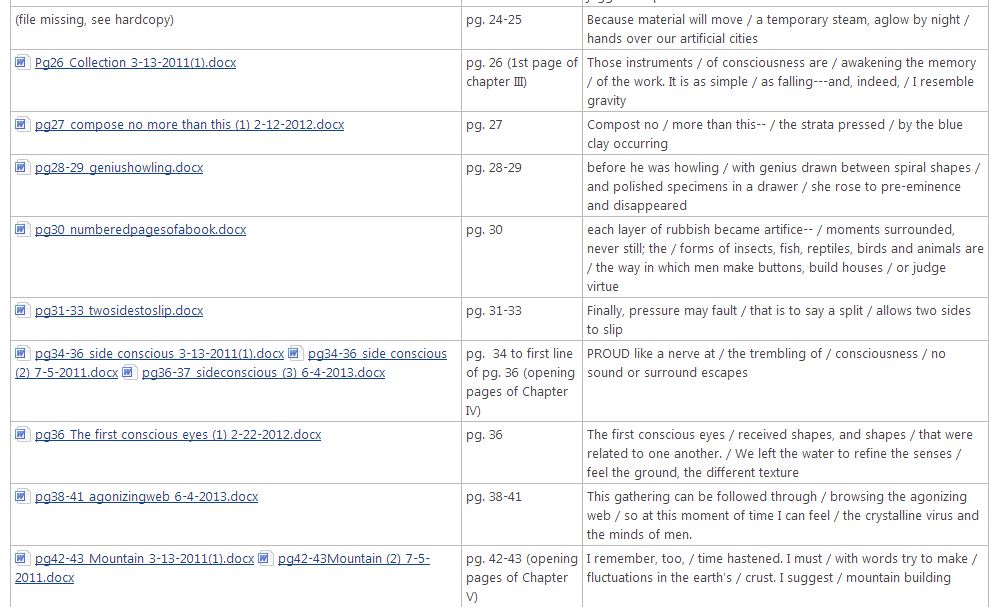
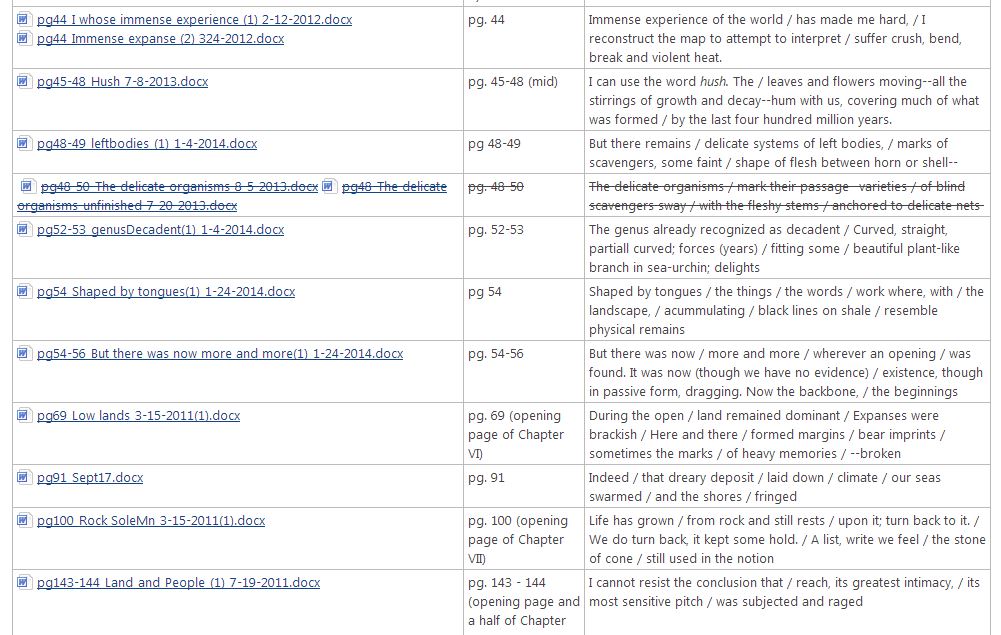
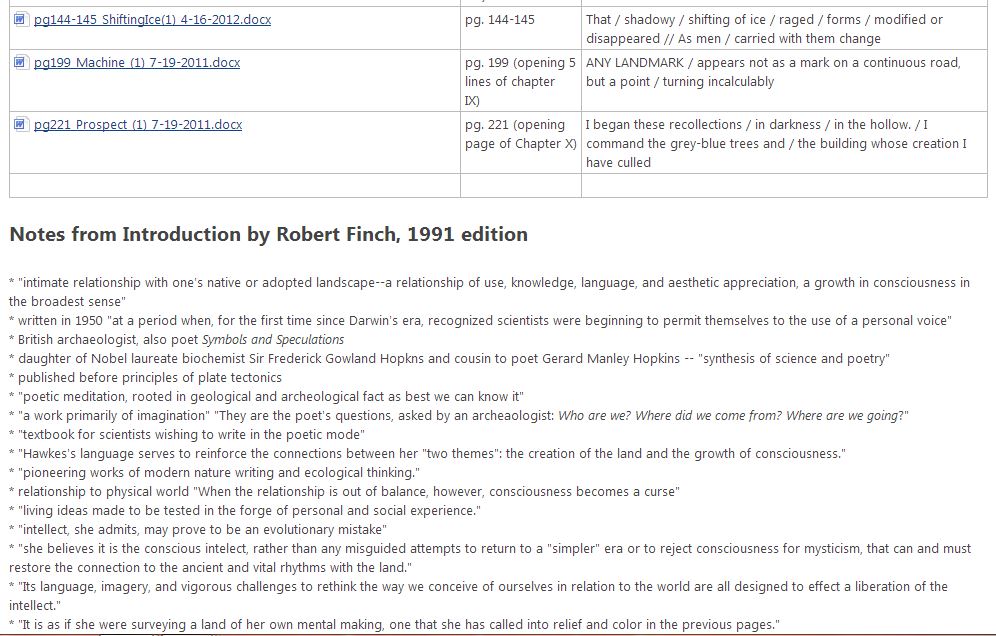
The results, however, are difficult to name and file, because the text is constantly shifting. You can see from the dates on my file names in the images below that I first began the erasure from the different chapter beginnings, and that the earlier poems have been revised more than the rest. Somewhere in the last year or so I gave up revisions for the sake of “progress,” changing my methods from the slow focused revision process I’ve typically employed to a desire to simply “get it done,” and then reconsider. As I’m now working through the book chronologically (I’m roughl 60 pages in…) I took this opportunity of the ‘signment to go back and rename my files first with the page numbers of the pages I erased for a given poem. This process was time-consuming. And I discovered digital files had gone missing for versions I had in hard-copy (usually when I’d made choices to usurp one stretch of pages with a slightly different stretch, thereby absorbing poems into others…). 

It’s through these elements that my anxiety over this project is made material. While structured and organized, the poems usurped by others, the semi-random selection of pages to erase first, the obsessively dated files… it demonstrates that I haven’t yet found my focus with the project. The rules of constraints appear confident and assertive, yet (in the additive italics, my inner voice externalized) it is clear I still have some questions, or have since dropped my own rules. I’d be curious to hear how others might read this archive were I not to be telling its story. Perhaps a more generous narrative. Perhaps a more critical one.

WikiScreenshot2WikiScreenshot3WikiScreenshot4WikiScreenshot5

Posted in Uncategorized | Comments Off on File (n): to rub smooth, reduce the surface of

Jeff and Jimmy

Jeff and Jimmy


On March 22, 1968 in the Thua Thien province of Vietnam outside of Hue, a sniper’s bullet killed my uncle. His name was Jeffrey G. Hamilton. In the same small arms exchange, Jeff’s friend and fellow Ohioan, James Ackerman, was also killed. They were from different parts of Mansfield, Ohio; Jeff from the “good” side, Jimmy from the “bad” side, and by happenstance they ended up in the same platoon in which Jeff served as the 2nd Lt, and Jimmy his radioman. Their death, then, kind of makes sense, as Jeff was in a forward position getting ready to call out coordinates for some suppressing mortar rounds, when he was killed, and Jimmy was right there next to him, radio on his back.


Fast forward to spring of 20o9. My grandmother (my dad’s and Jeff’s mom), Elsa Cox Hamilton, passes away quietly at 96. My father and I drive to Mansfield to settle thing out. We pack up a van full of family effects; paintings of great great grandparents, deeds, things of that nature. As they are wont to do, the boxes of stuff remain mostly unopened and certainly ill-considered for many months.


Fast forward to the fall of 2009. I’m visiting the farm where I grew up, getting in a few more days of swimming before the weather turns. My dad pulls me aside and hands me a stack of papers in a strange, leather envelope. “I don’t know what to make of this,” he tells me, on the verge of tears. I look inside the envelop. It’s a manuscript of an unpublished book. The title is Jeff and Jimmy: A Vietnam Story.

The “story” is about how Jeff met Jimmy in Vietnam after they had lived only a handful of miles apart from each other for 18 or so years. How they became fast friends. How they coped with the hardships of the war together. And eventually how they died together. It features letters they sent to their respective families. The letters reference each other, as well as skirmishes in which they both fight. There is no listed author of Jeff and Jimmy, but there is a bizarre editing note on page 43 that refers to “Bateman.” Who is Bateman? What would s/he write a story about my dead uncle Jeff?


The site above is from 2010. It’s a sort of repository where I kept track of some of the research my dad and I did as we both tried to make sense of Jeff and Jimmy: A Vietnam Story. It includes letters/emails that I exchanged with differen vets that had served with both Jeff and Jimmy, as well as some vets who had dedicated themselves to preserving pictures and other such memories of Jeff and Jimmy’s air cavalry company and division. It also includes a handful (7) entries in a blog that I planned on keeping as my dad and I struggled to figure out who Bateman was. The blog was short lived, mostly because we found out Bateman’s identity pretty quickly. He was a friend of Jimmy’s sister, Kay Ackerman. Over beers one night, Kay was telling him the story of Jeff and Jimmy, and Buddy (Bateman’s preferred name) said something to effect of “this is a great story! You need to tell this story!” Kay didn’t have the energy or enthusiasm to do so, but she encouraged Buddy to give it a go. Jeff and Jimmy was a sort of cathartic experience for Buddy, himself a veteran of the Vietnam era (he served in Germany). He had lived for many years with a strong sense of survivor’s guilt, not only because he survived the war, but also because he never saw “action,” and he didn’t know many soldiers who were killed in action.


As a sort of postscript, building on the momentum that we generated with this little research project, my dad wrote a book, which is in the proofing stages at the moment. It’s called Jeff and Jimmy: A Vietnam Epistolary. It uses a lot of the letters and emails from vets, as well as exchanges between he and I, and his friends, and it tries to make sense of his brother’s death, I think, in a way that he’s never really tried to do in the forty some odd years it’s been since Jeff was killed.

Posted in Uncategorized | Comments Off on Jeff and Jimmy

File: Inscriptions/Owners.

It was about two weeks ago when Melissa and I were walking home from school when, lugging bags over our shoulder up Forbes toward SqHill, she suggested that I turn my current utterance into my file project.

My utterance was something like, “I’ve been looking up the former owners of my used books, and they all seem to be dead.”

It was, at the time, disconcerting. (Despite that fact that all books will once have been owned by dead people, natch.) So I decided to start searching my books for more inscriptions and filing whatever–in most cases, little–info I could find on them.

https://plus.google.com/photos/108331725158756212470/albums/5992098046446251217

  1. Helen M. O’Connor. As far as I can tell, she was Catholic. Despite the fact that the novel is uber-Catholic. It’s about a roaming priest. And Powers was a hardcore Catholic. I did buy this in Ft. Wayne when I lived there, and FW is a rather serious Catholic city. I found online that a Helen O’Connor leased some land back in the 60’s for a city park. Then I found an obituary of a Mark O’Connor in Munster, IN, which states that he was preceded in death by Helen O’Connor, who gave birth to Mark on the campus of, yes, University of Notre Dame. Hmm. O’Connor is Irish, and by definition, Catholic. But I like to think it’s all linked.
  2. E. (Erma) Jean Price. Stamped. This was a recent purchase. Here’s what I found: “PRICE ERMA JEAN Age 71, of Shadyside, on Thurs., Nov. 28, 2013. Loving sister of Sally (Glenn) Reichard. No visitation or service. Memorial contributions may be made to the Carnegie Library of Lawrenceville, 279 Fisk St., Pgh., PA 15201. Arrangements entrusted to D’ALESSANDRO FUNERAL HOME & CREMATORY, LTD., Lawrenceville.” Loving sister of Sally, etc. seems like obituary-speak for “never married.” I mention this because I start creating stories in my head as soon as I read this stuff. Who was she? Why was she reading Todorov? Then I found a comment on the same website from a woman named Louise Brody in Paris: “Jean Price was an absolutely wonderful teacher, and an equally wonderful person. I am tremendously indebted to her – the love for the French language and culture that she communicated to me as a student inspired my move to Paris nearly 25 years ago. Thank you.”
  3. Lebowitz. This is Naomi. I actually didn’t realize this was her book until I opened it up. Pleasant surprise. She was a friend of mine, an emeritus professor at Washington University in St. Louis. We met a number of times and talked about novels and writing, etc. A wonderful woman. She is still alive. (Admission: I stole this book from a basement room in Duncker Hall at WashU. Profs used to donate loads of books when cleaning offices, and for some reason the Eng. Dept. was hoarding them in this tiny room, where I was relegated for a summer as an office asst. They were, in my estimation, left to rot. I saved them!)
  4. E.T. (Oliver?). I have no idea what the last name is. I’ve tried–desperately–to decipher it, with no luck.
  5. Robert CapaldiStamped. It seems that this fellow is still alive and lives in Pittsburgh. Between 50-54 yrs. of age. Thanks WhitePages.com!
  6. J. Reed Hunter. Okay. This is by far the saddest one. I buy at Caliban Books,  and they often get large sleeves of books just appearing on the ground. Day after day. How lucky I am as a PhD student that people are selling books, right? Wrong. Often, they are off-loaded by families of the deceased. Dr. Hunter had a lot of books. Here’s from the obituary on the funeral home’s site: “Dr. J. Reed Hunter, 52, of Pittsburgh, formerly of Saltsburg, passed away Thursday, January 16, 2014 at UPMC Montefiore in Pittsburgh. He was born October 26, 1961 in Latrobe the Son of Joseph R. and Donna Stern Hunter. Reed attended Vanderbilt University for his Undergraduate Degree and later Duquesne University for his PhD in Psychology. He was an instructor at the Pittsburgh Institute of Mortuary Science, a Counselor at the Western Pennsylvania Penitentiary, and an Assistant Professor at Duquesne University. He was an avid reader and rare book collector.”

    I think because 52 is incredibly young, as it were, I started to think differently about this man and his books. I will take care of this book more, because of his story. I don’t know for sure about (Oliver?) or Capaldi, but I know this man’s life. He was a prof. He liked rare books. He helped counsel inmates. He, apparently, never married or did not, publicly, have a partner. I feel compelled to buy all of his books now. Yet another solitary book owner passes.

  7. Janice M. Zimmerman, nee Daniel. Book stamped/impression. I like this one because she clearly had to order a new book stamp after getting married. And she was dead set on documenting this. I mean, she wrote in pen her initials and the date, as well. The thoroughness of possession is deep here. And then she promptly dumps the book into the loving arms of the University City Public Library of the greater St. Louis area where I worked as a lowly page/sorter/time-waster. A little digital digging possibly leads to her being married to a man who runs a gun-enthusiast website. Which I guess goes along with the earlier, adventure-themed Melville novels–Omoo, Typee, Mardi–which garnered him fame. I have to say that this book looks wholly unread. All that attention to detail in branding only to donate it years later.

    Who wants to do some alien phenomenology on used books? I do.

Posted in Uncategorized | Comments Off on File: Inscriptions/Owners.

Malaysian Aeroplane Files

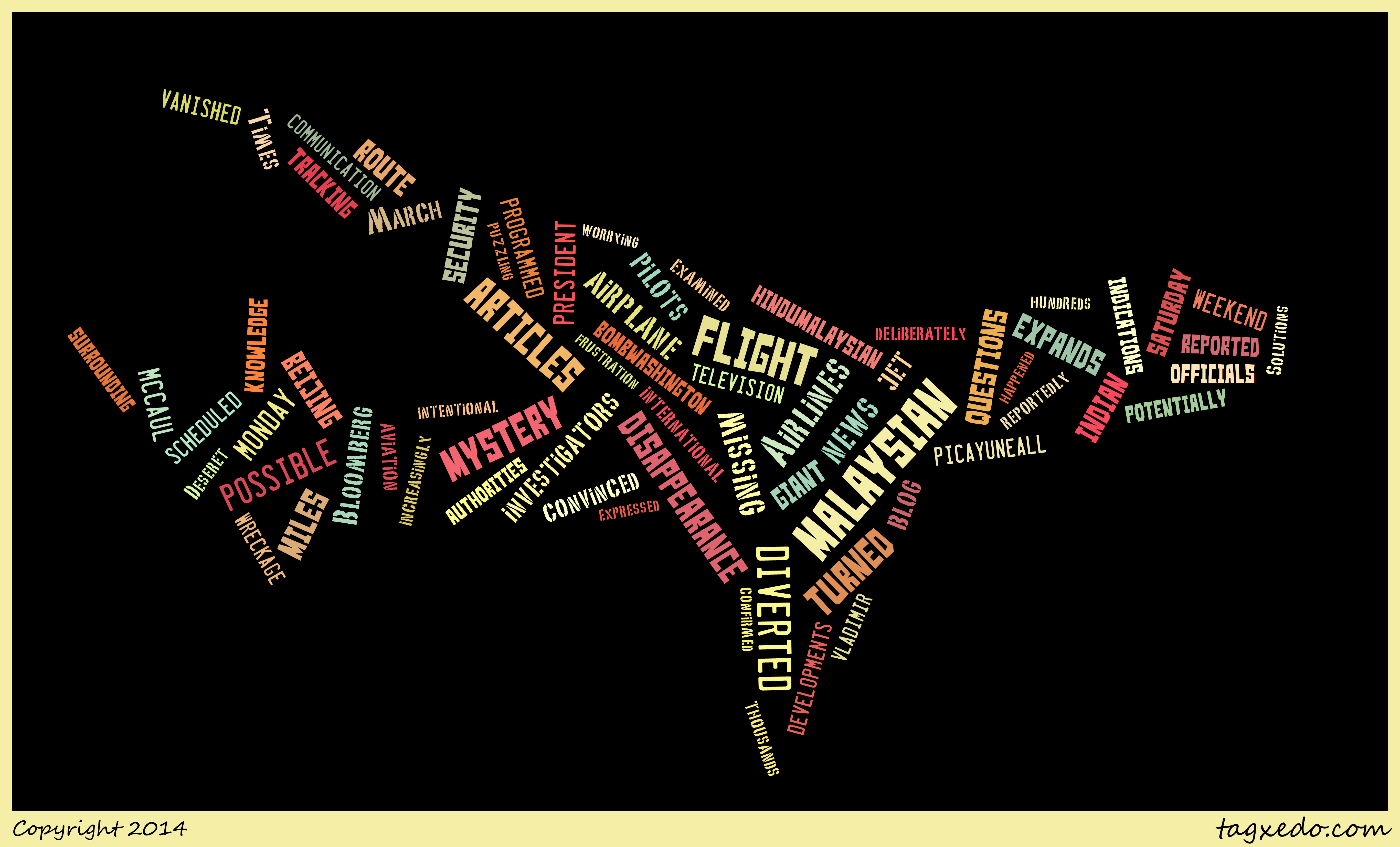
malaysian aeroplane


Being able to convert the horrors of a missing aircraft into a silly, aeroplane-shaped word cloud seems horrific and insensitive, after the fact.

Prior to this activity, I had spent two hours creating a technology-manifesto-word-cloud on Wordle, but Java thwarted me at the final moment, and I lost all my labor in an instant.  After throwing one of my technology-fueled tantrums, I began brainstorming the outlines of my own technology manifesto, while feeling incredibly sorry for myself, before finally realizing things could be way worse– I could be one of the passengers on that Malaysian airplane.

The Tagxedo website lets you enter news search terms to create a word cloud from search results.  So, I entered “Malaysian airplane” because I haven’t been following the news these past few days, and wanted to see if I could get a better idea about something I’d only heard people mention here and there.  I believe the word cloud gave me a pretty good idea of what was going on, even though I haven’t actually read any news articles about the ordeal.

Tagxedo offers many shape, color scheme, font, word dispersal and emphasis options.  I opted for the airplane shape, and the color theme “Lena’s Love Letter”, because it was dark, yet had lots of color variation, and pop!  I deleted various words and word pairings the search pulled up, to maximize word emphasis and overall aesthetics.  I left the fonts Tagxedo chose, even though I didn’t really like them, because they seemed cargo-ish, pre-selected to complement the airplane shape.  The image on the website is interactive.  You can scroll over words to magnify and turn them about, but I didn’t know how to transport all that fancy into our blog, so you guys just get the static jpeg version.

The word “suicide” did not manifest in the Tagxedo word cloud, but I did hear pilot suicide was suspected.


Posted in Uncategorized | 2 Comments