What value can be derived from a ripped-up wrapper of an individually packaged tea bag? As with David Levy’s document in “Meditation on a Receipt,” packaging — the small wrapper, especially — is “abundant and ordinary,” and (from what I understand about the habits of non-hoarders) often discarded without second consideration after its designated use-value expires.
The use-value of a tea wrapper is rather limited in the first place — the box is needed for wholesale, the tea bag for its flavorful leaves, but the individual wrapper? Not so much. It is supposed to keep the tea bag fresh for longer, but the avid tea drinker often finishes tea with such efficiency that it does not have a chance to expire. Furthermore, the same directions listed on the box are often reprinted and redundant on the wrapper: boil water, steep tea bag in water for a certain amount of time, sip carefully. Some suggestion of addition niceties might also be included: cream, honey, sugar, lemon, ice, etc. Does the wrapper have a purpose beyond freshness and frivolity?
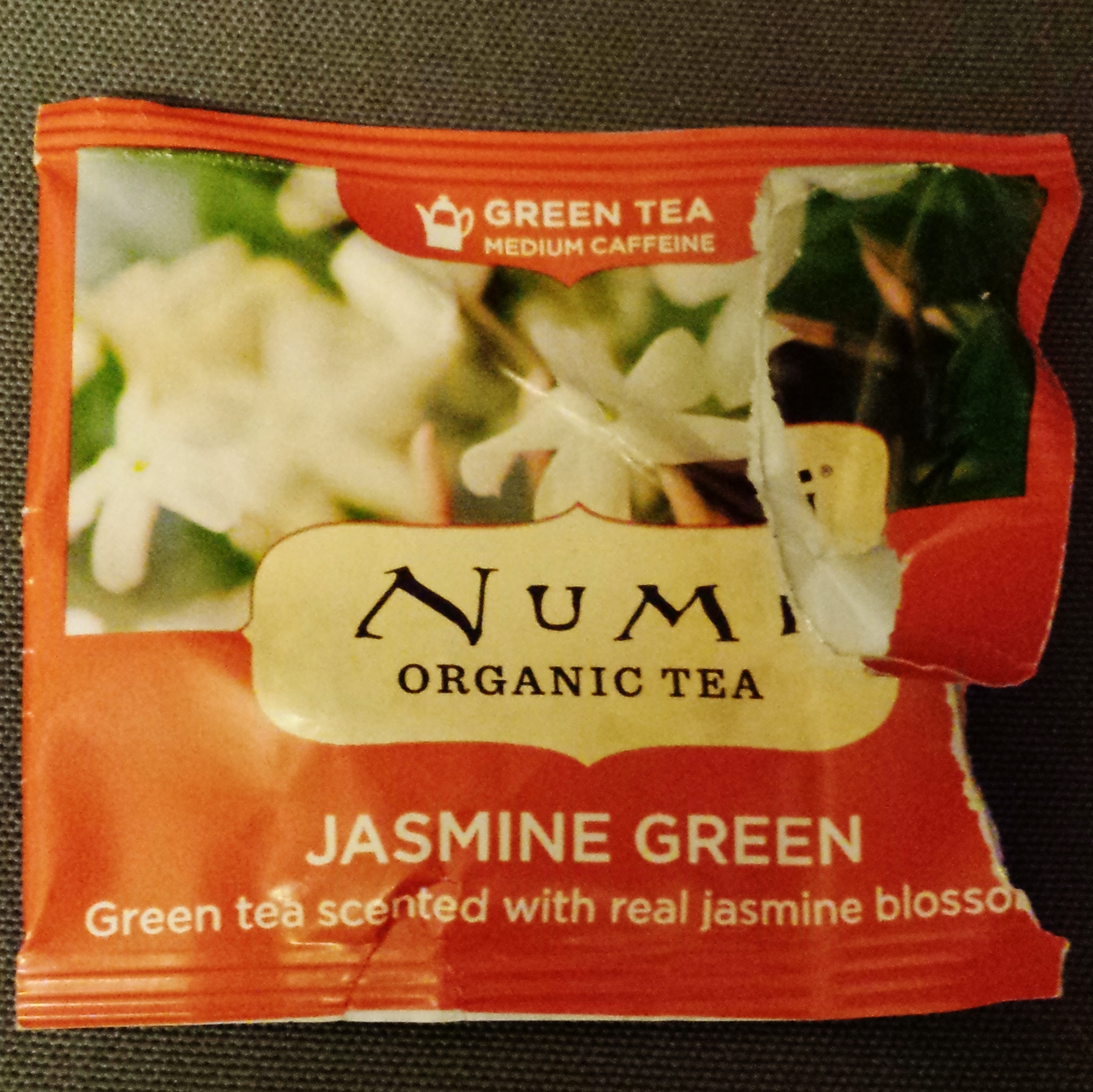
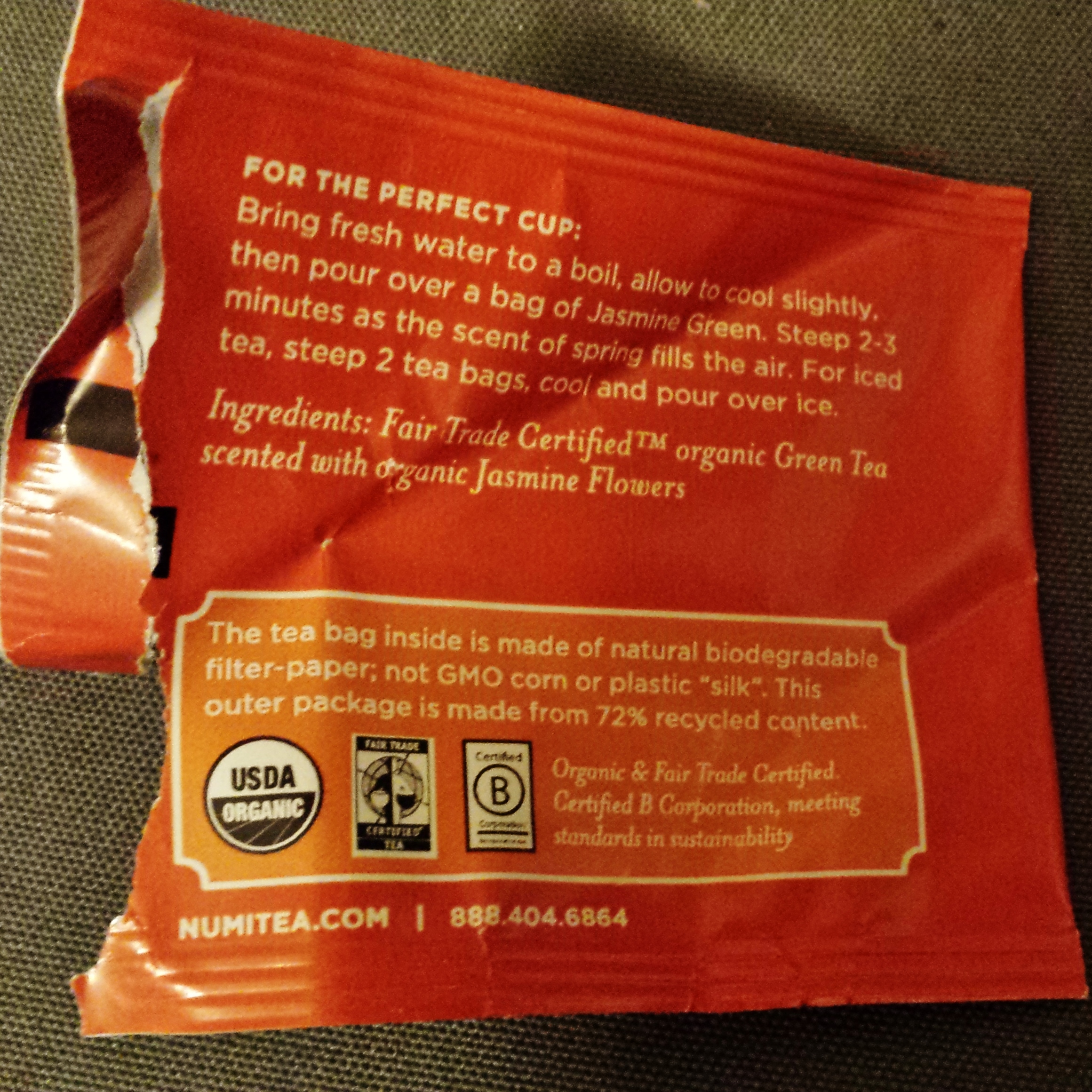
Here is a typical wrapper with some specific details. It tells the preparer that the water brought to a boil must be fresh, then cooled only slightly. The wrapper suggests the tea is seasonal — steeped as the “scent of spring fills the air.” A single jasmine blossom is found in focus on the wrapper’s photography, and the dark orange complements the greens, whites, light yellows (the dim lighting and the phone camera do not do these colors justice).
Learning about the contents of the wrapper might brighten one’s day beyond the colors: note how the contents are “made of natural biodegradable filter-paper; not GMO corn or plastic ‘silk’.” These disclaimers are meant to comfort the conscious consumer, so the tea-drinking experience is fully calming and guilt-free. Following the website linked on the bottom left to further research this particular Jasmine Green tea, the enthusiast is confronted with an even more decadent and exuberant description:
Fragrant organic jasmine flowers are laid atop organic green tea leaves as their scent is naturally embraced. Scented three times, this smooth green tea has layers of subtle fragrance and hints of moonlight.
Does this mean I have been enjoying this tea incorrectly by drinking it on winter mornings; is it meant to only be embraced by moonlight in the spring? I ask this with some facetiousness, but tea-drinking rituals are no laughing matter — tea ceremonies have been well-established cultural events throughout Asia for many centuries, and sharing a certain tea using a kettle and cups designed for a specific season is often expected and respected. The tea and everything it is served with are all worth meditating on in the tea house. Those teas tend to be loose leaf or matcha powder, though — and rarely ever contained by the individual tea bag.
Nevertheless, imagine my delight upon emptying an entire variety pack of Numi teas to discover that every “For the Perfect Cup” description is different:
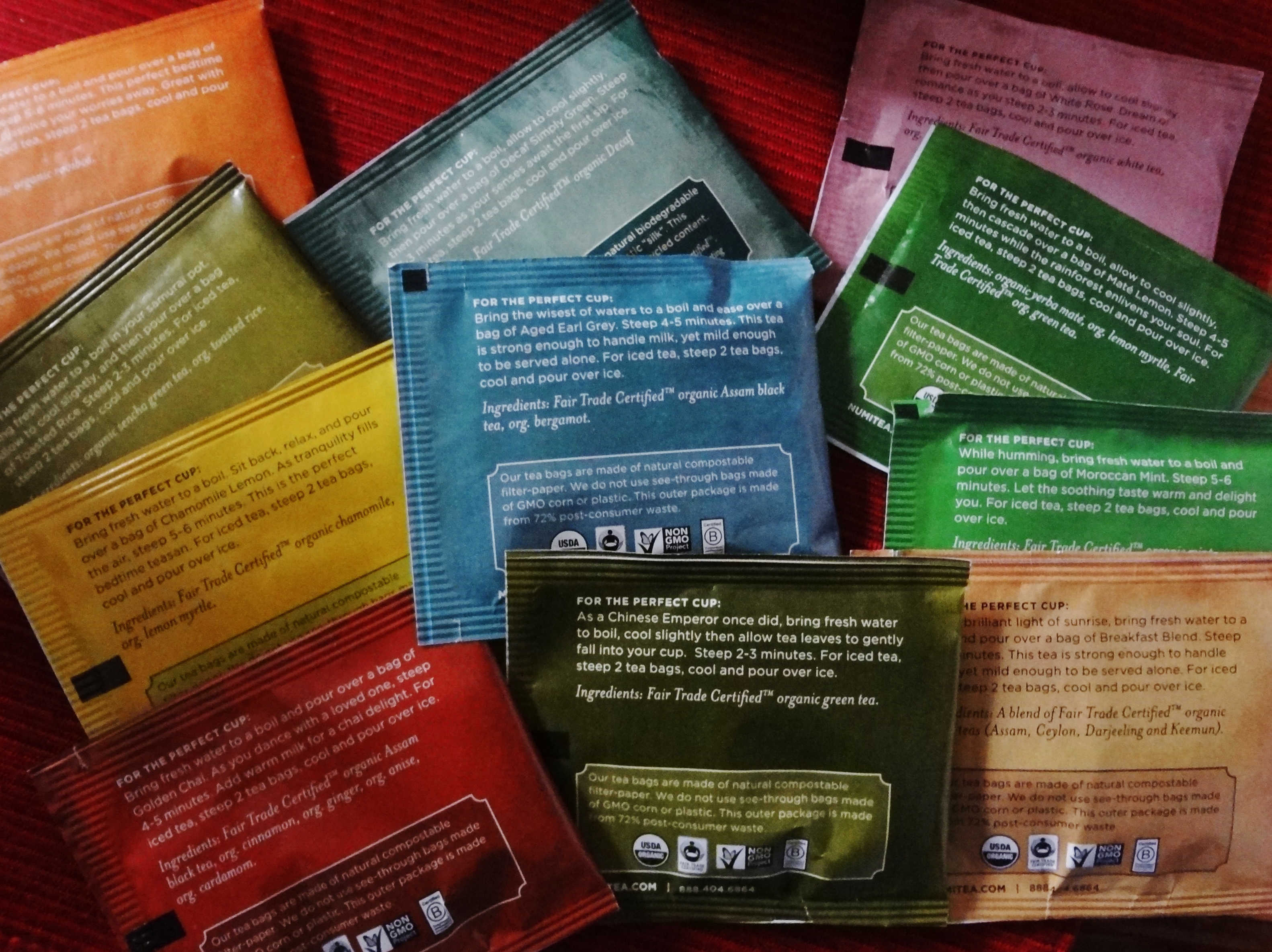
Clearly, someone was hired to consider these documents with some care. To what end? I have no clear answers, but I would like to offer highlights to meditate upon:
When preparing your green tea, boil water “as the Chinese Emperor once did” and “…allow tea leaves to gently fall into your cup” (this is particularly ambitious given that the tea leaves are constrained by the “natural compostable filter-paper” tea bags from actually falling anywhere). “Bring the wisest of waters to a boil” to “ease over” your Earl Gray, and be “humming” when you boil your water for your cup of Moroccan Mint tea. “Dance with a loved one” for 4-5 minutes while waiting for your Golden Chai, and Chamomile Lemon must be steeped a minute or two longer “as tranquility fills the air.”
Levy ends his article with a note that while “it may seem strange to place small, trivial, invisible documents” such as his receipt “alongside the great ones, and to speak of them in the same breath…this is exactly what we must do if we are to see the entire class of documents, all of them, as a single species; and if we are to see their shared properties and their joint work in the world.”
Of “joint work in the world” construed freely, one particular tea wrapper has been home to a favorite writing material for the past few years on my walls:

Tea leaves have long been read for fortunes.
Should we be reading tea wrappers for anything beyond basic instruction and for occasional amusement?

2 Responses to My Tea’s Realities