In another Bogost work, Alien Phenomenology (2012) he presents the notion of philosophical making as what could be akin to Carpentry “to do carpentry is to make anything, but to make it in earnest, with one’s own hands… carpentry entails making things that explain how things make their world. Like scientific experiments and engineering prototypes, the stuffs produced by carpentry are not mere accidents, waypoints on the way to something else. Instead, they are themselves earnest entries into philosophical discourse” (93). This prior argument from Persuasive Games (2007) emphasizes the gamer, interactor, critic, and reader of the video game in order to elevate games to the level of expressive and persuasive power of literary and other media, but I couldn’t help but feel the maker decidedly left out in this reading of Persuasive Games (it’s the second time around for me). If in the Aristotelian sense rhetoric is related to our capacity to percieve the “available means of persuasion” then Bogost is putting games on the table as an available means of persuasion, and rightly so. As Bogost posits, “procedural rhetoric is a subdomain of procedural authorship; its arguments are made not through the construction of words or images, but through the authorship of rules of behavior, the construction of dynamic models. In computation, those rules are authored in code, through the practice of programming” (29). Rather than focus on the programmer, however, Bogost reads via the lens of the gamer or the critic, which he more than once acknowledges. “Procedural rhetorics,” he writes in his concluding chapter, “expose the way things work, but reflection creates and prolongs this process. Criticism is one aspect of the reflective process. But criticism requires formal discourse, often limiting itself to the academic and cultural elite. More generally, persuasive games can produce discourse in the general sense, like the blog conversations that crop up around the Dean game” (334).
I figured that today I’d think somewhere between Bogost’s two arguments, between critic and maker, where individuals who have a certain level of “procedural literacy” (re: Chapter 8) turn the rhetorical tools of the game toward their own uses, often to subvert the dominant expressive narrative of the base game. It’s procedural rhetoric by appropriation — and I think why I was tempted to add “mechanics” to our list in discussion of code and programming last week, because such work necessitates an understanding of the code at the level of exploiting game mechanics created through the code. This is perhaps especially possible in sand-box style games, like The Sims, which Ada described in an earlier post today. Just search in YouTube for any emotional challenge and you’ll find a Sims animated narrative telling that story, like the results for “bullying” demonstrate, for example. There are also narrative videos of players picking up prostitutes in the various versions of Grand Theft Auto (a component of the procedural rhetoric left out by Bogost, as he chose instead to focus on fast food and health in GTA San Andreas… ugh), either as chosen Let’s Play video headings or in montages (I implore you not to read the comments section on these GTA videos).
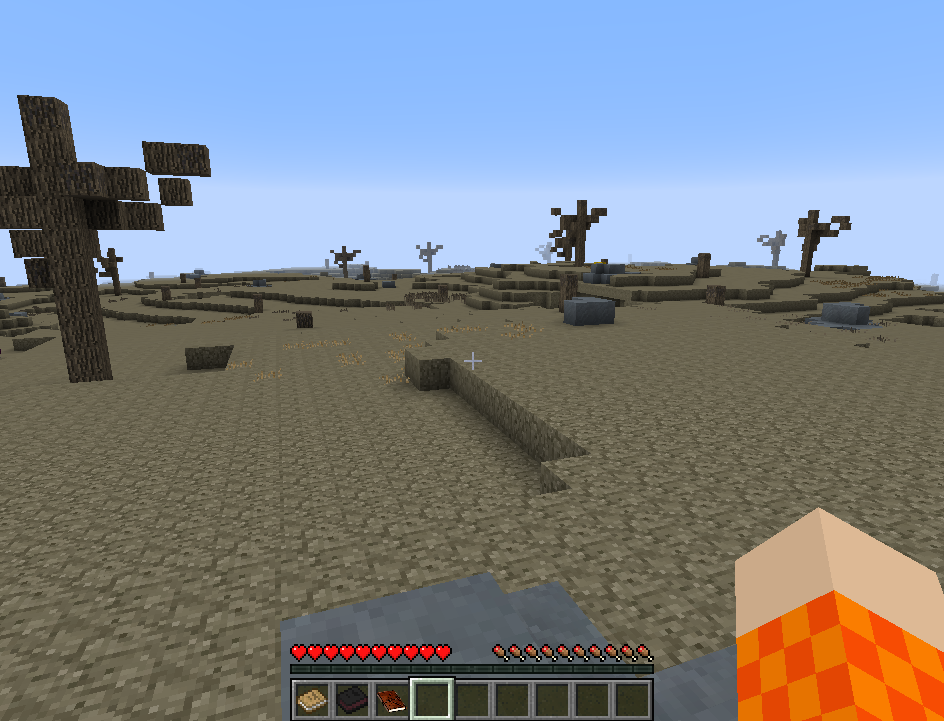
Games with simple mechanics like Minecraft leave it open to the player to create his or her own narrative, deciding what kind of world to build and how sinister or kind that world might be (toward the environment, for example). This kind of openness leaves room for modding (game modification), where programmers can edit or add portions of game code to alter those mechanics or add new interactions, which is especially vibrant with games like Minecraft. Game packs with certain selections of mods are also often put together with the mod “Hardcore-Quest-Mode” which uses a quest book to set up a narrative and guide the player through the use of the mods. Many of these questing packs start with some type of dystopic setting, changing world-gen to create desolate worlds that players have to rebuild with plant-based resources, or build consequences into a game without much consequence in its base game (have a gander of some of these packs). The persuasion then comes not from the game’s original programmers, but with those who can read and make new mechanics from existing capability of the games, which can then be interacted with by other players.
As I continue to think about programming literacy I feel a personal and intellectual tension. On the one hand, I want to learn how to code so I can make academic work with and through digital means, but on the other hand appropriating and exploiting existing program mechanics can generate productive and expressive avenues for users and thinkers, which requires procedural literacy but doesn’t necessitate programming knowledge, per se. I wonder what’s more important for the general population — being able to read and understand how code is impacting the ways in which we interact with programs on the web and otherwise enough to make/appropriate/exploit those mechanics for one’s own expressive purposes, or learning enough code to invent from the ground up? In many ways I think the appropriative version is more exciting — just give people discursive tools and they’ll act with them. It also takes away (perhaps) some of the intimidation factor of learning and keeping up with ever-evolving programming languages and tools, which is a good thing, no?