Mateas and Monfort explicitly state that they are not looking into obfuscated code that is created for commercial protection. Instead, they focus on obfuscation done mostly for the sake of play, with a little bit of art thrown in. However, their discussion of “bilingual” phrases or programming language got me thinking about another reason people might want to obfuscate their code, and what it could do.
In thinking about obfuscation in code and code as literary, I couldn’t help thinking of Russian and Soviet writers using Aespoian language to potentially, maybe, in-a-way-that-could-always-reasonably-be-denied, communicate subversive messages to audiences without breaking the rigid rules of socialist realism or getting targeted by the censors.

Socialitst realism style anti-alcohol poster
Here, the process of obfuscating language/stories often through the use of metaphors and symbols that were fairly open to interpretation clearly served both a political purpose and an artistic one. (However, it is entirely possible that some writers used Aesopian language to subvert only the art-limiting rules of socialist realism without saying anything antagonistic towards the state that instituted the system.)
Still, what can obfuscated code do?
Mateas and Monfort maintain that “to be worth anyone’s attention [obfuscated programs] must actually do something and have a machine meaning as well as a human one” (10). This “something” is full of so many possibilities. Perhaps obfuscated code can allow cheating in the spirit of the Volkswagon emissions violations. Certainly, that has to be on someone’s mind. Perhaps obfuscated code can be used to convey secret messages to humans in the form of INTERCAL’s “forgiving compiler” that simply skips code it doesn’t understand, thereby letting code look-a-likes to carry messages only visible to humans that the machine simply ignores. These hidden comments could then be deciphered by a key that the intended human recipients have in their possession. (And this could easily be modified to a more advanced version of cryptography, but that’s beyond me.)
Now, let’s bring in music into the discussion. But first, let’s talk about these super-weird, totally fascinating thing called numbers stations.
From Wikipedia:
A numbers station is a type of shortwave radio station characterized by unusual broadcasts, reading out lists of numbers or incomprehensible coded messages.[1] The voices are often created by speech synthesis and are transmitted in a wide variety of languages. The voices are usually female, although sometimes men’s or children’s voices are used. Some voices are synthesized and created by machines; however, some stations used to have live readers.[2] Many numbers stations went off the air due to the end of the Cold War in 1989, but many still operate and some have even continued operations but changed schedules and operators.
As excellent as that description is, it really doesn’t convey how terrifying and strange these stations are. In order to really demonstrate this, you really have to hear one of these. I kept trying to embed a broadcast here in this post, but that process has been giving me problems today. Here’s a link. (Start listening at 0:50 if you don’t want to listen to the whole thing.)
*********************
********PLEASE LISTEN TO THE LINK*****************************
*******************THIS IS HERE TO MAKE SURE YOU DON’T MISS IT*****************
*********************************
These things are amazing. What this strange, esoteric recording on Youtube loses (outside of any mp3 or mp4 ghosts as JUMP talks about them), though, is context. These broadcasts are actively being transmitted to someone(?) in theory but to everyone in practice. You can listen to them as they occur with a simple AM radio. (Can you imagine finding one of these broadcasts by accident?)
Now, let’s bring music into the discussion. Think about what could possibly be done now with computer generated music. Perhaps there would be absolutely no messages hidden in the code for a music generator at all. Perhaps the generated sounds of this program would then be used as input for another program that then converts the generated music into human-legible messages. What if it wasn’t human-legible at all, but machine-legible. A music generator would output a strand or a song or whatever, and then another machine would use that as input to run its own code/functions/algorithms. Maybe it would use the musical output as the seed to write its own code to be executed. Perhaps it would be another song, and computers could sing to one another in a responsive, dynamic way using a method both humans and machines could hear.
What if everyone working on computer generated music set up their own radio stations. If you want to talk about a musical intelligence Turing test, like the article on Donya Quick‘s Kulitta, this could be a fantastic test. Would radio stations run by music generating code work and have listeners? If numbers stations have listeners (and they actually have avid ones), doesn’t that mean any noise-maker would have an audience? Well, no, I don’t think so.
Part of the appeal of the numbers stations is that they are mysterious, but their broadcasts seem like a breakdown of the normal expectations of radio stations. Some of these stations just have alpha-numeric messages, but some, like the one linked above, play music. In theory, if you’re just casually surfing channels on your AM radio, you could be fooled by the numbers station’s obfuscation/music and surf on without knowing you stumbled on something very strange…
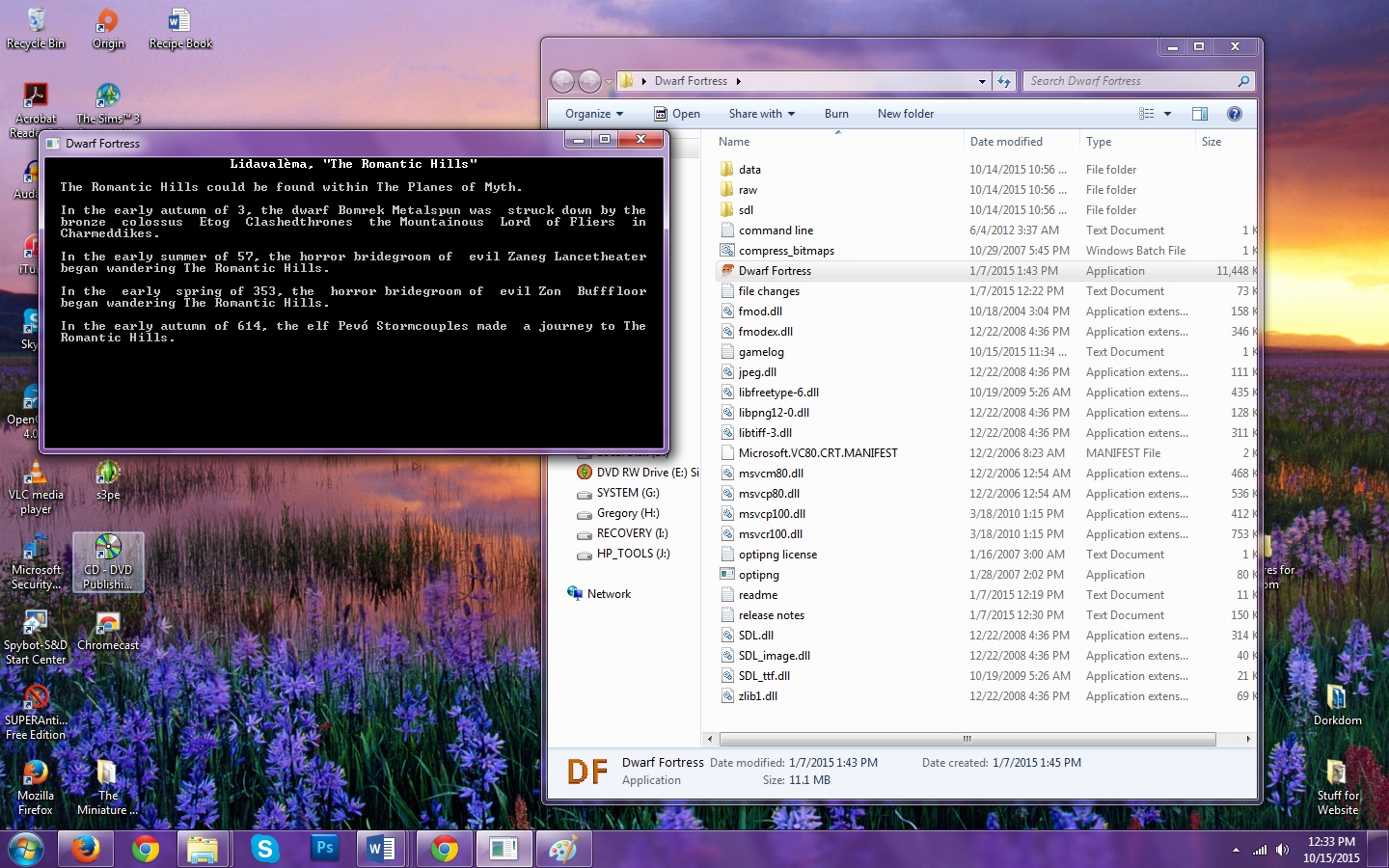
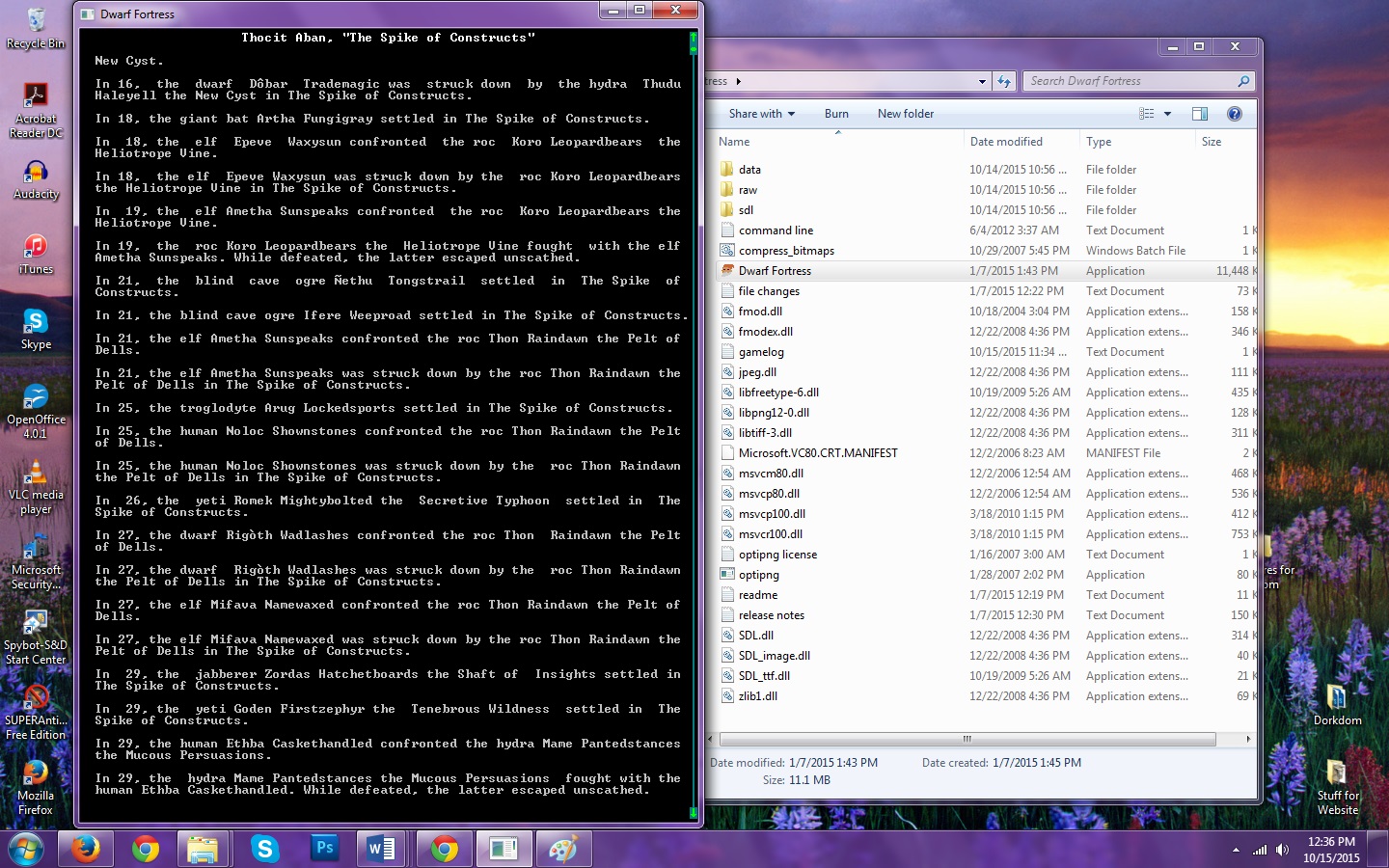

 As far as I can see, computational literacy is of great use to the study of English and the humanities in general. For me, it’s easier to see the necessity of computational literacy for research interests and pedagogical concerns that deal with the contemporary and the future. If one cannot understand procedure, then one will never look at code. However, even within the Python teaching module, there were many, numerous comments hidden within # lines and triple quotation marks. I think that these markers of human making can be as fruitful to study as earlier drafts of poems, diary entries, marginalia. (Even some computational literacy will give context to those comments.) Even in published video games produced by Nintendo and other major corporations, there are packets of unused code that contain clues about the direction that a game might have gone, at one point. This is amazing and incredible, but how relevant is computational literacy to something like Victorian literature? Well, besides being able to use computation as a tool in general research, I also think that literacy will let me (and others) analyze and interact with our current moment’s interaction with and reproduction of our collective (mis)remembering of the Victorian period. That might be Neo-Victorian studies, but that is a whole other area that I find super interesting.